1861 – Antwerp – 1949
Dutch-Belgian Painter
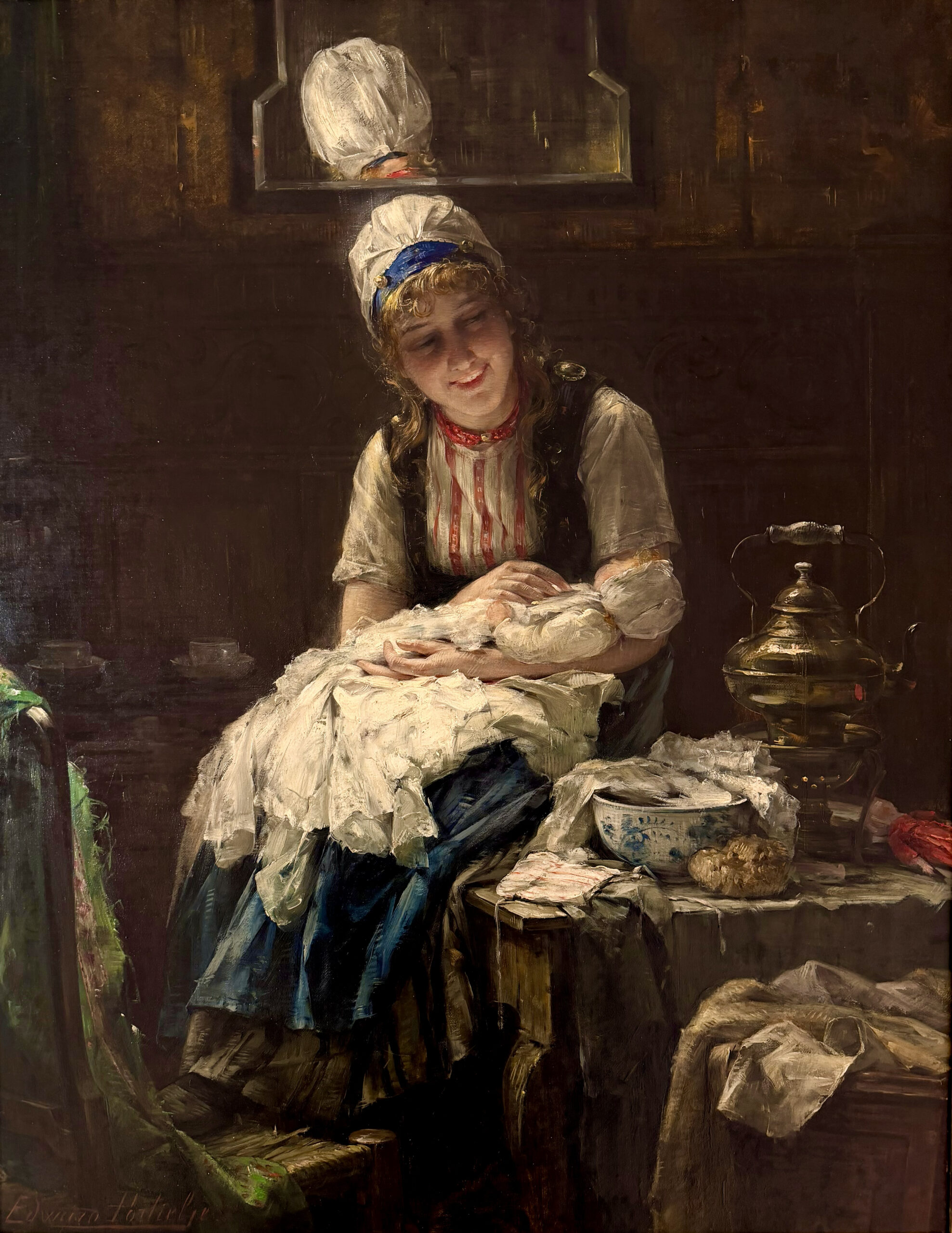
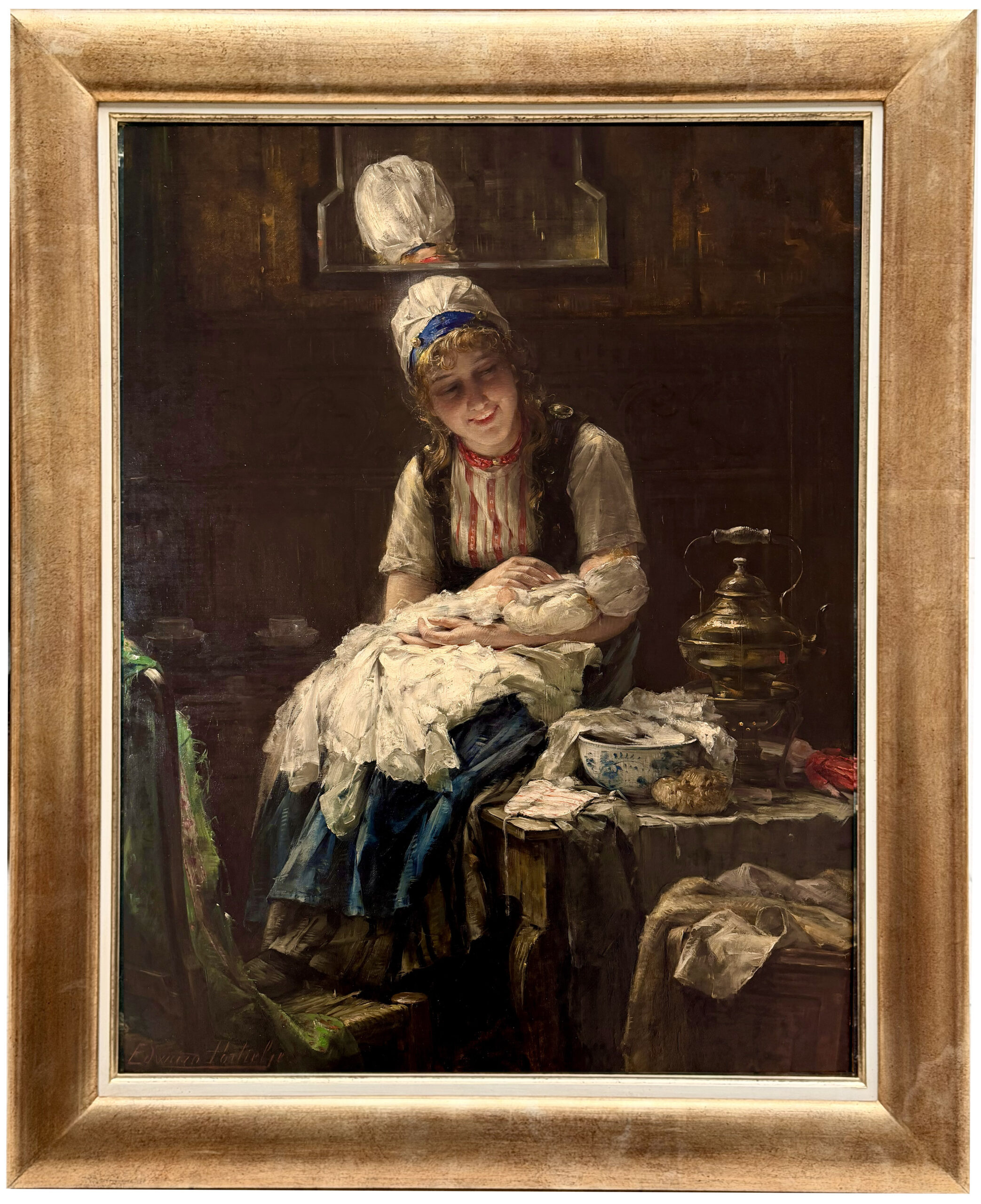
Mother and Child
Edward Portielje – Belgian genre painter from an Antwerp artist family. Edward Portielje was born in Antwerp on February 8, 1861, and passed away there on December 18, 1949. He came from a distinctly artistic family that had been involved in painting for multiple generations. His works are now held in public collections and museums in Antwerp, Chicago, Melbourne, Sydney, and Bordeaux.
The Portielje family had its roots in the Netherlands. Edward’s grandfather owned a bookstore in Amsterdam specializing in luxury engravings. His father, Jan Portielje, however, chose a career in painting and studied at the Antwerp Academy. From the 1850s, Jan gained recognition for his refined portraits of the affluent bourgeoisie: barons, baronesses, and elegant ladies, often with a Spanish or Oriental touch. He even painted a portrait of King Leopold II. After marrying the Antwerp native Eulalia Lemaire, he settled permanently in Antwerp.
The couple had five children, including Gerard (1854) and Edward (1861). Like their father, both sons pursued artistic careers and studied at the Antwerp Academy. Gerard Portielje became known for anecdotal genre scenes with mild humor and colorful details, while Edward developed an early personal and refined style.
Fewer biographical records have survived for Edward than for his brother. A limited number of documents and notebooks remain. From his first marriage to Rosa Hermans in 1888, a son, Leo, was born. During World War I, the family fled Antwerp for Brussels. After the war, in 1924, Edward signed an exclusive agreement with Antwerp art dealer Guillaume Campo on the Meir, following his brother Gerard’s example.
From a young age, Edward was strongly drawn to Zeeuws-Vlaanderen, which inspired much of his oeuvre. He frequently painted young women in traditional regional dress, often depicted within the interior of a fisherman’s home. His favorite subjects included motherhood, lovers, love letters, marriage proposals, tea moments, or intimate conversations between friends.
Although Edward adhered to traditional genre painting, his style was somewhat more progressive than his brother’s. His works are distinguished by a lively, sometimes nervous brushstroke reminiscent of Impressionism. Light plays a central role in his paintings: sunlight streaming through open windows, soft reflections on fabrics and skin, and subtle transitions between interior and exterior spaces. He also paid refined attention to facial features, clothing, and interior details.
These qualities are exemplified throughout Edward Portielje’s oeuvre. His preference for intimate domestic scenes, rendered with a subtle sense of light, color, and atmosphere, gives his paintings exceptional warmth and humanity. Tender moments, such as a mother with her child, a confidential conversation between friends, or a quiet instant in a simple interior, are executed with great sensitivity and refinement.
Portielje achieved a balance between realism and poetry. His compositions convey restrained emotion and gentle sensuality without ever becoming sentimental. The lively brushwork, refined rendering of fabrics, and warm color harmonies make his work recognizable and lend it timeless charm.
Thanks to these qualities, Edward Portielje is considered one of the most beloved Belgian genre painters of his generation. His oeuvre represents a significant chapter in Antwerp painting at the end of the 19th and beginning of the 20th centuries.
References Inneke Bruynooghe, The Oeuvre of Portielje: Jan, Gerard, Edward, 2001. Wim & Greet Pas, Biographical Lexicon of Plastic Arts in Belgium, 2000.