1824 – Antwerp – 1890
Belgian Painter
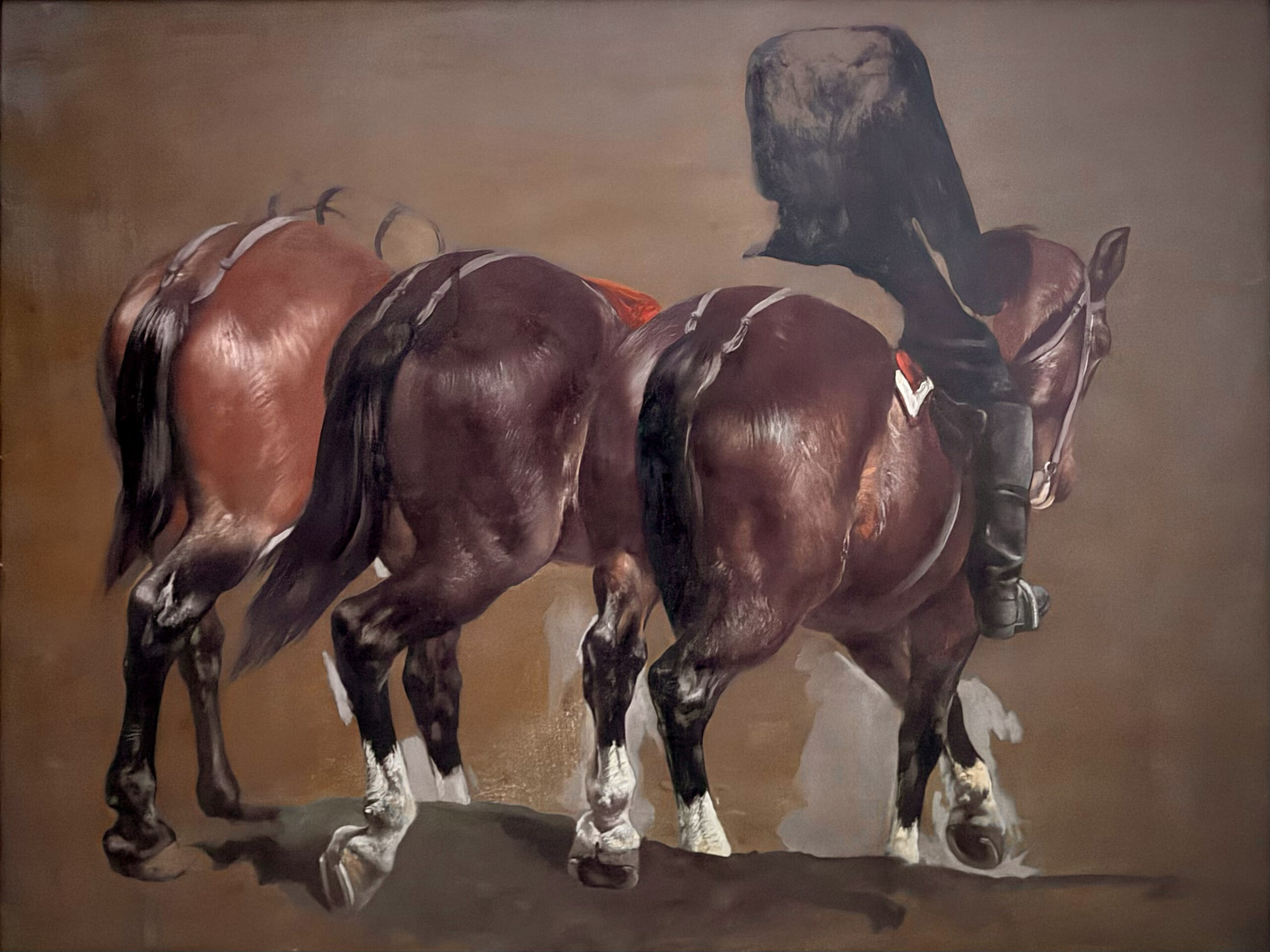
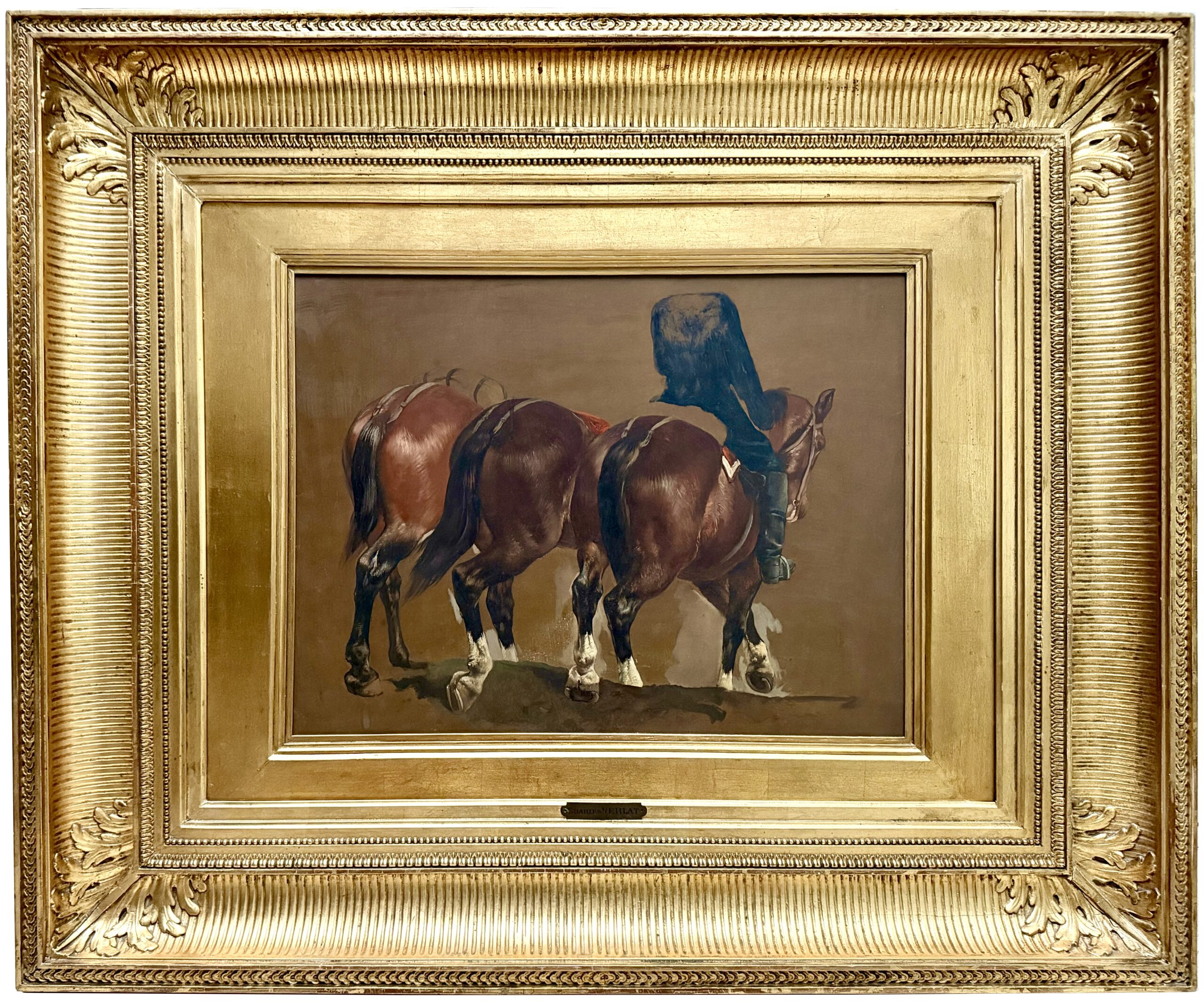
Study of Three Horses
Charles Verlat (1824–1890) was a highly versatile Belgian artist whose career encompassed painting, watercolour, and etching, alongside an exceptional practice as a draughtsman. Born in Antwerp, he trained at the Royal Academy of Fine Arts in Antwerp, where he would later play a decisive role as director and reformer of artistic education in Belgium.
Verlat’s subject matter was remarkably wide-ranging. It included animal paintings, portraits, religious and historical compositions, Orientalist scenes, genre subjects—among them a notable group of singeries—as well as occasional still lifes. His early artistic formation was shaped by the professors of the Antwerp Academy, leading proponents of the Belgian Romantic School, who advocated a return to the grandeur of the Flemish Baroque tradition as a means of depicting significant episodes from Belgium’s national history.
As his career developed, Verlat absorbed a variety of contemporary influences. Through his acquaintance with Ary Scheffer in Paris, he encountered the ideas of the German Idealists, while the realism of Gustave Courbet also left a lasting impression. During his stay in Palestine, his palette became noticeably more restrained, losing the robust colour and bravura associated with Flemish painting. Nevertheless, despite these diverse influences, Verlat’s primary inspiration remained the great Flemish Baroque masters, Peter Paul Rubens, Anthony van Dyck, and Jacob Jordaens. Upon his return to Antwerp, his work regained a richer and more vibrant chromatic range.
During his lifetime, Verlat was widely recognized as an important animal painter, admired for his ability to render animals with vitality, anatomical accuracy, and psychological presence. One of his early animal paintings was acquired by the celebrated English animal painter Edwin Landseer, a testament to Verlat’s reputation in this field. Among his most renowned works is The Defense of the Herd (1878, Royal Museum of Fine Arts Antwerp), painted during his residence in Palestine. Executed in the muted palette characteristic of that period, the work displays a dynamic interaction of animals reminiscent of earlier Flemish animaliers such as Frans Snyders.
Verlat also produced a significant body of singeries humorous scenes depicting monkeys engaged in human activities. Often dressed in costume, these animals parody human behavior, occupations, or vices, such as smoking, gambling, or professions including art critic, dentist, painter, and musician. These works combine technical virtuosity with wit and social commentary, firmly situating Verlat within a long Flemish tradition.
In addition to painting, Verlat created a number of original etchings in the early 1880s, including a striking self-portrait. He worked directly on the plate without preliminary drawings, lending these works a spontaneous and expressive quality.
Appointed director of the Royal Academy of Fine Arts in Antwerp in 1874, Verlat remained an influential teacher and mentor until his death in 1890. His legacy is that of a multifaceted artist who successfully bridged academic tradition, realism, and personal expression, leaving an enduring mark on Belgian 19th-century art.