Antwerp 1886 – 1952 Ostend
Belgian Painter
+32 478 22 65 64 | info@valentinasafarian.com

Antwerp 1886 – 1952 Ostend
Belgian Painter
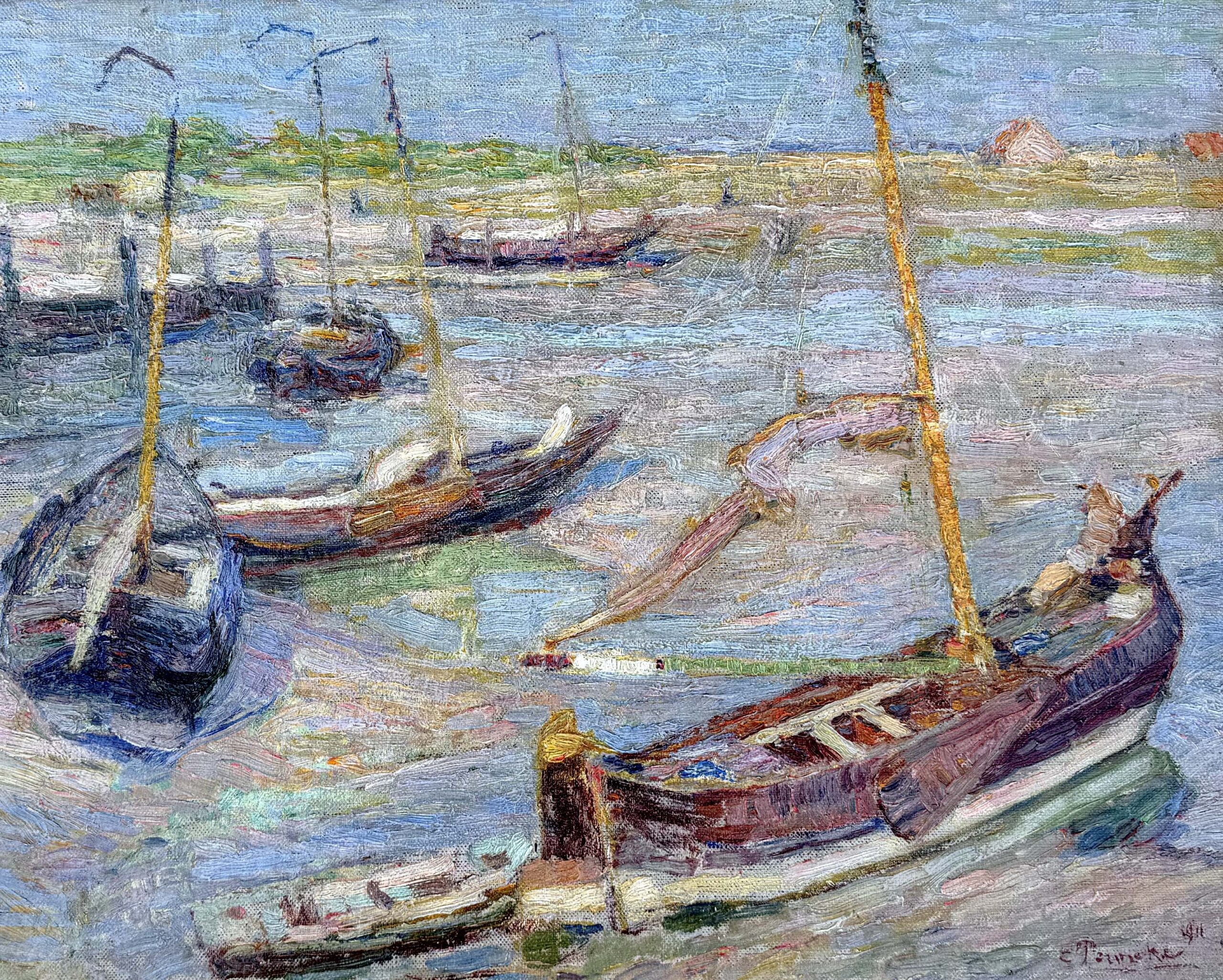
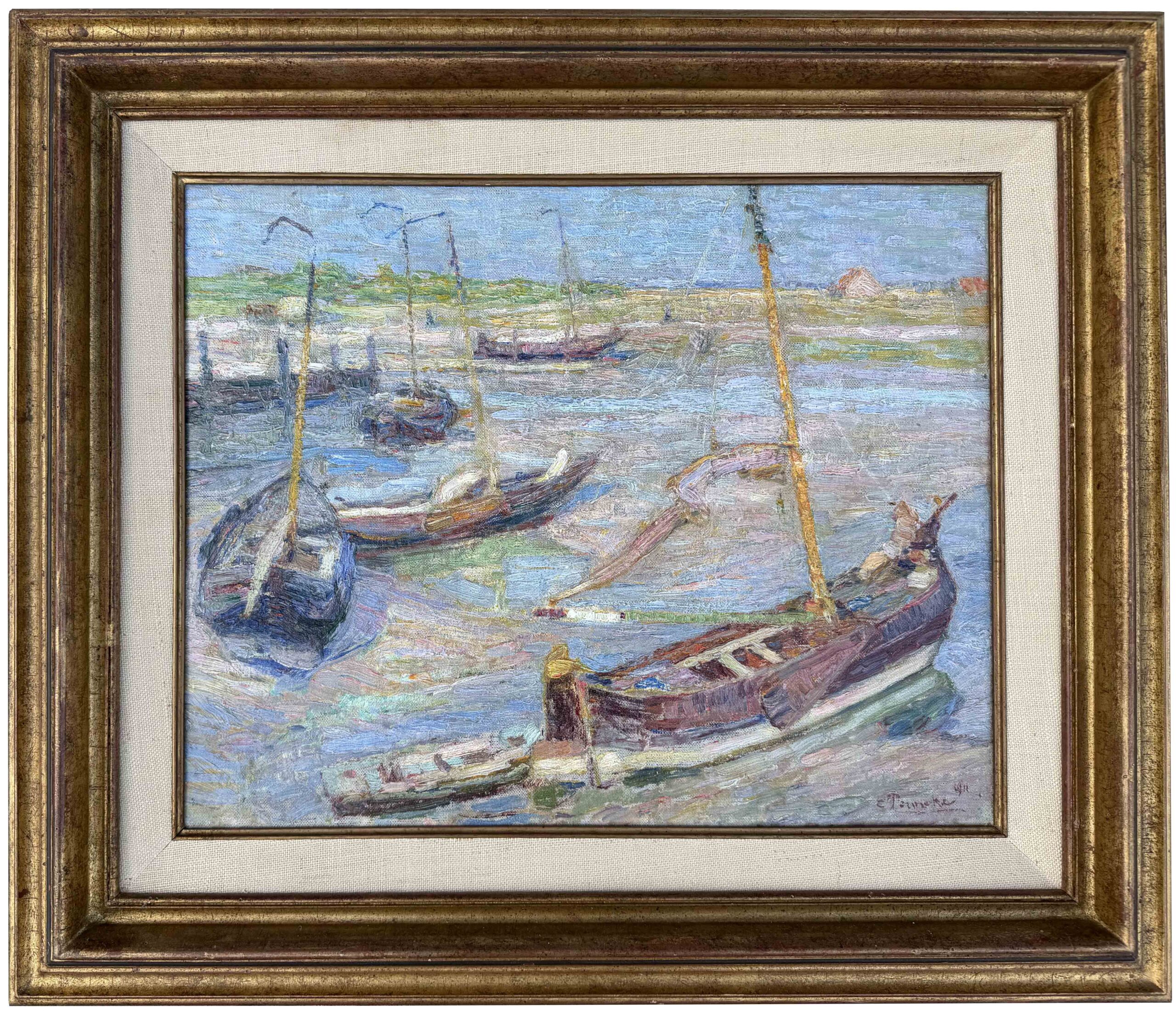
Constant Permeke (Antwerp, 31 July 1886 – Ostend, 4 January 1952) stands as one of the most powerful and defining figures of Flemish Expressionism. Both painter and sculptor, he is widely regarded as its leading representative, celebrated for his monumental and deeply human depictions of fishermen, sailors, and their families—figures rendered with a gravity and dignity that echo the harsh realities of coastal life.
Permeke was born into an artistic environment. His father, Henri Permeke, a trained painter and restorer, introduced him early to both the practice and the craft of art. From him, Constant not only inherited a sensitivity to painting but also developed strong technical skills through restoration work. In 1892, the family settled in Ostend, a move that would prove decisive: the North Sea, with its austere beauty and relentless force, became a lifelong source of inspiration.
Between 1903 and 1906, Permeke studied at the academy in Bruges, though he found academic training limiting. More formative were the artistic encounters that followed. Influenced initially by the luminist Emile Claus, he later gravitated toward a more expressive and emotionally charged style, inspired by artists such as Eugène Laermans and Jakob Smits. During his military service in Ghent, he connected with a circle of avant-garde artists including Gustave De Smet and Frits Van den Berghe, with whom he later settled in Sint-Martens-Latem, a key center of modern Belgian art.
By 1908, back in Ostend, Permeke turned decisively away from luminism. Confronted with the raw, often brutal existence of fishermen, he sought a more forceful visual language. His friendship with Albert Servaes proved pivotal in this transition, as both artists explored a heavier, more spiritual form of expressionism marked by dense paint, simplified forms, and emotional intensity.
In 1912, Permeke married Maria Delaere, and the couple settled in Ostend’s fishermen’s quarter. There, his mature style began to take shape: somber tonalities, robust forms, and a profound empathy for his subjects. His neighbor Léon Spilliaert was an important intellectual companion during these years.
The outbreak of World War I interrupted his career. Wounded in battle, Permeke was evacuated to England, where he spent several years in exile. This period proved artistically transformative. In Devon, he developed a more monumental and autonomous style, characterized by simplified compositions, thickly applied paint, and a restrained palette dominated by earthy tones. Works such as The Butcher and The Cider Drinker date from this decisive phase.
Returning to Belgium in 1919, Permeke found Ostend devastated. His work took on a darker, more introspective tone, reflecting both personal and collective hardship. In the 1920s, his style evolved further under the influence of structural concerns and a growing interest in form, partly inspired by contacts with sculptors such as Oscar Jespers and by exposure to modern movements including Cubism.
Gradually, his thematic focus shifted from the sea to the Flemish countryside. Farmers and rural life replaced fishermen as central subjects, yet the same monumental treatment and existential depth remained. Personal tragedy, notably the death of his son in 1923, deepened the emotional gravity of his work, often reflected in an even more restrained, darker palette.
By the mid-1920s, Permeke had gained widespread recognition. Major exhibitions in Brussels and Paris established his reputation internationally, confirming his position as a central figure in modern Belgian art.
Permeke spent his later years in Jabbeke, in his house “Vier Winden,” where he continued to work until his death in 1952. Today, his oeuvre remains a cornerstone of Flemish Expressionism—powerful, uncompromising, and profoundly human.
Zeedijk – Het Zoute 731, 8300 Knokke
Belgium
+32 478 22 65 64
info@valentinasafarian.com

© Copyright 2023 Valentina Safarian | Website by BEAUX SITES