Boulogne 1838 – 1910 Paris
French Painter
+32 478 22 65 64 | info@valentinasafarian.com

Boulogne 1838 – 1910 Paris
French Painter
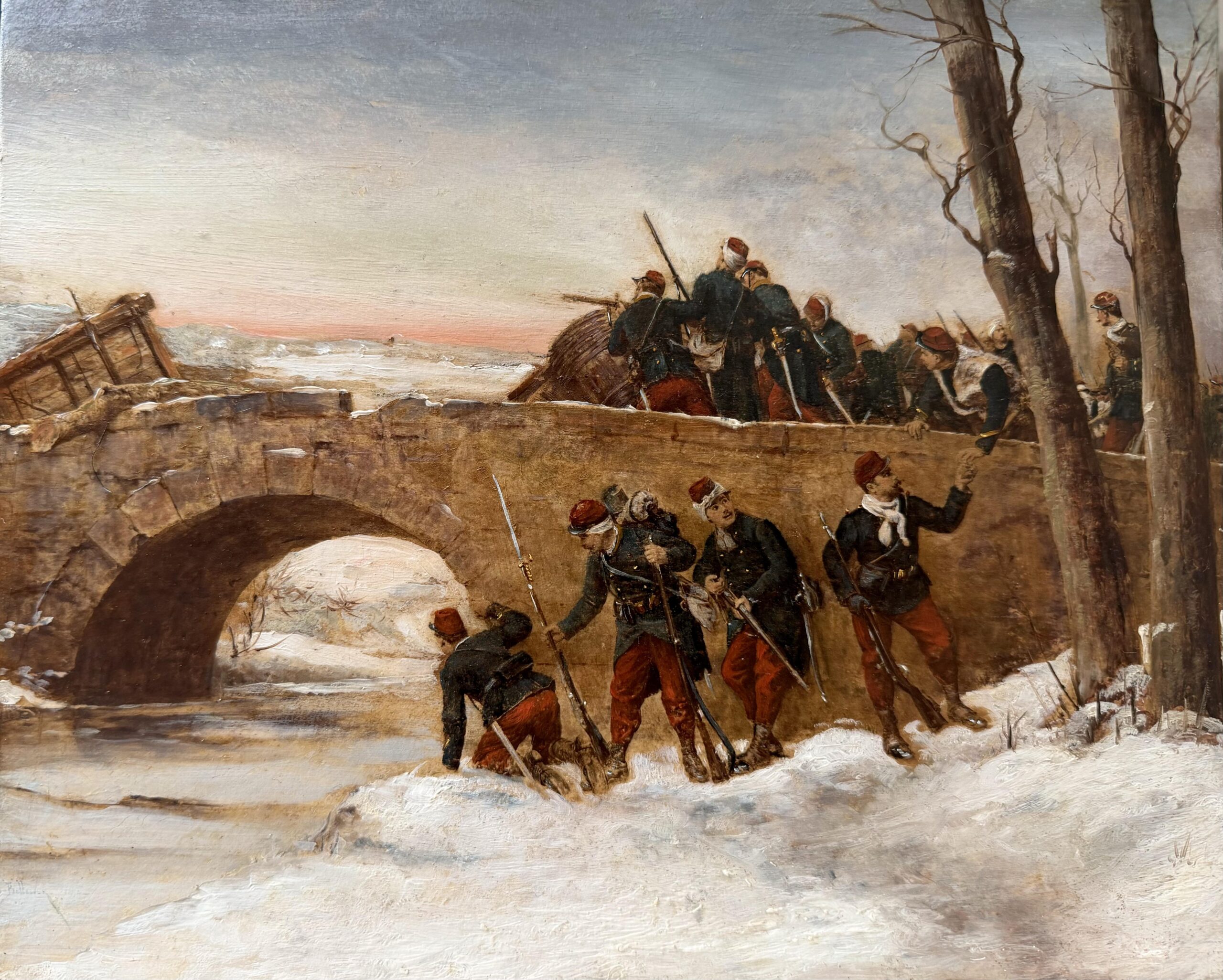
Étienne Prosper Berne-Bellecour was a distinguished French painter, illustrator, printmaker, photographer, sculptor, and etcher, best known for his highly accomplished military scenes and depictions of the Franco-Prussian War. He was born on 29 June 1838 in Boulogne-sur-Mer, France, into an artistic family. His father, Étienne Berne, was a dramatic artist, and this creative environment strongly influenced his early artistic development.
In 1856, Berne-Bellecour entered the École des Beaux-Arts in Paris, where he studied under several prominent academic masters, including François-Édouard Picot, Félix-Joseph Barrias, and Émile Signol. In 1859, he competed for the prestigious Prix de Rome, although without success. During his years of study, he supported himself through work in photography, collaborating with Michel Berthaud under the studio name “Helios” between 1864 and 1870. His achievements in this field were recognized internationally when he received a photography prize at the Universal Exposition of 1867.
Berne-Bellecour was closely associated with important artistic figures of his time, notably the painter and dramatist Jean-Georges Vibert, who encouraged him to devote himself fully to painting. In 1864, he married Vibert’s sister, Jeanne Victorine Alice Vibert, and the couple would have nine children. One of their sons, Jean-Jacques Berne-Bellecour (1874–1939), also became a noted military painter.
In 1870, Berne-Bellecour traveled to Africa alongside Jean-Georges Vibert, Alexandre-Louis Leloir, and Édouard Detaille. However, the outbreak of the Franco-Prussian War forced his return to France, where he enlisted in the corps franc des Tirailleurs de la Seine. During the conflict, he distinguished himself through bravery under fire and was awarded the Médaille Militaire. His wartime experiences profoundly shaped his artistic direction, inspiring many of his most celebrated compositions. In 1878, he was named Chevalier of the French Legion of Honour in recognition of his artistic and military contributions.
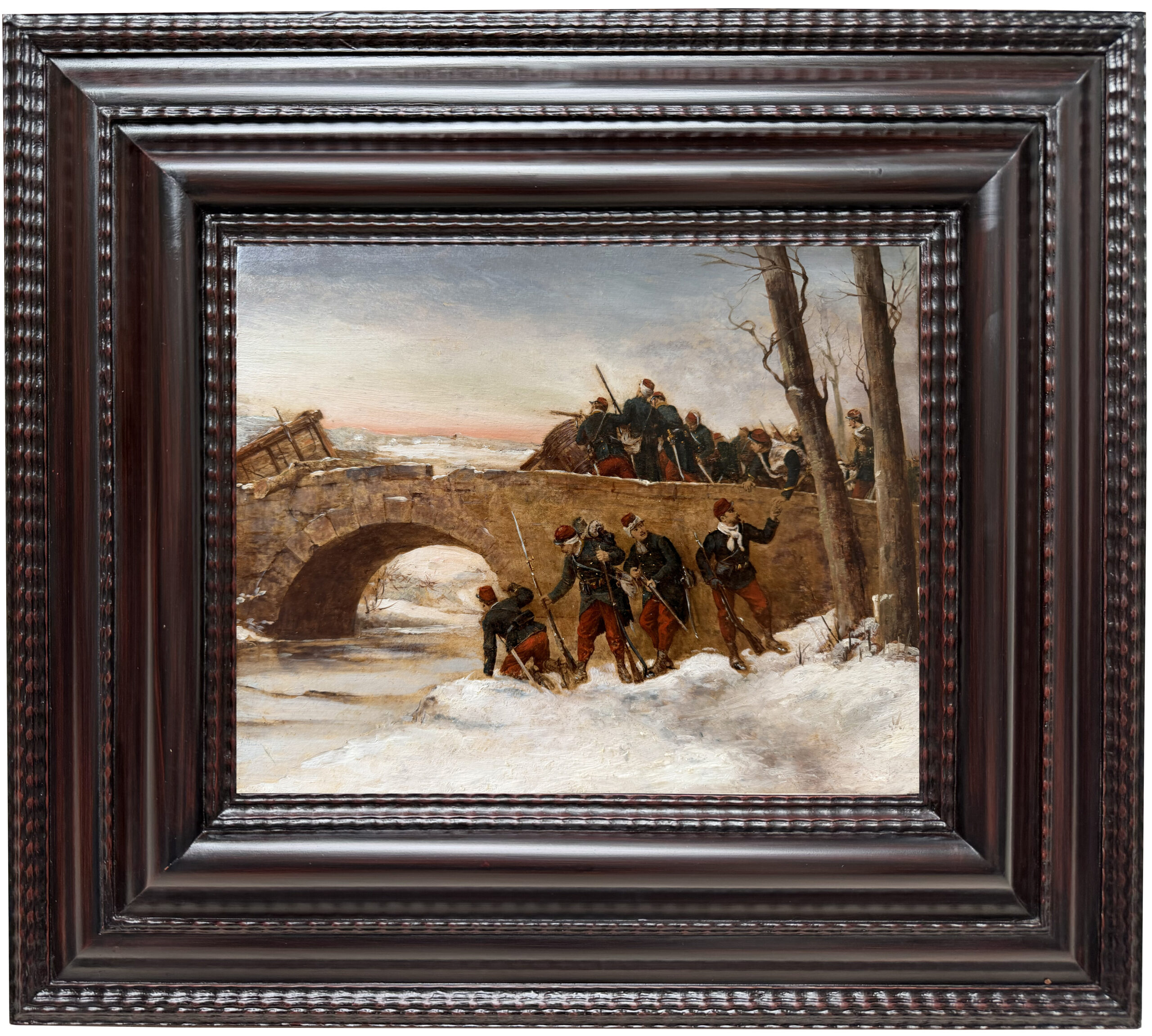
While Berne-Bellecour initially painted landscapes and portraits, he gradually became renowned for his military paintings and battle scenes. Works such as Les Tirailleurs de la Seine au combat de Malmaison, Le Prisonnier, and Défense d’un pont established his reputation as one of the important military painters of late 19th-century France. His compositions are admired for their realism, atmospheric detail, and psychological sensitivity, often capturing the human dimension of warfare with remarkable precision.
Beyond painting, Berne-Bellecour also collaborated in the theatre world. Together with Jean-Georges Vibert, he co-authored the satirical theatrical entertainment La Tribune mécanique, cours d’éloquence parlementaire, performed at the Théâtre du Palais-Royal in 1872.
In 1867, he purchased the Château d’Égreville, which was then in ruins. He carefully restored the property and later made it his residence. In 1899, he sold the château to his friend, the celebrated composer Jules Massenet.
Étienne Prosper Berne-Bellecour died in Paris on 29 November 1910 at his residence on Rue Ampère in the 17th arrondissement. Today, his works are held in both private and public collections worldwide, and he is regarded as an important figure in 19th-century French military painting, admired for combining academic precision with vivid narrative intensity.
Zeedijk – Het Zoute 731, 8300 Knokke
Belgium
+32 478 22 65 64
info@valentinasafarian.com

© Copyright 2023 Valentina Safarian | Website by BEAUX SITES