1876, La Louvière – 1943, Schaerbeek
Belgian Impressionist and Luminist Painter
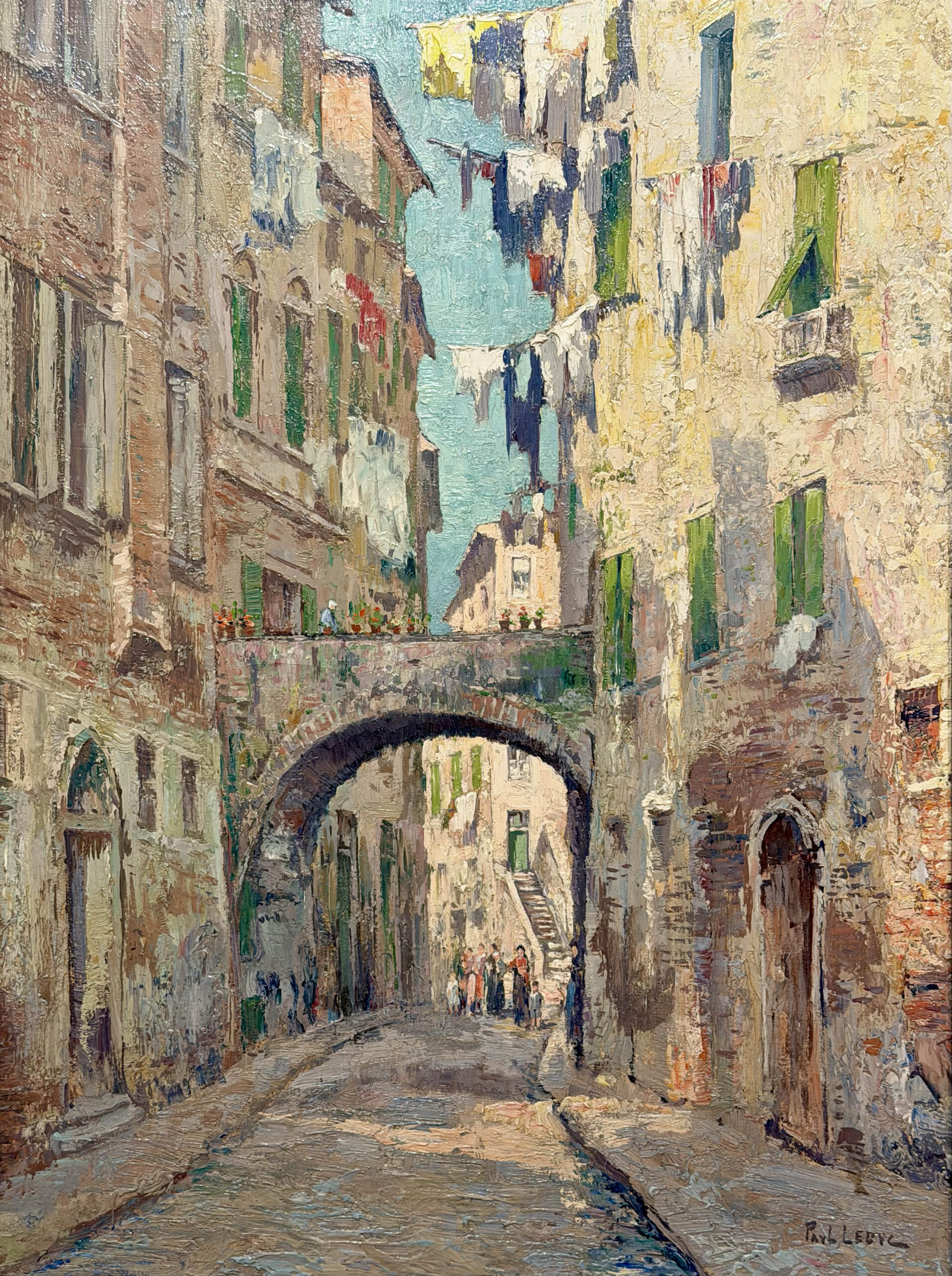
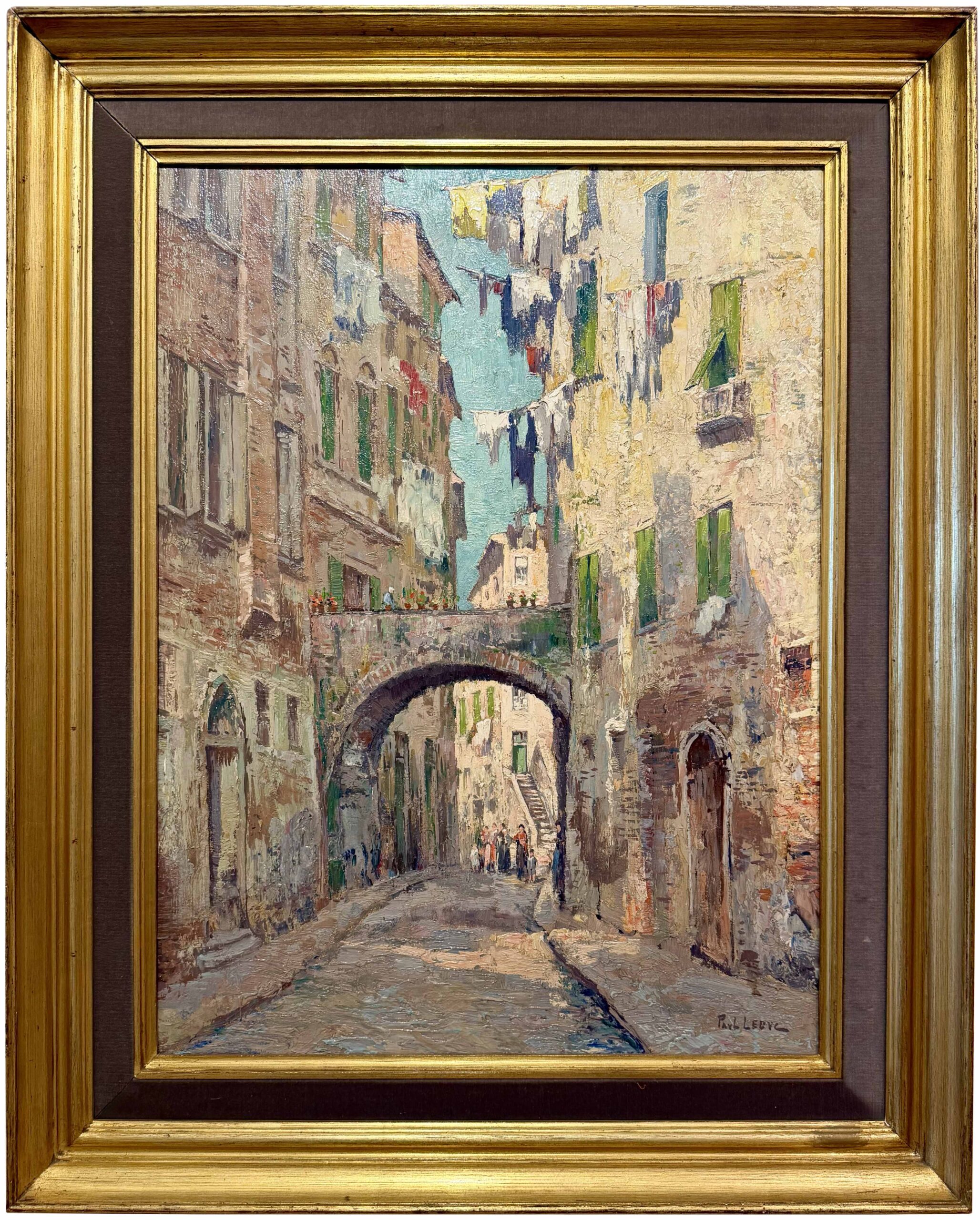
Rue Longue, Old Town of Menton, 1934
Paul Leduc was a Belgian painter best known for his luminous landscapes, river and canal views, picturesque towns and Mediterranean scenes. Born in La Louvière on 28 August 1876, he was the son of the painter Hubert Leduc and Marie Pourbaix.
Leduc received his early artistic formation in Tervuren, working alongside pupils of the landscape painter Joseph Coosemans. He subsequently studied at the Académie des Beaux-Arts in Mons under Antoine Bourlard from 1891 to 1896, before continuing at the Higher Institute of Fine Arts in Antwerp, where he studied under the distinguished Belgian painter Albert Baertsoen. This training was particularly important to Leduc’s development as a landscape painter and in his appreciation of rich, expressive brushwork.
Initially, Leduc painted landscapes, portraits and genre scenes, including views of the industrial region of his native Hainaut. His artistic horizons broadened considerably through travel. He worked in Belgium and the Netherlands and was particularly inspired by the south of France and Italy, painting the waterways, bridges, harbours and picturesque towns of places such as Martigues, Menton, Saint-Tropez and Venice. His interest in Mediterranean light gradually led his work away from early realism towards a distinctly French-inspired Impressionism and, subsequently, Belgian Luminism.
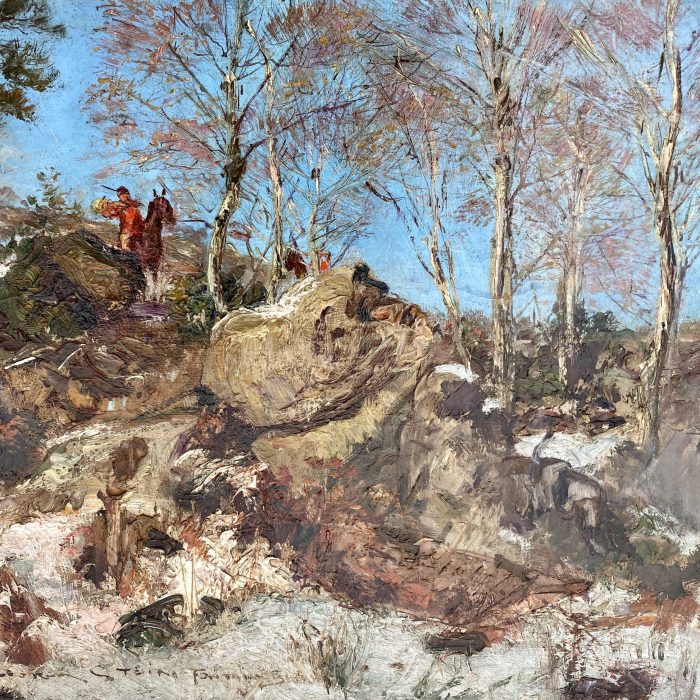
Light became one of the defining elements of Leduc’s mature work. His paintings are characterised by a generous, tactile application of paint, vibrant colour and a sensitive rendering of reflections and changing atmospheric conditions. His Venetian and Provençal views, in particular, demonstrate his ability to transform architectural and natural motifs into radiant compositions.
Leduc’s work is represented in important Belgian public collections. The Musées royaux des Beaux-Arts de Belgique in Brussels hold two paintings by the artist, Vue de Venise (1922) and Marché provençal. Martigues (1924). His Le grand canal à Venise is also part of the permanent collection of the Musée des Beaux-Arts de Charleroi. The Musée Charlier in Brussels preserves several works by Leduc, including Venise le matin (Canale Grande et l’église della Salute) (1920) and Le Brescou à Martigues (1921). The Musée d’Orsay in Paris also maintains a dedicated documentary record for the artist.
Paul Leduc died in Schaerbeek on 13 July 1943 and was buried at the Brussels Cemetery in Evere. Today, his work is particularly appreciated for its distinctive combination of Belgian landscape tradition, French Impressionist influence and luminous Mediterranean subject matter.
Museum references: Musées royaux des Beaux-Arts de Belgique, Brussels; Musée des Beaux-Arts de Charleroi; Musée Charlier, Brussels; Musée d’Orsay, Paris