Brussels 1896 – 1977 Bruges
Belgian Painter
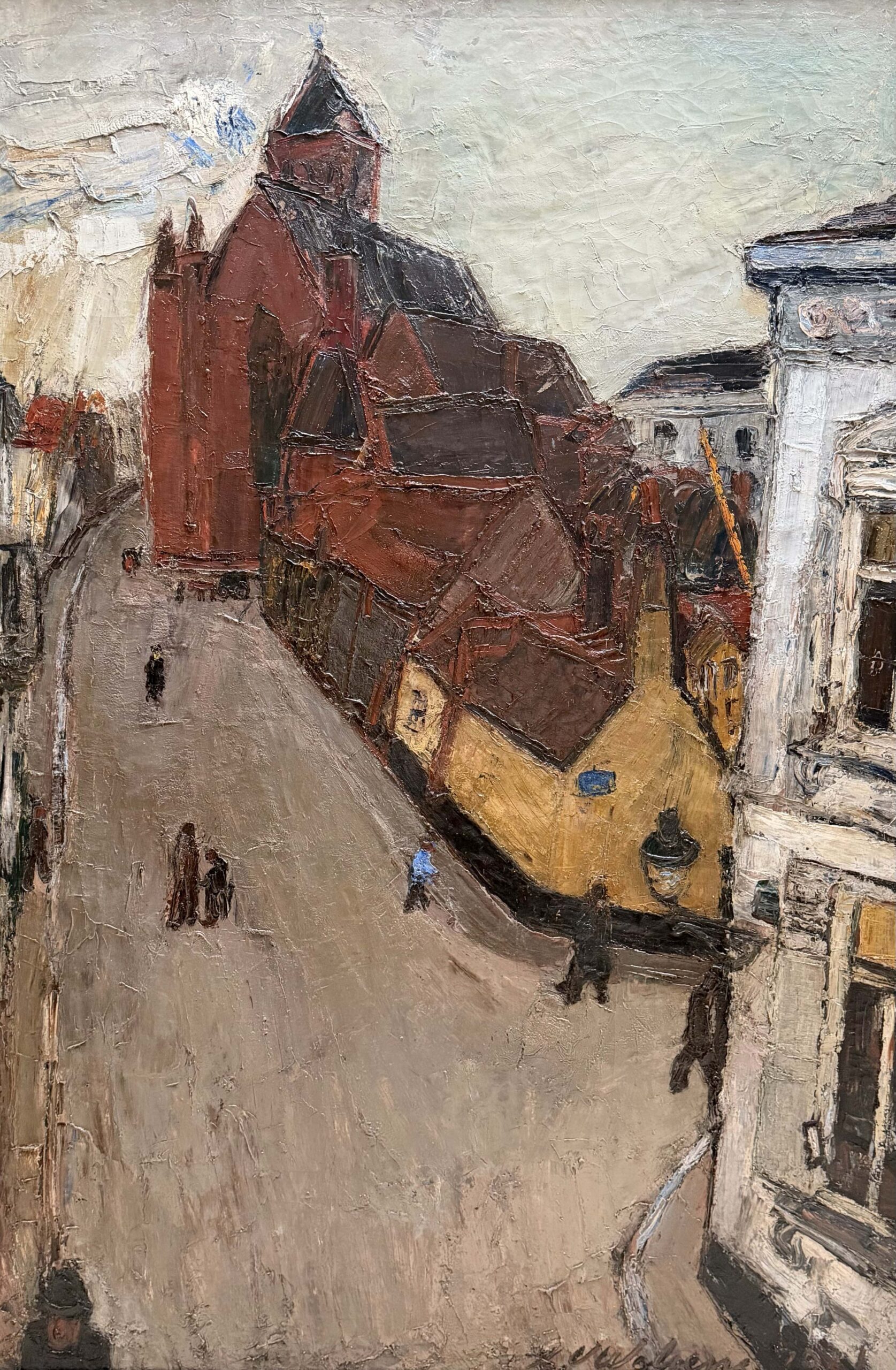
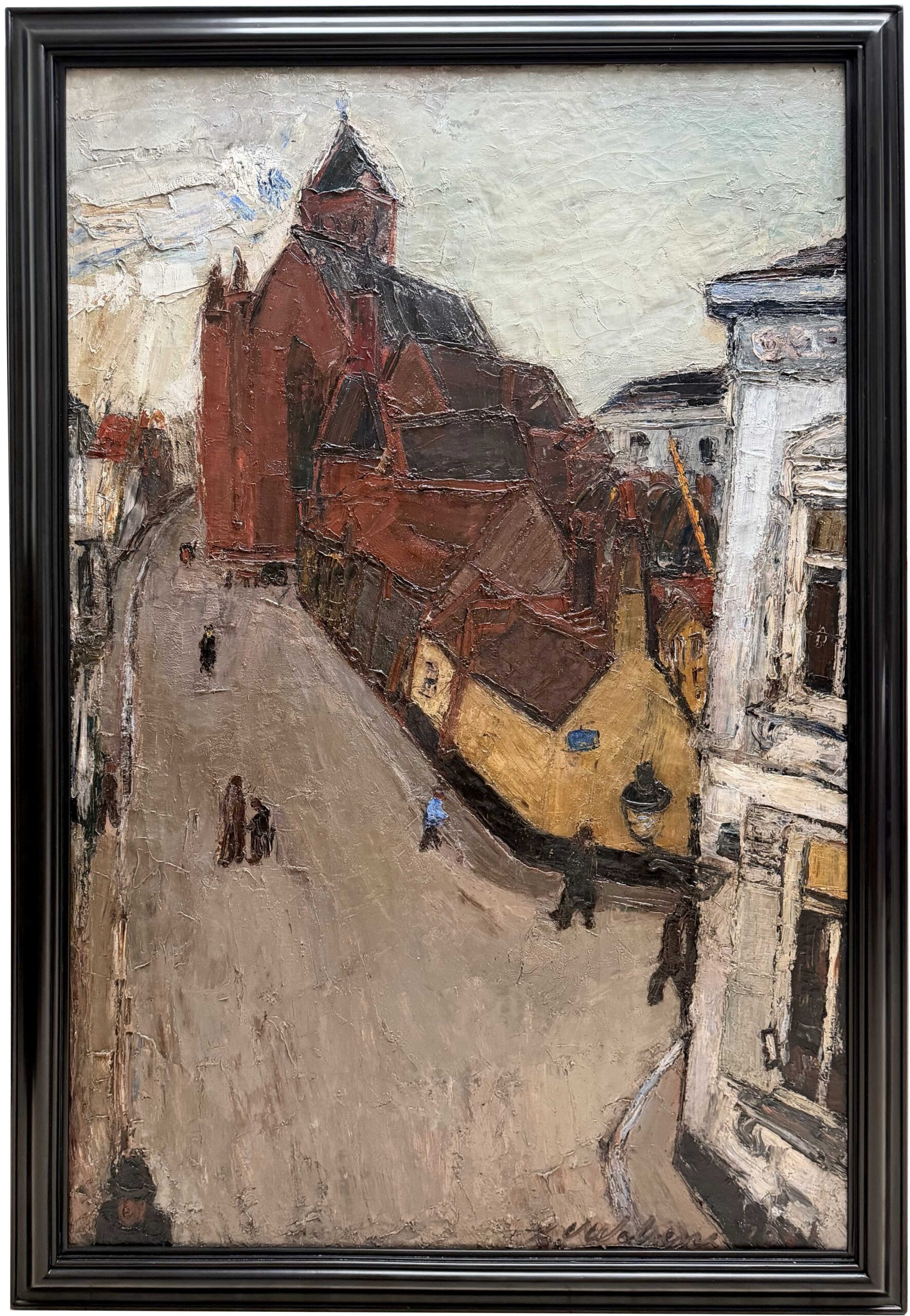
The St. James’ Church in Bruges, 1941
Henri Victor Wolvens was a distinguished Flemish painter whose work beautifully bridges tradition and modernity. Throughout his career, he developed a profound sensitivity to light, atmosphere, and the poetic presence of the sea, which became the central inspiration of his artistic vision.
Born in Brussels on June 6, 1896, Wolvens received his artistic training at the Municipal Academies of Schaerbeek, Saint Josse ten Noode, and Saint Gilles, where he studied under Henri Ottevaere and Maurice Lefèvre. In 1931, he continued his education at the Académie de la Grande Chaumière in Paris, where he was exposed to the vibrant artistic developments of the period and refined his personal style.
In his early period, Wolvens used a dark and earthy palette influenced by Flemish Expressionism and particularly by Constant Permeke. His first solo exhibition at Galerie Georges Giroux in Brussels marked the beginning of a successful career. Over time, his palette evolved significantly, becoming brighter and more luminous, inspired by artists such as Vincent van Gogh, J M W Turner, and James Ensor, with whom he later developed a friendship.
After his marriage in 1930, Wolvens settled in Bruges. The light of the city and the proximity of the North Sea had a decisive impact on his artistic development. From that moment, the coast became his lifelong subject. He painted seascapes, harbours, breakwaters, beaches, and promenades, capturing shifting skies and the reflective movement of water with remarkable sensitivity. Alongside these coastal scenes, he also depicted everyday life, including train stations, quiet streets, walkers, and modest interiors filled with human presence and atmosphere.
His technique is characterized by richly layered brushwork and a refined attention to the effects of light and atmosphere. Although he did not formally align himself with any artistic movement, his work is often associated with Animism, due to its warm human quality and his ability to animate stillness with subtle life.
Wolvens exhibited widely throughout his career. Notable exhibitions include Galerie Apollo in 1942, Galerie Breughel in 1945, and Galerie Dietrich in 1946. In 1946, he exhibited alongside James Ensor at Galerie Studio in Ostend, reflecting the high esteem in which he was held. Major retrospectives followed at the Groeningemuseum in Bruges in 1959, the Casino in Knokke in 1964, and the Museum of Modern Art in Ostend in 1993 and 1994.
In 2015, the Ixelles Museum presented a dedicated exhibition curated by Roger Pierre Turine titled Wolvens from shadow to light, highlighting the evolution of his palette and artistic spirit. In 2019, his radiant beach scenes were again celebrated in the exhibition Summertime at Group 2 Gallery in Brussels.
Henri Victor Wolvens passed away in Bruges on January 31, 1977. He left behind a deeply evocative body of work that continues to resonate for its serenity, depth, and luminous portrayal of Flemish coastal life. A commemorative plaque on his former home in the Moerstraat in Bruges honours his legacy as a painter who transformed the subtle light of his environment into enduring poetry.