Samswegen 1816 – 1905 Düsseldorf
German Painter
+32 478 22 65 64 | info@valentinasafarian.com

Samswegen 1816 – 1905 Düsseldorf
German Painter
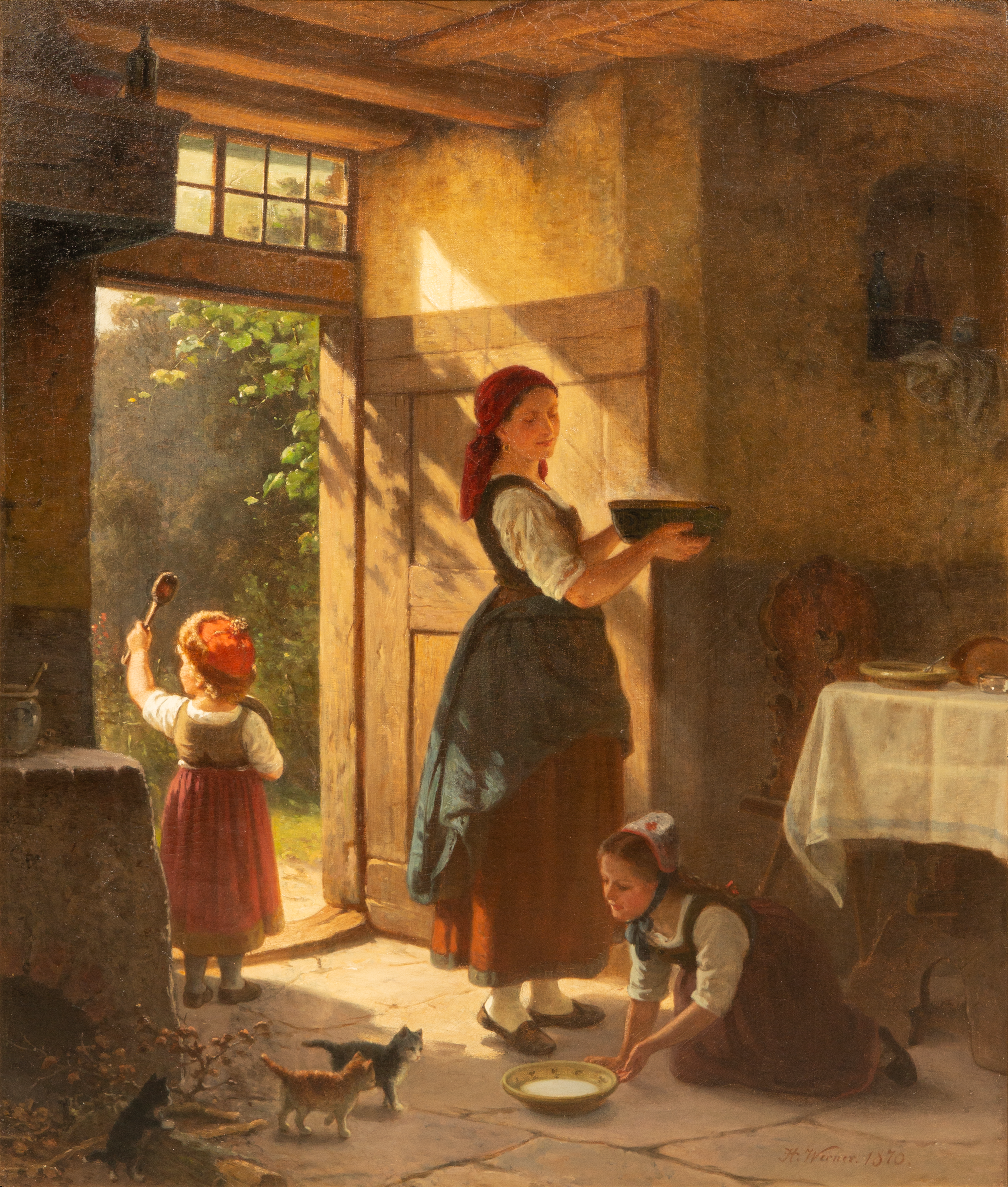
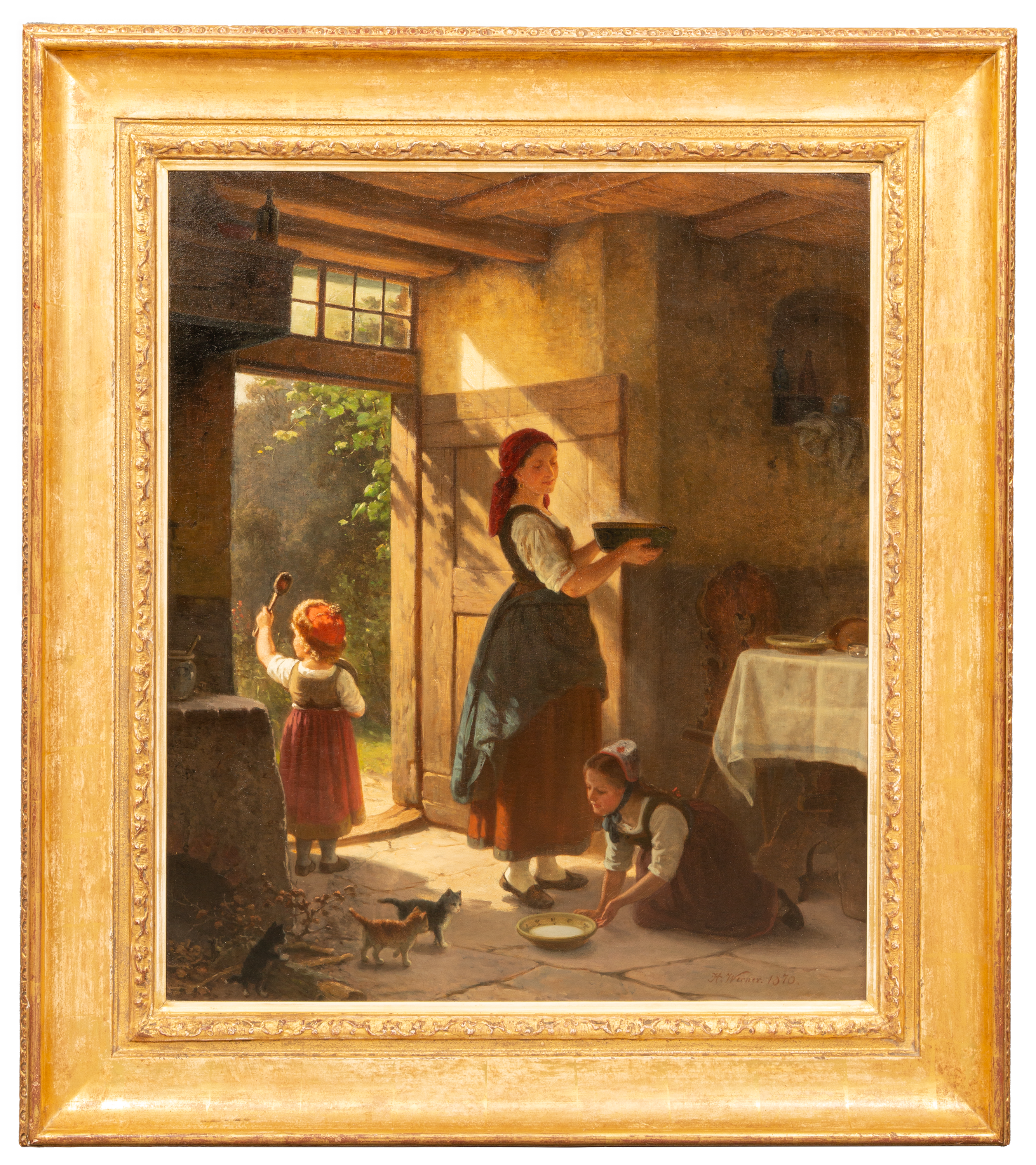
Hermann Werner was a German genre painter of the Düsseldorf School, best known for his intimate depictions of children, family life and scenes from the rural world. He was born on 25 January 1816 in Samswegen and died on 5 February 1905 in Düsseldorf.
Werner began his artistic training at the Düsseldorf Academy, where he studied from 1838 to 1840. Following the death of his father, he left Düsseldorf and later continued his education in Berlin, studying at the Academy and working in the studio of the distinguished painter Carl Steffeck. His early career took him between the Prussian province of Saxony and Berlin before he returned to Düsseldorf. From 1862 onwards, Düsseldorf became his permanent home and centre of artistic activity.
Werner developed a particular reputation for genre scenes depicting children, domestic interiors and rural family life. His paintings often portray simple moments of everyday existence with warmth and close observation. Children at play, family gatherings and scenes of rural domestic life became recurring subjects in his work. Such subjects were particularly popular during the second half of the nineteenth century and formed an important part of the genre tradition associated with both the Düsseldorf and Munich schools.
His work was exhibited in Berlin, Düsseldorf, Hamburg and Vienna, and he also participated in the 1873 World’s Fair in Vienna. In 1859 he became a member of the Düsseldorf artists’ association Malkasten, remaining associated with the society until his death. Through the Düsseldorf artistic community he maintained close contact with artists including Ernst Bosch, Carl Adloff, August Leu, Carl Hilgers, Johannes Niessen and Christian Eduard Boettcher.
Werner’s paintings can be found in institutional and museum collections. The Kunsthalle zu Kiel holds his Der kleine Schulmeister (The Little Schoolmaster), while the Museum Wolmirstedt has devoted an exhibition to the artist and his depictions of children and family life. The museum notes that Werner was an important representative of the Düsseldorf School and that his works depicting children and family formed a particular focus of his artistic output.
His work is also represented in the Metropolitan Museum of Art, New York, where Werner is credited as the artist after whom an engraving in The Aldine of 1873 was produced. This provides evidence of the wider international circulation of his imagery during his lifetime.
Today, Hermann Werner’s paintings offer a characteristic insight into the nineteenth-century German genre tradition, combining carefully observed domestic subjects with the warmth, sentiment and narrative qualities that made the Düsseldorf School’s depictions of everyday life so widely appreciated.
Zeedijk – Het Zoute 731, 8300 Knokke
Belgium
+32 478 22 65 64
info@valentinasafarian.com

© Copyright 2023 Valentina Safarian | Website by BEAUX SITES