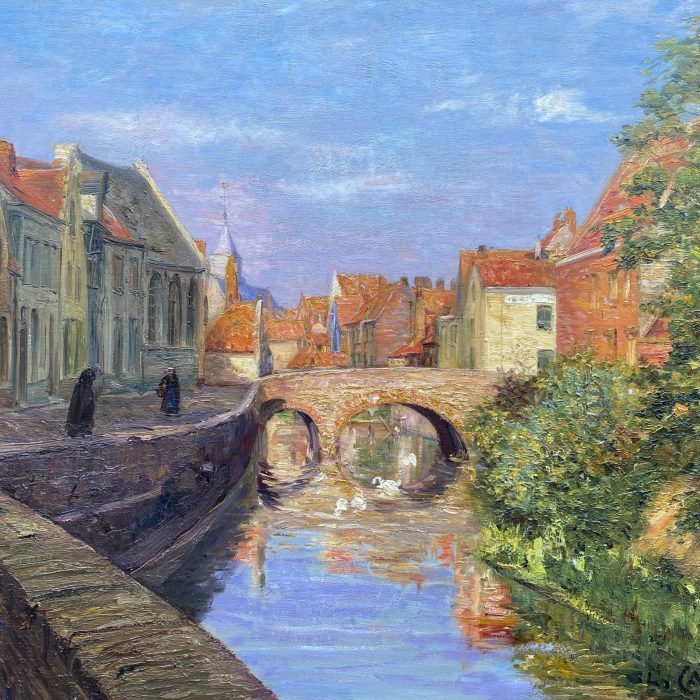
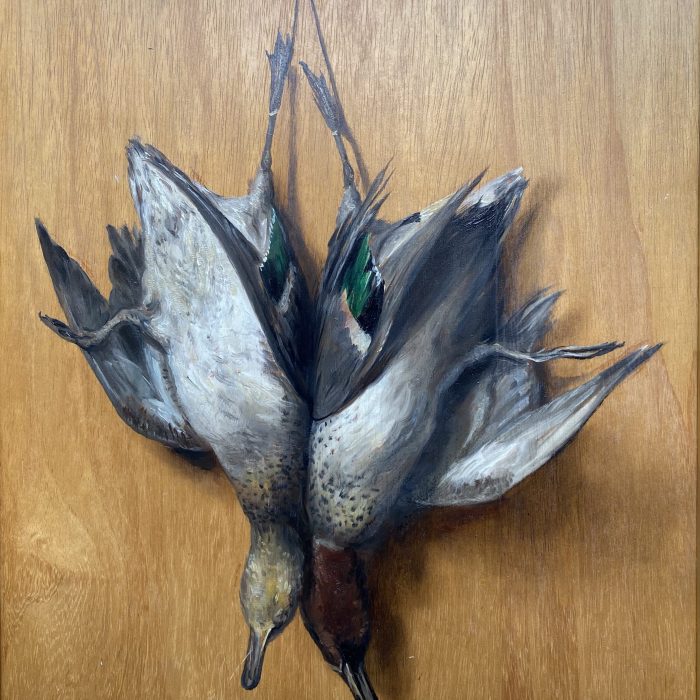
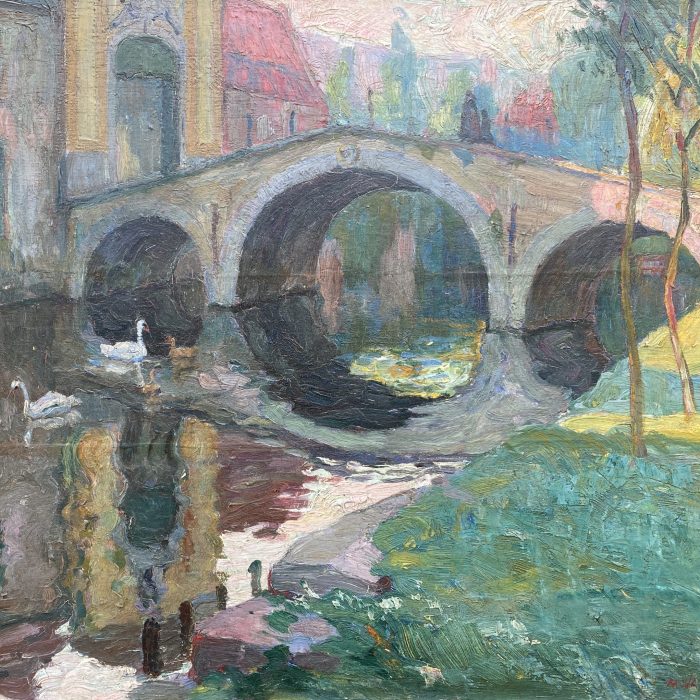
Antwerpen 1887 – 1962 Brussel
Belgian Painter
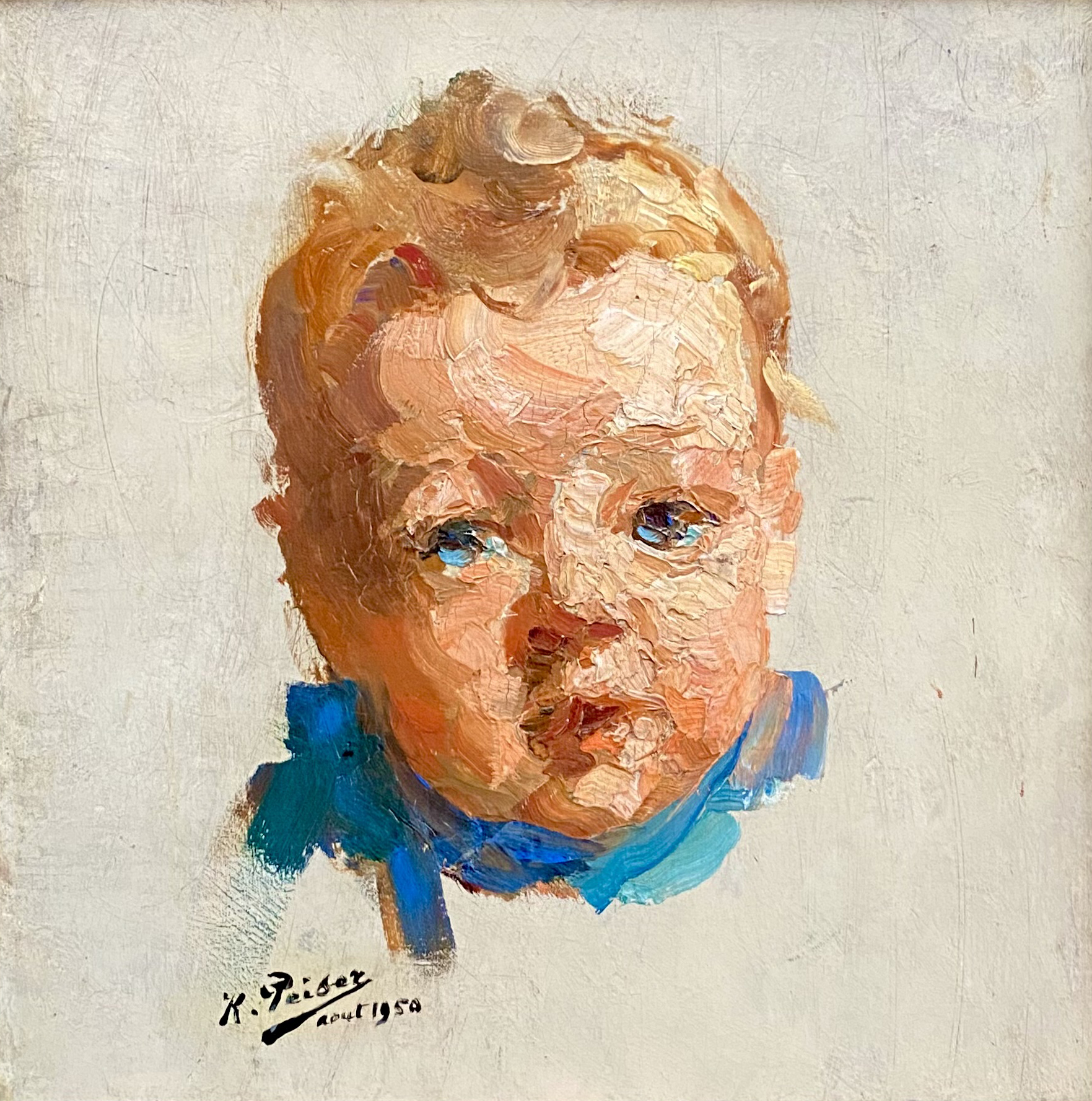
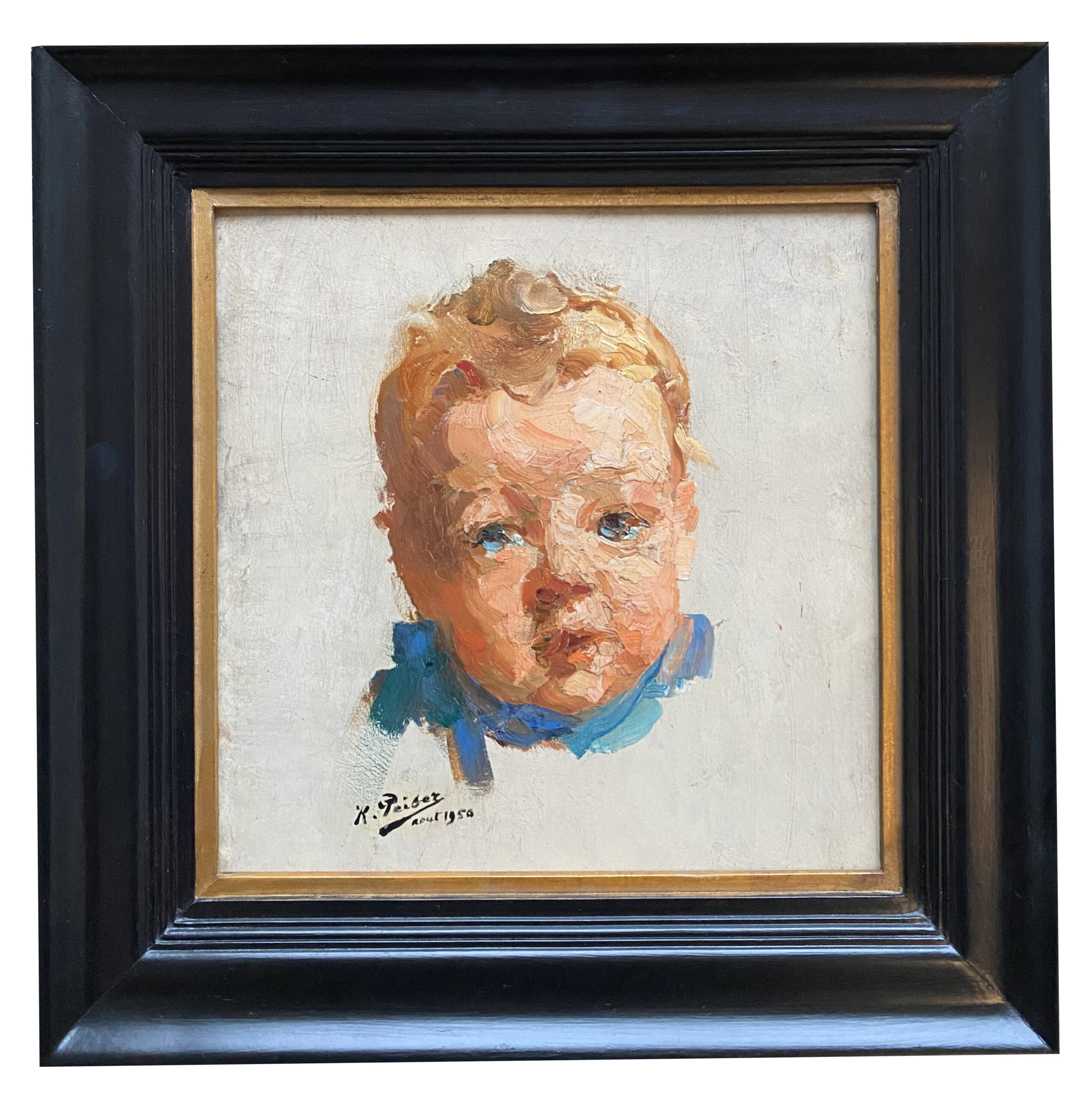
The Little Boy
Kurt Peiser was born in Antwerp in the year 1887. His parents were of German origin and came from the city of Gleiwitz in Prussia. They moved from Charlottenburg near Berlin to Antwerp in 1885 when Peiser’s father, a distinguished chemist, accepted a position as director of the sugar factory in Tienen. Although raised in a family with German roots, Peiser grew up fully immersed in Belgian life and embraced Belgian nationality at the age of eighteen.
From an early age, Peiser showed a deep awareness of the world around him. A strong sense of social and humanitarian concern became the guiding element of his artistic career. He worked as a painter, draughtsman, etcher, aquarellist and lithographer. His style was primarily realistic yet enriched with touches of impressionism and expressionism that gave his subjects both softness and emotional depth.
Peiser received his artistic education at the Royal Academy of Fine Arts in Antwerp, where he studied under the painter Gerard Jacobs. Later in his career he passed on his knowledge to a new generation of artists, among them Rudolf Schönberg, Hermann Kosak and Jacob de Vries.
A significant part of Peiser’s inspiration came from direct experience. He spent ten years at sea and the life of sailors became a central theme in his marine paintings. He also portrayed the vibrant atmosphere of the Antwerp docks, scenes of fishermen at work, and more emotionally charged images that depicted poverty, hardship and human struggle. His works reveal both careful observation and a compassionate understanding of the lives he represented.
Peiser’s commitment to portraying reality in its rawest form brought him notoriety in 1914. On the fourth of June of that year he appeared before the Antwerp court after eleven of his paintings were removed from an exhibition for allegedly violating public decency. He was fined but eventually recovered all the confiscated works. The episode shows the courage with which he approached difficult subjects.
Peiser’s graphic oeuvre displays the same breadth and intensity as his paintings. He created a remarkable series of etchings dedicated to the Antwerp harbour and became an active member of the association La Gravure Originale Belge, which played a vital role in the promotion of original Belgian printmaking.
A high point in his career arrived in 1929 when the prestigious Galerie Georges Giroux in Brussels presented a large retrospective of his work. This gallery was one of the most influential art spaces in Belgium during the first half of the twentieth century and had previously featured artists such as Wassily Kandinsky, Henri Evenepoel, the Jespers brothers, James Ensor, Georges Minne and Gustave De Smet. Presenting Peiser among such renowned figures marked an important recognition of his artistic achievement. He also took part in the Venice Biennale in the years 1924 and 1934 and exhibited at Galerie Giroux in 1928.
Although his name was less prominent in the decades after his death, recent years have brought renewed appreciation for his work. In 2018 exhibitions at Museum De Reede in Antwerp and at Maison des Artistes in Ukkel introduced his art to new audiences. In 2023 his legacy received significant attention through a double exhibition in Antwerp at Museum De Reede and at Galerie Campo and Campo. The exhibition titled Kurt Peiser Eindelijk Thuis at Campo and Campo brought together one hundred and thirty six works created between 1907 and 1961 and offered a comprehensive overview of his themes including life in the harbour, scenes along the Scheldt and the North Sea, depictions of work and daily activity, moments of celebration, genre scenes and portraits.
Peiser’s works form part of private collections throughout the world and belong to the collections of the Hermitage, the Pushkin Museum, the British Museum, the Royal Library of Belgium, Museum De Reede and the Jewish Museum of Brussels. He passed away in Ukkel in 1962. His oeuvre continues to speak to contemporary audiences through its sincerity, its social awareness and the profound humanity that runs through every subject he touched.