Nantes 1875 – ?
French Painter
+32 478 22 65 64 | info@valentinasafarian.com



Nantes 1875 – ?
French Painter
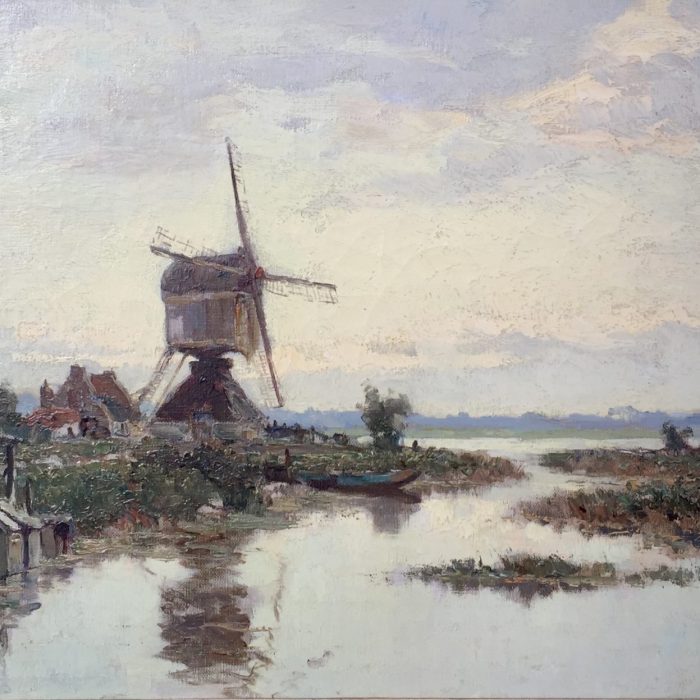
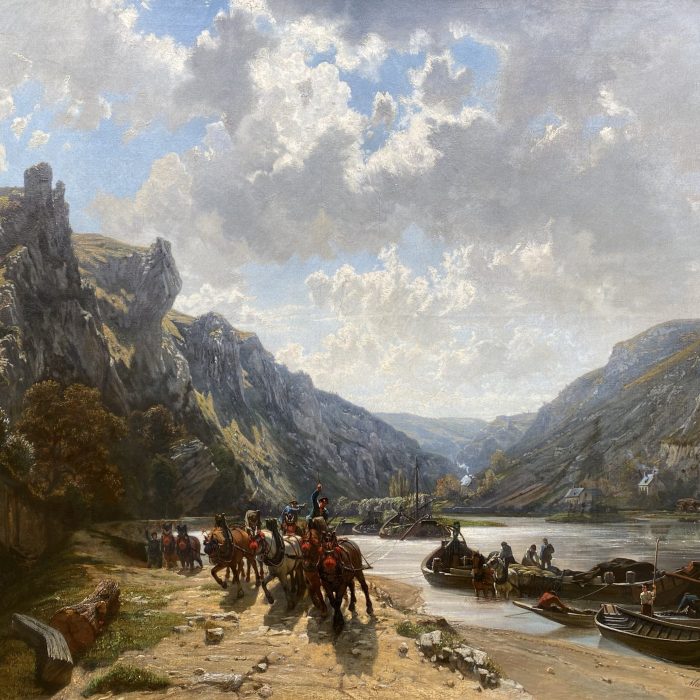
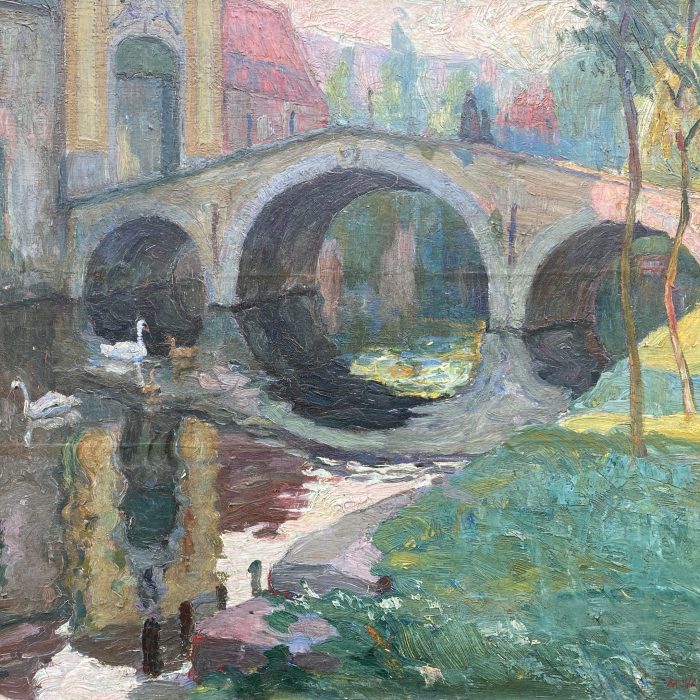
Gabriel Chauvelon was a French painter born in Nantes in 1875, known for his landscapes and depictions of traditional life in Brittany. His work captures the distinctive character of the region, from picturesque coastal villages and harbour scenes to rural landscapes and figures in traditional Breton dress.
Chauvelon drew inspiration from the landscapes of western France, particularly Brittany, where places such as Bréhat, Camaret-sur-Mer, Quimperlé and Tréboul provided subjects for his paintings. His compositions reflect a sensitivity to the region’s distinctive atmosphere, coastal light and everyday life. Some of his works demonstrate the influence of Pointillism, with carefully placed touches of colour contributing to the luminosity of the landscape.
Chauvelon exhibited at the Salon des Artistes Français, presenting Vue du Port-Clos à Bréhat in 1923, and at the Salon des Artistes Indépendants in 1924. His artistic activity is also documented in a 1934 catalogue devoted to Breton art, which lists works including Église Sainte-Croix à Quimperlé and Quimperlé, arrivée.
His work is represented in French public collections. The Musée des Beaux-Arts de Bordeaux holds L’église Saint-Michel à Quimperlé, an oil painting on canvas measuring 98 × 147 cm, recorded in the museum’s online catalogue. The work entered the public collection through a deposit of the Fonds national d’art contemporain in 1939, providing an important institutional reference for the artist’s legacy.
Through his paintings, Chauvelon offers an evocative record of Brittany’s coastal scenery, historic towns and traditional communities, preserving the distinctive atmosphere of western France in the late nineteenth and early twentieth centuries.
Zeedijk – Het Zoute 731, 8300 Knokke
Belgium
+32 478 22 65 64
info@valentinasafarian.com
© Copyright 2023 Valentina Safarian | Website by BEAUX SITES