1861 – Antwerp – 1921
Belgian Painter
+32 478 22 65 64 | info@valentinasafarian.com

1861 – Antwerp – 1921
Belgian Painter
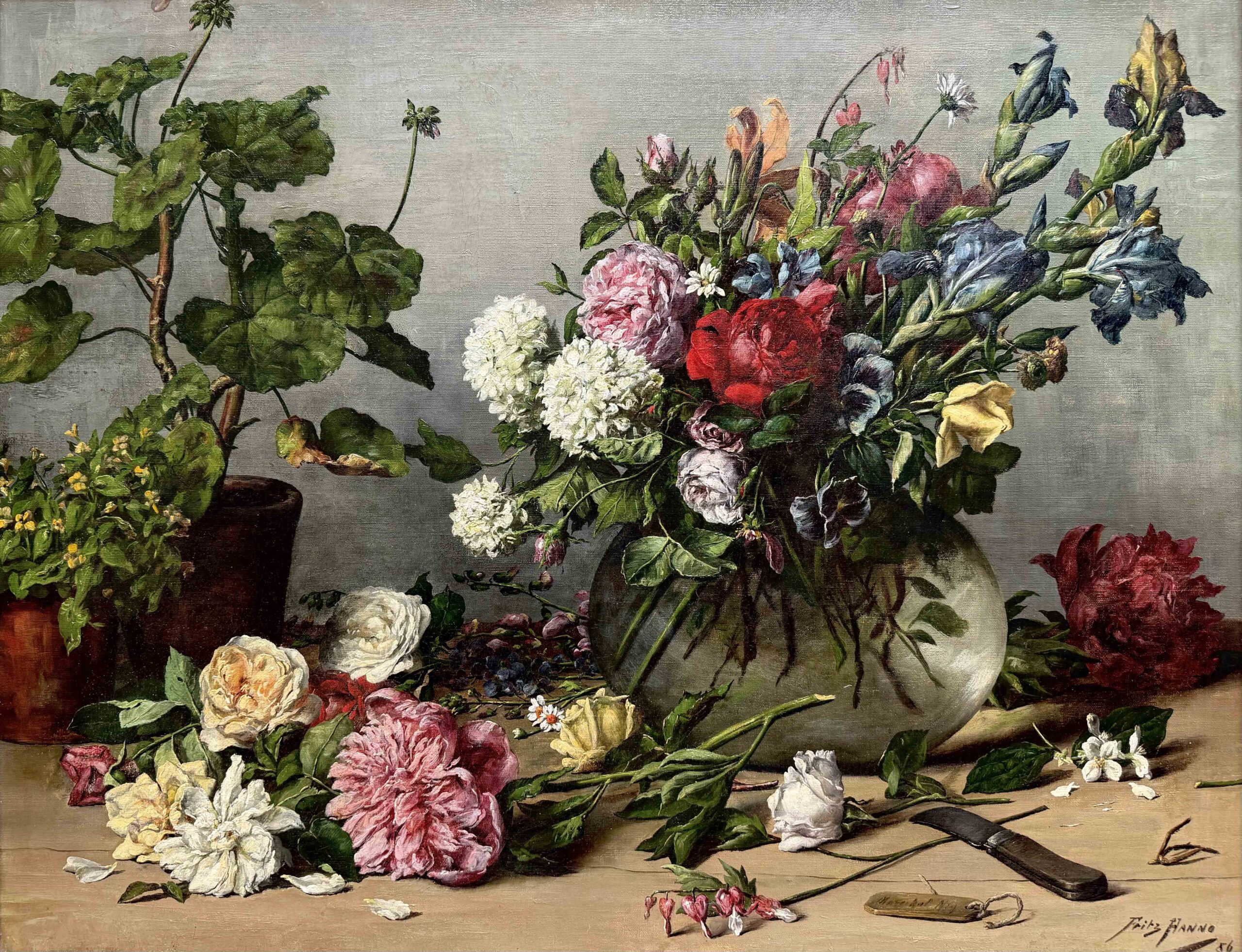
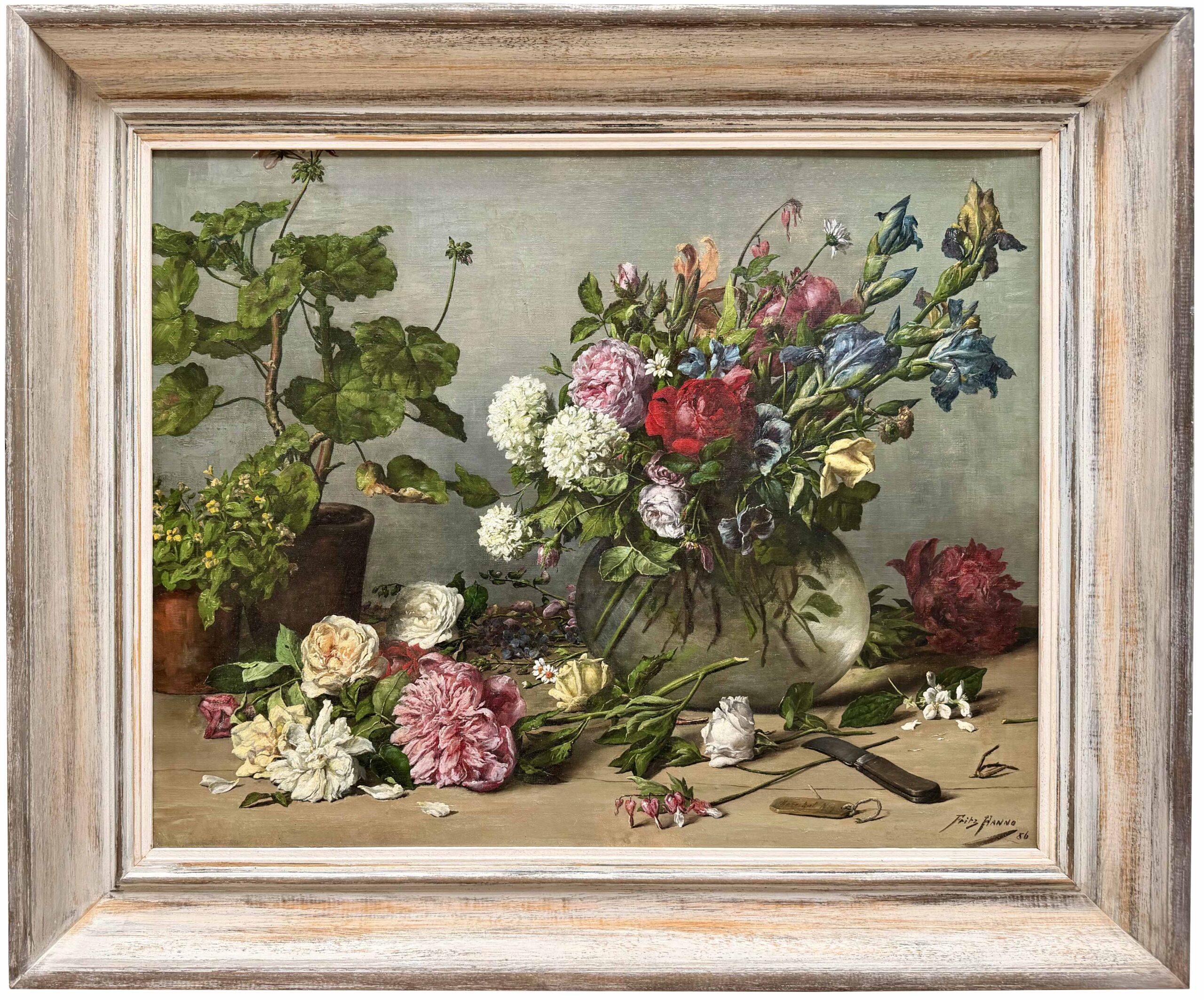
Fritz Hanno (Fredericus Maria Hanno), often referenced in the art market as Hanno Fritz, was a Belgian painter, watercolorist, etcher, illustrator, and journalist born in Antwerp on 12 May 1861. Although he later gained recognition as an architect, his artistic career flourished during the final decades of the nineteenth century, particularly between 1884 and 1898, when he regularly exhibited paintings and graphic works in Belgium and abroad.
Hanno studied at the Royal Academy of Fine Arts in Antwerp, where he received several academic distinctions. He subsequently continued his artistic training under Charles Verlat and later in the studio of Jean-François Portaels in Brussels. During the late 1880s he spent several winters in Nice, producing portraits and genre scenes that further developed his reputation as a skilled colourist.
In 1883 Hanno became one of the founding members and secretary of the influential Antwerp artists’ association Als Ik Kan. Through its exhibitions he established himself as a versatile painter whose oeuvre included portraits, genre scenes, domestic interiors, floral still lifes, fruit pieces, game still lifes, and landscapes. Contemporary critics admired the richness of his palette and his sensitive observation of everyday life.
Alongside his work as a painter, Hanno was an accomplished etcher and illustrator. His graphic work often depicted intimate domestic scenes, still lifes, and portraits, demonstrating a refined mastery of line and atmosphere. Several of these etchings entered important public collections and contributed significantly to his artistic reputation. Today, works by Fritz Hanno are preserved in the print collection of the Rijksmuseum in Amsterdam, including Vrouw met een koffiemolen in de keuken (1890), Jonge vrouw staat in de deuropening te breien (1890), Vaas met bloemen en een waaier (1886), and several other etchings dating from the late nineteenth century.
In addition to his artistic activities, Hanno worked as a journalist for several Antwerp newspapers before pursuing a successful architectural career. He remained an active figure in Antwerp’s cultural life until his death on 11 December 1921. His oeuvre reflects the richness of late nineteenth-century Belgian art, combining academic training, technical accomplishment, and a refined appreciation of everyday subjects. Today, his paintings, drawings, and prints are represented in museum collections and continue to attract collectors interested in the artistic life of fin-de-siècle Belgium.
Zeedijk – Het Zoute 731, 8300 Knokke
Belgium
+32 478 22 65 64
info@valentinasafarian.com
© Copyright 2023 Valentina Safarian | Website by BEAUX SITES