1876 – Amsterdam – 1967
Dutch Painter
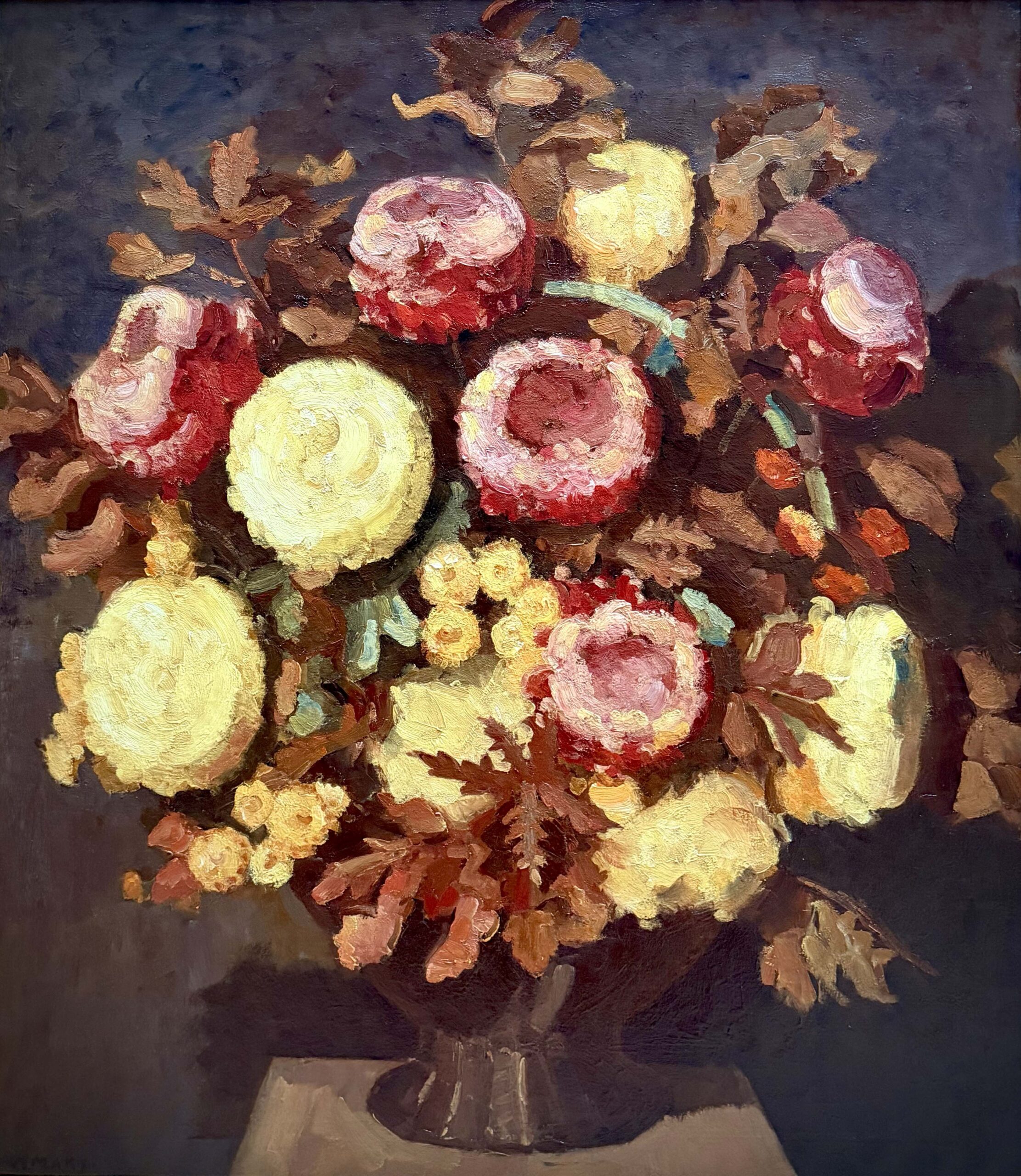
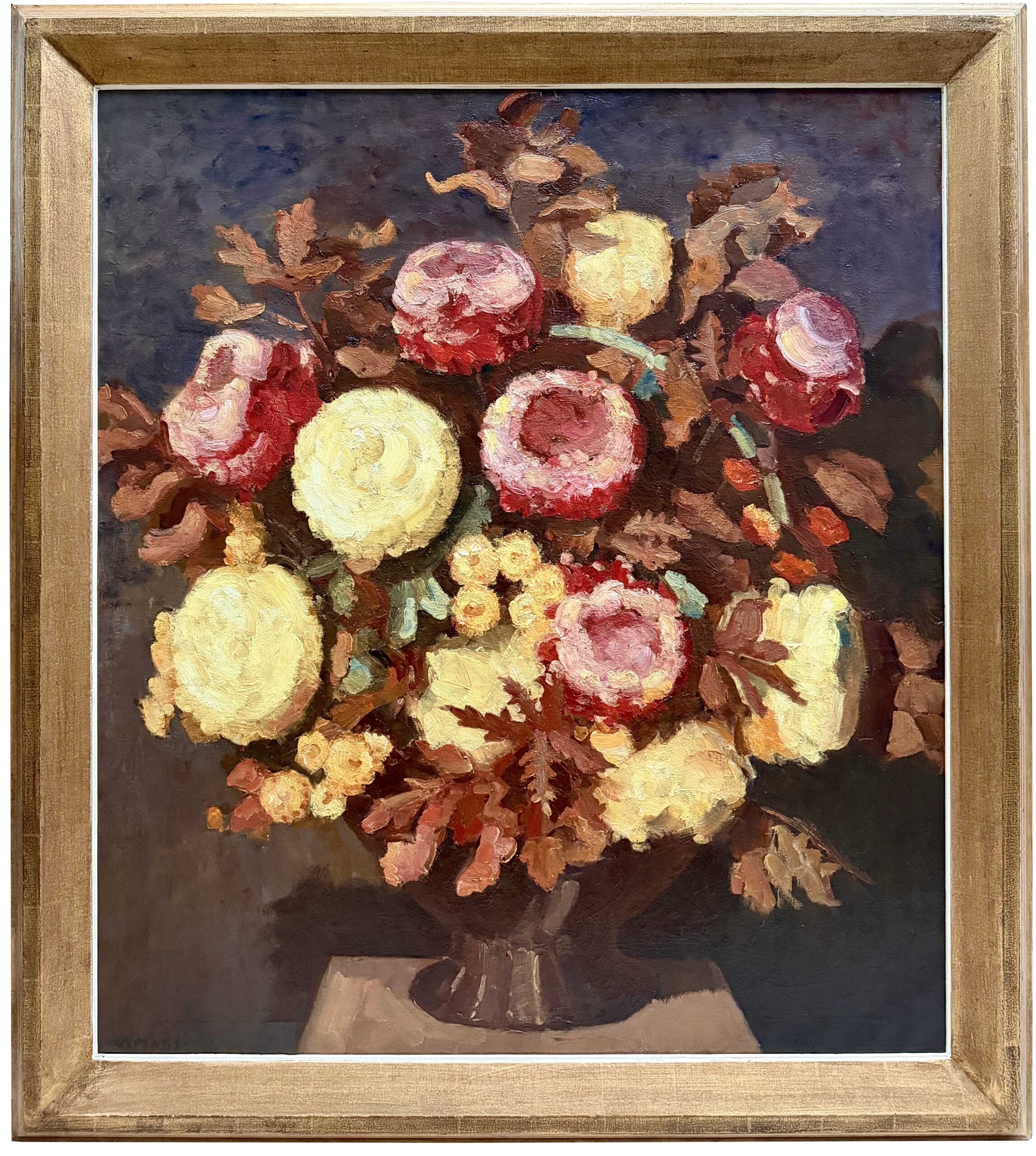
Chrysanthemum in a Vase
Cornelis Johannes Maks, better known as Kees Maks, was one of the most distinctive Dutch painters of the first half of the twentieth century. Born in Amsterdam on 22 August 1876, he developed into an artist of remarkable originality, celebrated for his colourful depictions of fashionable nightlife, elegant society, circuses, flowers and festive gatherings.
Maks received his artistic training at the Rijksacademie in Amsterdam, where he studied under the influential painter George Hendrik Breitner. From an early age, he demonstrated an exceptional sense of colour and composition, qualities that would remain central throughout his career.
International recognition came quickly. Between 1910 and 1914, Maks participated in the prestigious exhibitions of the Munich Secession, where his work attracted considerable attention. At the same time, he became a regular exhibitor at the Salon d’Automne in Paris, participating almost continuously between 1910 and 1940. Paris proved decisive for his artistic development. There, surrounded by the vibrant atmosphere of cafés, theatres and dance halls, Maks found the inspiration for many of his most celebrated works.
During the interwar years, when avant-garde movements were transforming the European art world, Maks aligned himself with the tendency known as Retour à l’ordre—a return to classical balance and figuration after the radical experiments of the early twentieth century. Like many of his contemporaries, he embraced a more structured and monumental style, while preserving the vitality and decorative richness that made his paintings so distinctive.
Together with his close friend Kees van Dongen, Maks enjoyed great popularity in Paris. His paintings introduced subjects that were still relatively unusual in Dutch art: circus performers, dancing couples, elegant women, garden parties, lavish bouquets and scenes of sophisticated nightlife. Painted with broad, simplified forms and strong, luminous colours, these works conveyed a sense of joy, elegance and theatricality.
Kees Maks, together with Kees van Dongen and Jan Sluijters, belonged to a generation of Dutch artists who gave modern Dutch painting an entirely new character. Their work moved away from traditional historical or rural themes and embraced the energy of modern urban life. Maks in particular distinguished himself through his playful and refined vision, balancing realism with an almost decorative sense of colour and atmosphere.
His reputation extended far beyond the Netherlands. Maks participated in the annual Salons in Paris from 1910 until 1945 and his work was included in the art competitions of both the 1928 and the 1948 Summer Olympics. In 1939, he was represented in the important exhibition Onze Kunst van Heden at the Rijksmuseum in Amsterdam, a major survey of contemporary Dutch art.
Throughout his long life, Kees Maks remained faithful to his own artistic language. While artistic fashions changed around him, he continued to paint with the same delight in colour, spectacle and beauty. He died in Amsterdam on 28 October 1967, at the age of ninety-one.
Today, Kees Maks is remembered as one of the great Dutch painters of his generation: an artist whose vibrant and elegant works captured the spirit of modern life and whose paintings remain admired for their charm, refinement and unmistakable individuality.