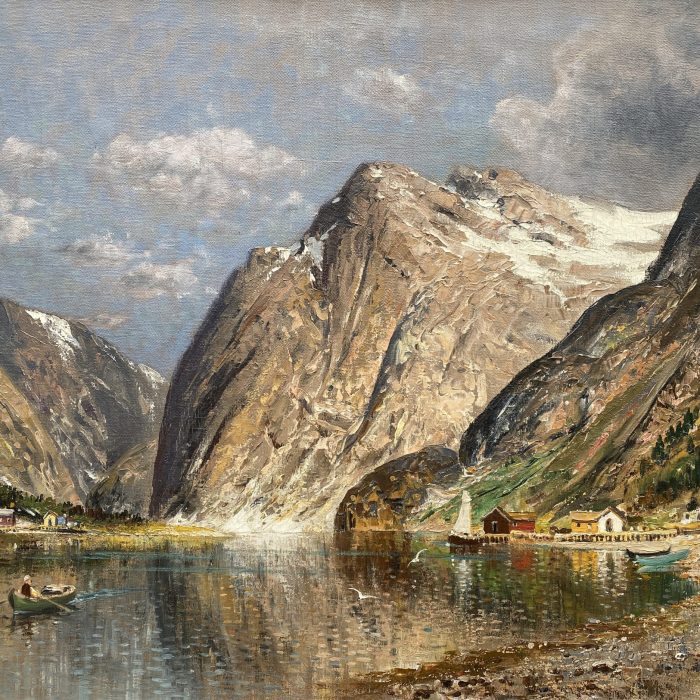
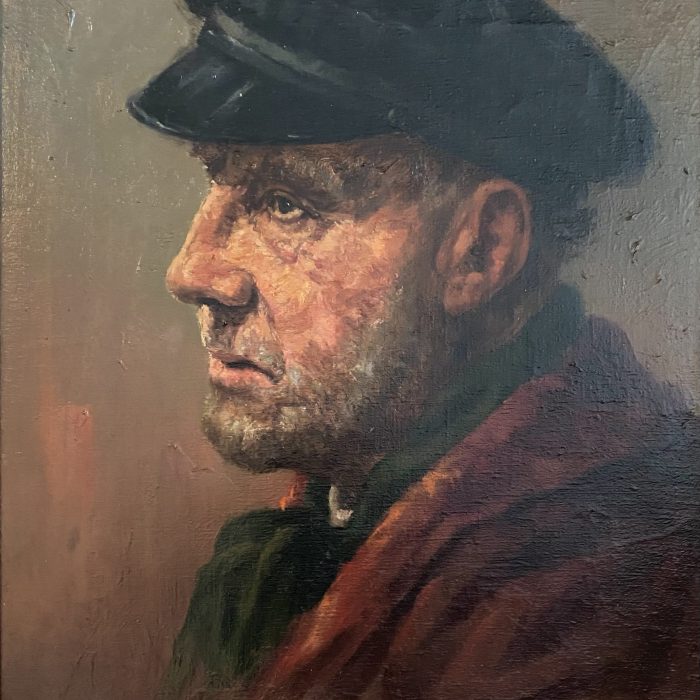
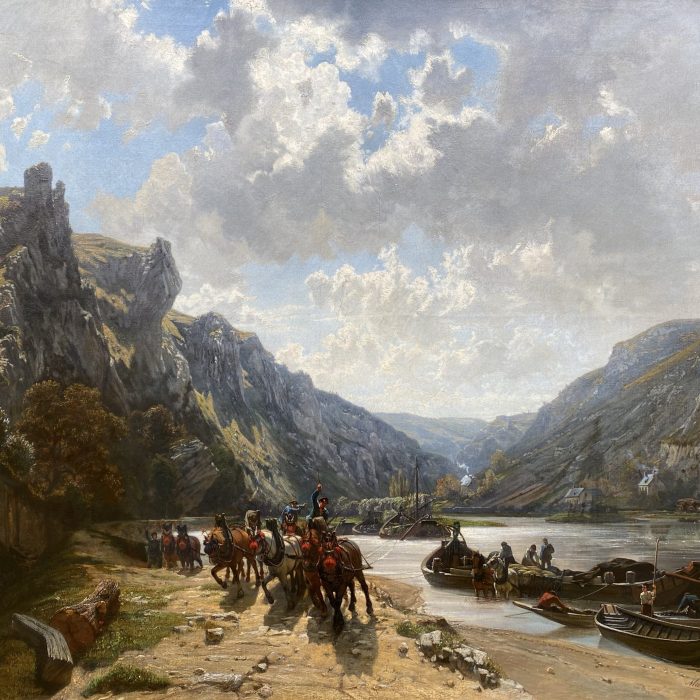
Ixelles 1873 – 1955 Uccle
Belgian Painter
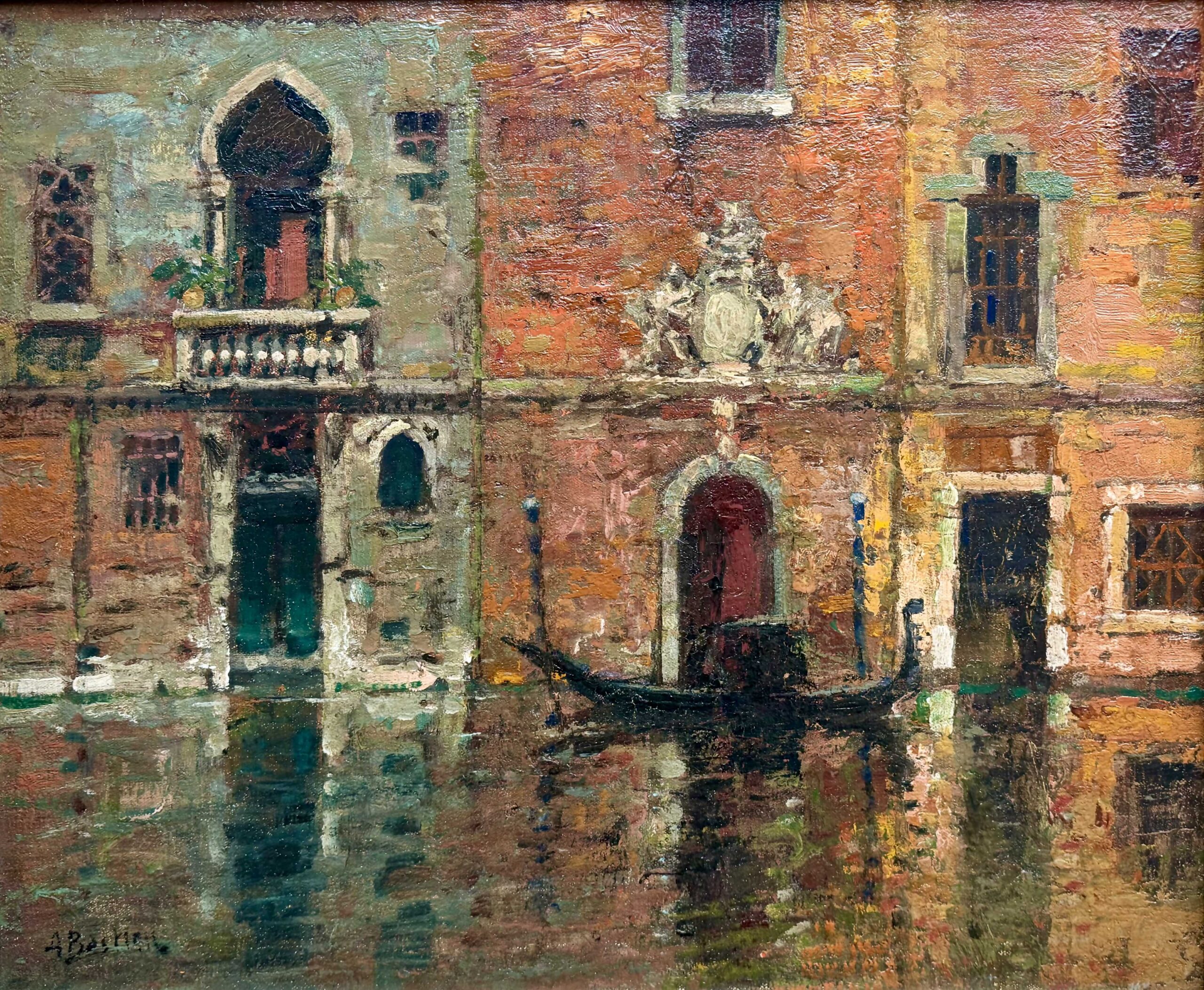
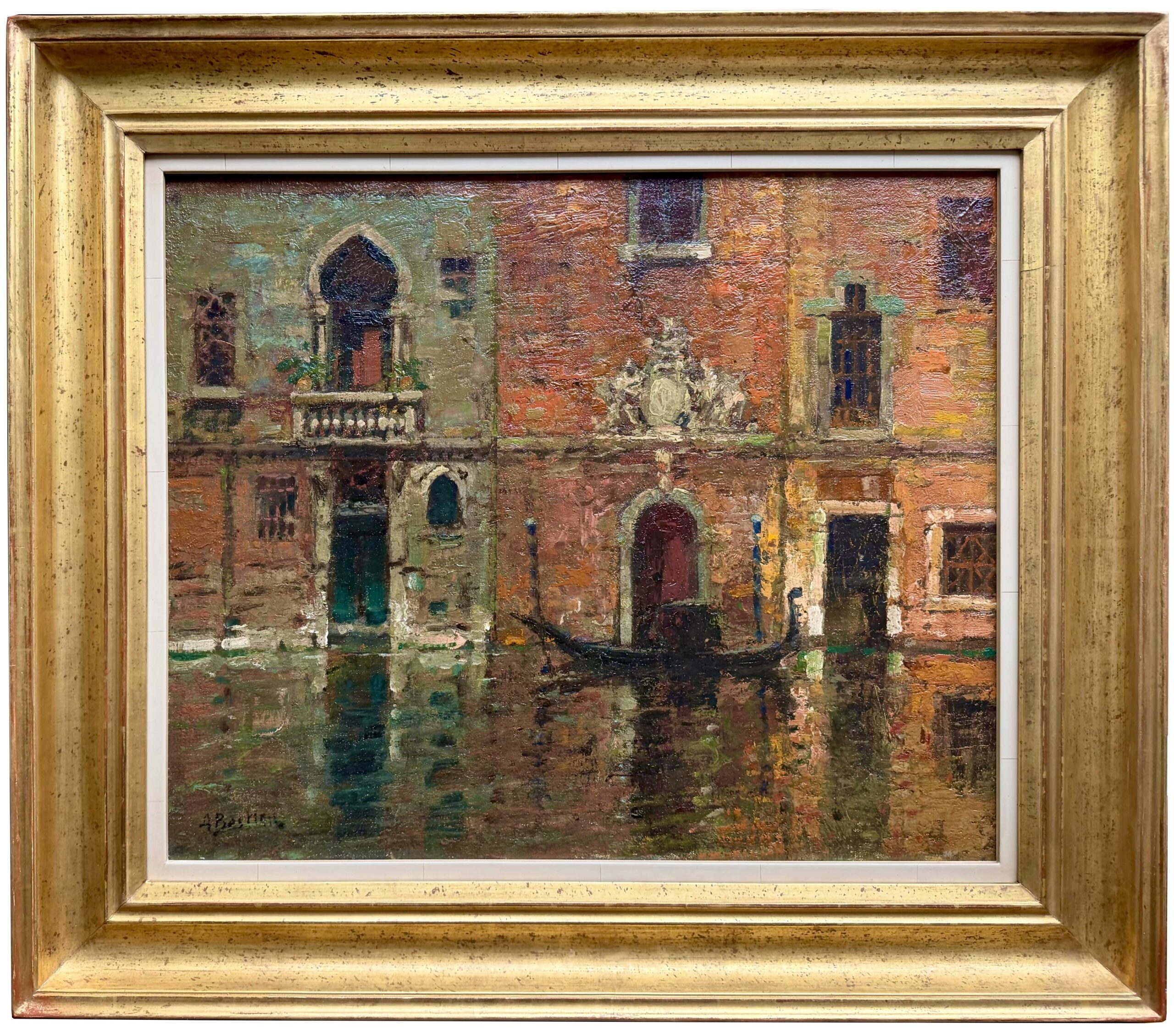
Venice – Vue sur le Canal
Alfred Théodore Joseph Bastien was one of Belgium’s most important painters of the early twentieth century. Born in Ixelles on 16 September 1873 and deceased in Uccle on 7 June 1955, he gained renown both as an accomplished academic artist and as one of the foremost visual chroniclers of the First World War.
Bastien studied at the Académie Royale des Beaux-Arts in Ghent under Jean Delvin and later at the Académie Royale des Beaux-Arts in Brussels with Jean‑François Portaels. In 1897 he was awarded the prestigious Prix Godecharle, after which he continued his training in Paris at the École des Beaux-Arts.
When the First World War broke out, Bastien volunteered for the Belgian Army despite being over forty years old. Attached to the Section Artistique at Nieuwpoort, he produced numerous drawings and sketches of the Belgian front along the Yser. His powerful wartime compositions were frequently published in the British press, notably in The Illustrated War News. In 1917 he was invited by Lord Beaverbrook to work with the Canadian Army, and in 1918 he served as official war artist to the Canadian 22nd Battalion. Several of these works are now preserved in the Canadian War Museum in Ottawa.
After the war, Bastien devoted himself to the monumental Panorama de l’Yser, an immense circular painting measuring 115 metres long and 14 metres high. Inspired by his wartime experiences, the panorama recreated the Belgian front in extraordinary detail and attracted more than 800,000 visitors during its first exhibitions in Brussels. In 1926 it was installed in a specially built museum in Ostend, where it became one of Belgium’s most celebrated war memorials.
Bastien also created the Panorama de la Bataille de la Meuse in 1937, depicting the fighting around Namur and Dinant in August 1914. Throughout his career, he combined technical mastery with a profound sense of history, leaving behind a body of work that remains an essential testimony to Belgium’s wartime experience.