Bruges 1886 – 1979 Ghent
Belgian Painter
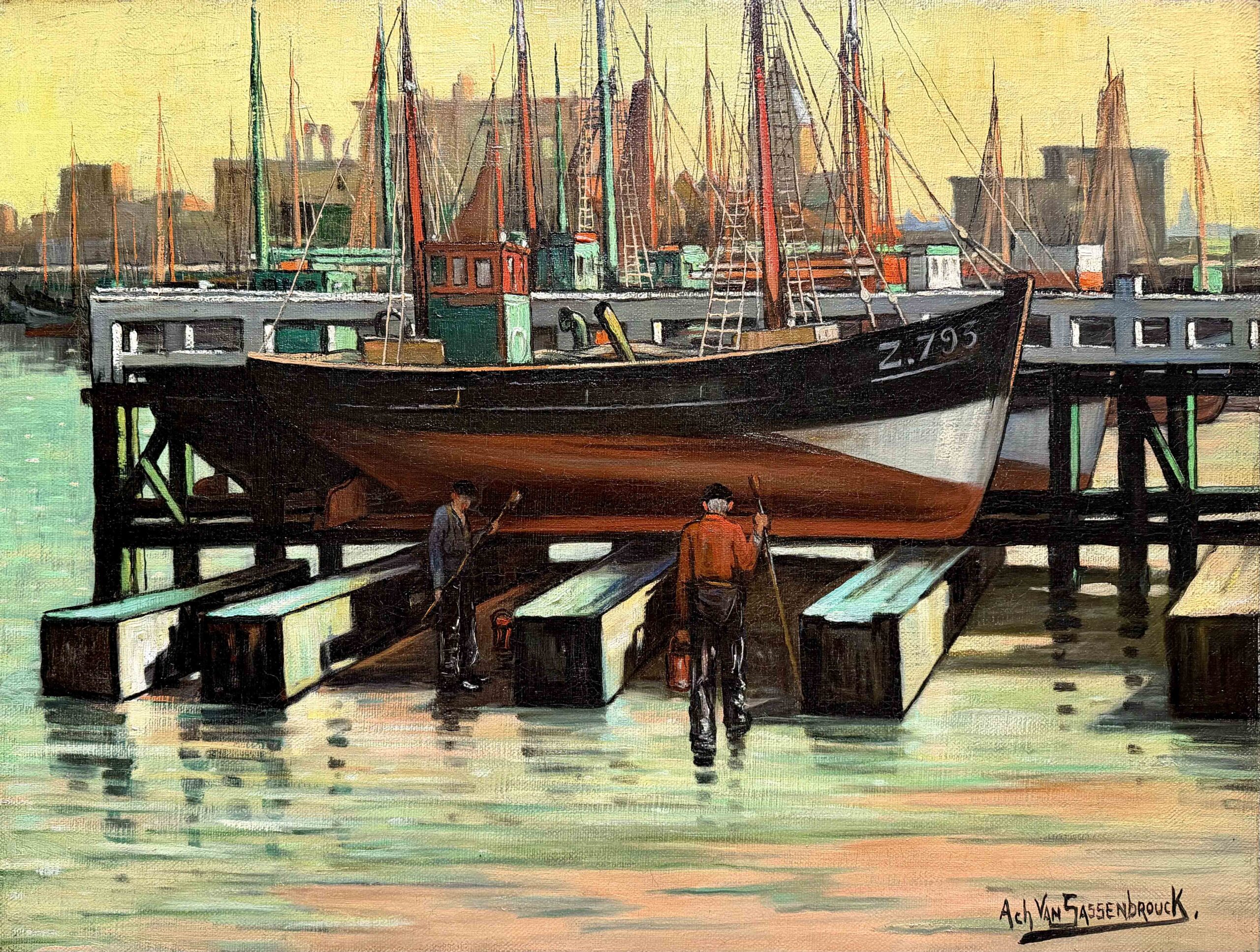
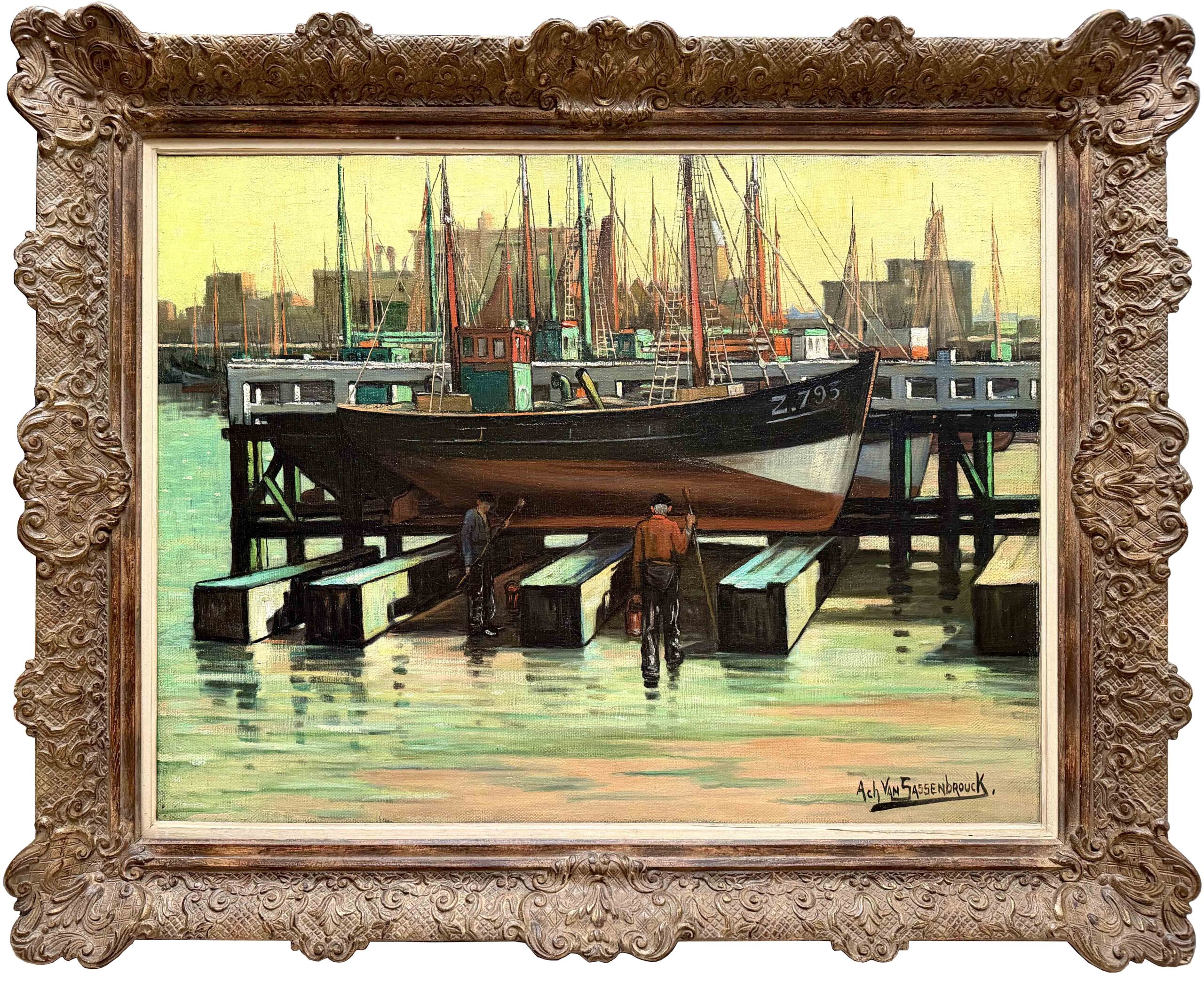
Harbour Hands in Ostend
Achille (Achiel) Van Sassenbrouck, nicknamed Den Sassen, was born on 25 September 1886 in Bruges and died on 3 October 1979 in Ghent. He was a Belgian painter associated with the Bruges School and became known for his powerful, socially engaged expressionism.
Born in the Zwarte Leertouwersstraat, he was the son of a cabinetmaker who intended him to follow in the family trade. The young Achiel, however, was determined to become a painter. After tensions at home, he ran away at the age of twelve and joined a travelling fair, working as a handyman. During these wandering years he travelled to Rotterdam, Dordrecht, Amsterdam and Düsseldorf. After several years he returned to Bruges, where he lived in modest lodgings and earned his living as a sign painter.
In his spare time, he attended classes at the Bruges Academy of Fine Arts. He studied line drawing and graphic arts with Joseph Neutens and Victor De Loose, and painting with Charles Poupaert and Pieter Raoux. He also received guidance from Edmond Van Hove and Gustaaf Pickery. Among his fellow students were Albert Goethals, Constant Permeke, Maurice Van Middel, Benoît Van Eeghem, Leo Mechelaere, Octaaf Rotsaert and Karel Laloo. In 1909, at the age of twenty-three, he completed his studies, having won every prize the academy had to offer.
Thanks to a benefactor, he continued his training at the Royal Academy of Fine Arts Antwerp, where he studied under Juliaan De Vriendt, Franz Courtens and Frans Van Leemputten, the latter becoming an important mentor.
In 1914, Van Sassenbrouck volunteered for the Belgian Army. During his service in the trenches along the Yser, he worked as a front-line artist. Around thirty paintings and drawings from this period were later donated to the war museum established at the Kruispoort in Bruges. Severely wounded, he ended the war teaching in a unit for injured soldiers in Port-Villez, where he met Claude Monet, who showed keen interest in his work. During an exhibition in De Panne, Queen Elisabeth of Belgium purchased three of his works.
After demobilisation, he returned to Bruges, where he organised successful exhibitions. The brewer and senator Victor De Meulemeester supported him and introduced him to collectors, while Minister Jules Destrée acquired no fewer than twenty-three of his works.
When offered a studio in Brussels, he moved to the capital and became acquainted with writers and intellectuals such as Ernest Claes, Herman Teirlinck and Karel van de Woestijne, notably through the Vlaamse Club. In late 1925, August Vermeylen delivered a lecture at the opening of an exhibition of Van Sassenbrouck’s pictorial work.
After his marriage, he and his wife purchased a fifteen-metre houseboat and travelled the waterways, stopping in Bruges, Ostend, Ghent and Sint-Martens-Latem, where he reconnected with his friend Albert Servaes. His itinerant life came to an end in 1933 when he moored the boat in Hamme. There he settled in a secluded, walled residence on the Kaaldries overlooking the Durme, where he lived for the rest of his life, alternating with stays on his boat.
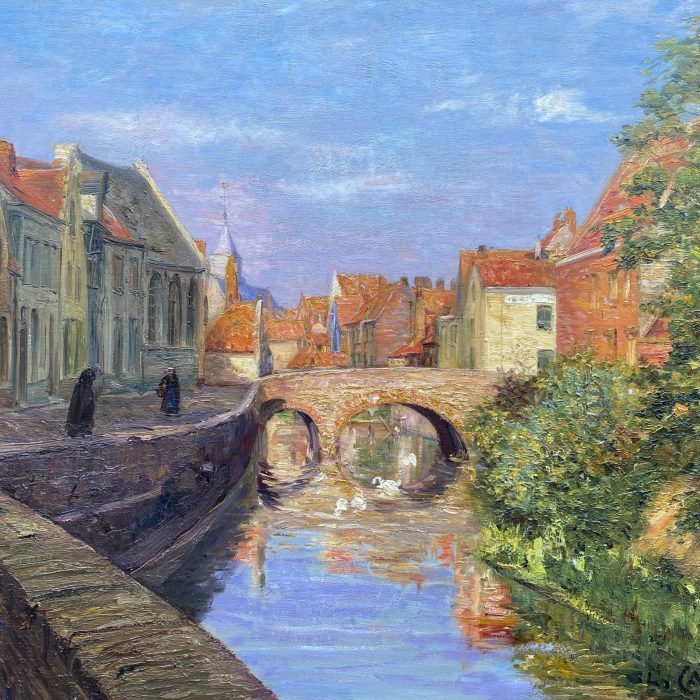
Van Sassenbrouck was an accomplished portraitist. Among those he portrayed were Achiel Van Acker, Victor Van Hoestenberghe, Emile Vandervelde, Constant Eeckels and August Vermeylen. Yet he is especially remembered as a painter of social reality: workers, peasants, vagrants, soldiers and marginal figures populate his landscapes and compositions. He also painted numerous Bruges cityscapes and landscapes in a robust, personal expressionist style, characterised by strong drawing and a rich, expansive palette.
His work is represented in numerous museum collections, reflecting its lasting artistic significance and appeal.
Selected exhibitions include the Exposition internationale in Liège (1937), a retrospective at Albert Hall in Bruges (1974), and a presentation at Jonge Kamer in Dendermonde (1977), underscoring the continued recognition of his oeuvre.
Van Sassenbrouck remains an important representative of Flemish expressionism, distinguished by his human empathy, psychological depth and powerful pictorial language.