Leuven 1910 – place and date of death unknown
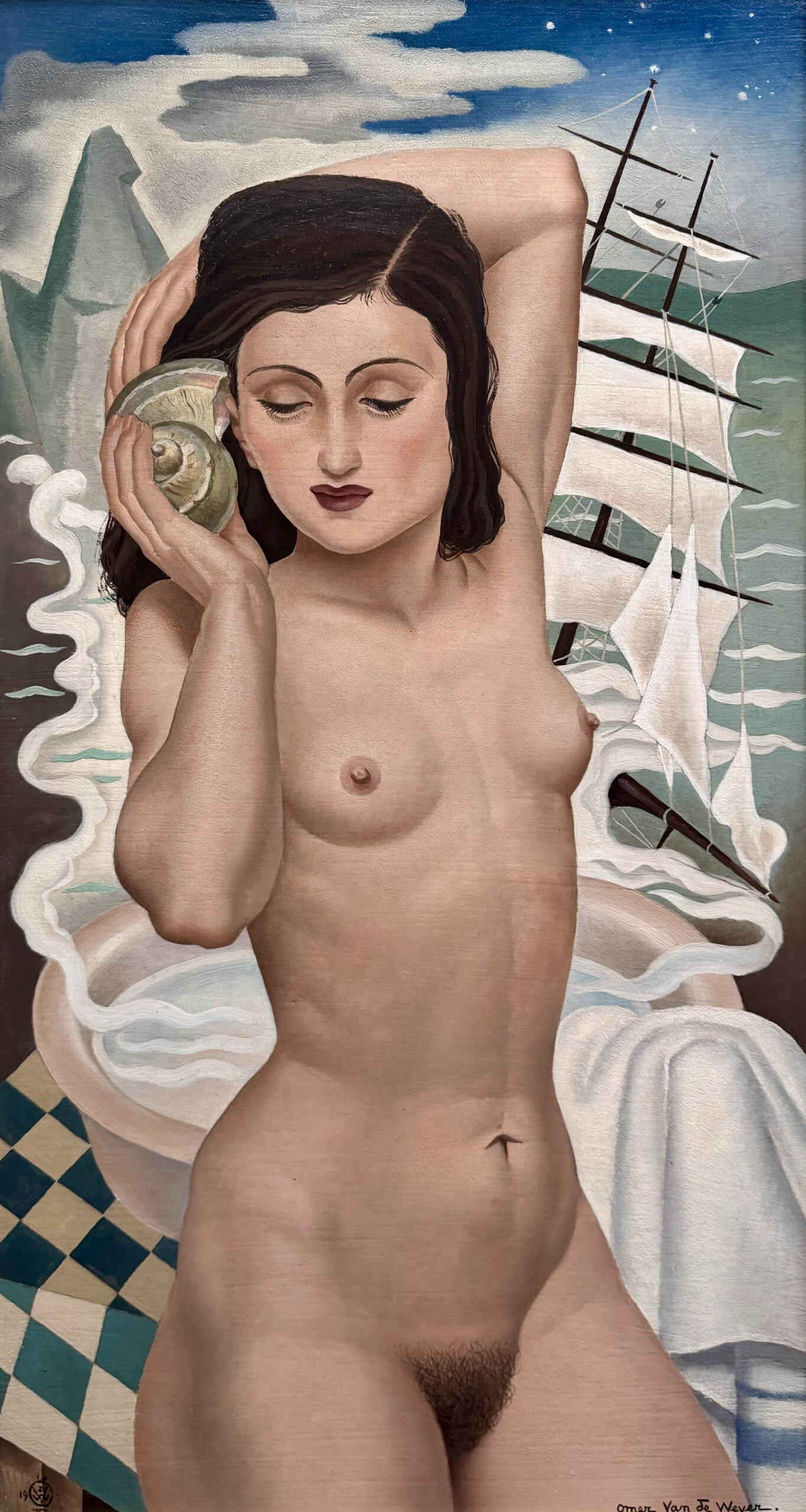
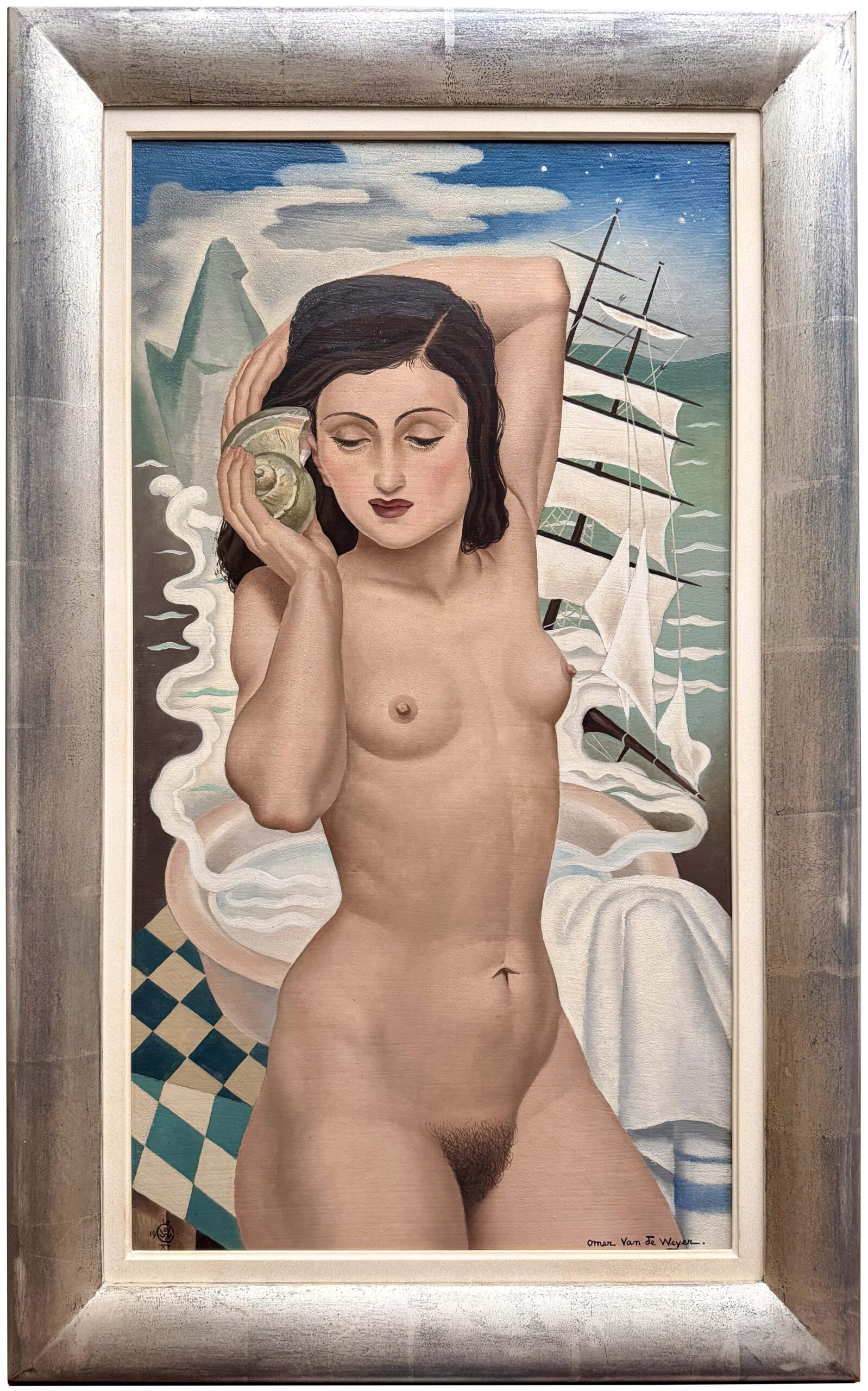
The Shell’s Voice – Franciska Léona Rochtus, 1920
Omer van de Weyer was a Belgian painter, draughtsman, and designer, born in Leuven in 1910. He studied at the Académie des Beaux-Arts in Brussels between 1925 and 1932, where he received a rigorous academic training that laid the foundation for his later career as a realist artist.
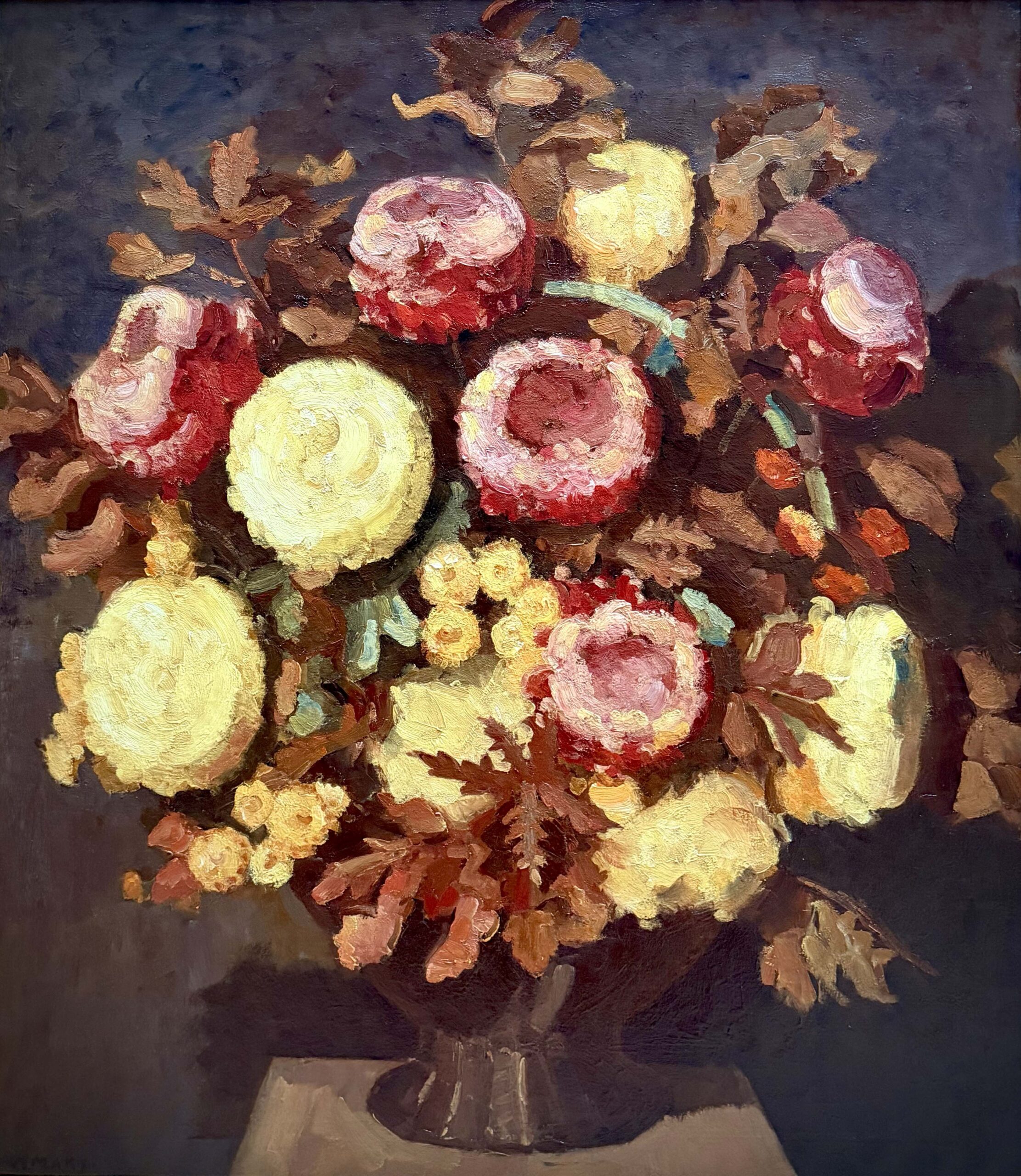
After completing his studies, Van de Weyer developed a distinctive artistic language rooted in realism. He became known for a wide range of subjects, including landscapes, flower pieces, portraits, nudes, and still lifes. His paintings are generally characterized by careful draftsmanship, a strong sense of composition, and rich, controlled colour.
One of the most remarkable aspects of Van de Weyer’s work was his fascination with Japanese art. Strongly influenced by Japanese woodblock prints, he incorporated an oriental atmosphere into many of his paintings. He created a notable series of works depicting samurai and other Japanese-inspired themes, often rendered in expressive forms and vivid colours. These paintings stand apart from his more conventional realist works and reveal his interest in exotic subjects and decorative design.
Besides painting and drawing, Van de Weyer was also active as a designer. He created mosaics and posters, demonstrating his versatility and his interest in applying art beyond the traditional canvas. His decorative sensibility can often be seen in the stylised quality of his compositions.
Van de Weyer later returned to the Académie des Beaux-Arts in Brussels as a teacher. From 1955 until 1977 he taught there, influencing a younger generation of Belgian artists while continuing his own artistic practice. His long teaching career helped establish him as a respected figure within Belgian artistic circles.
Omer van de Weyer remains appreciated for his technically accomplished and highly individual work, which reflects both his academic realist training and his penchant for dramatic and imaginative subjects.