Deinze 1886 – 1964 Petegem-aan-de-Leie
Belgian (Flemish) Painter
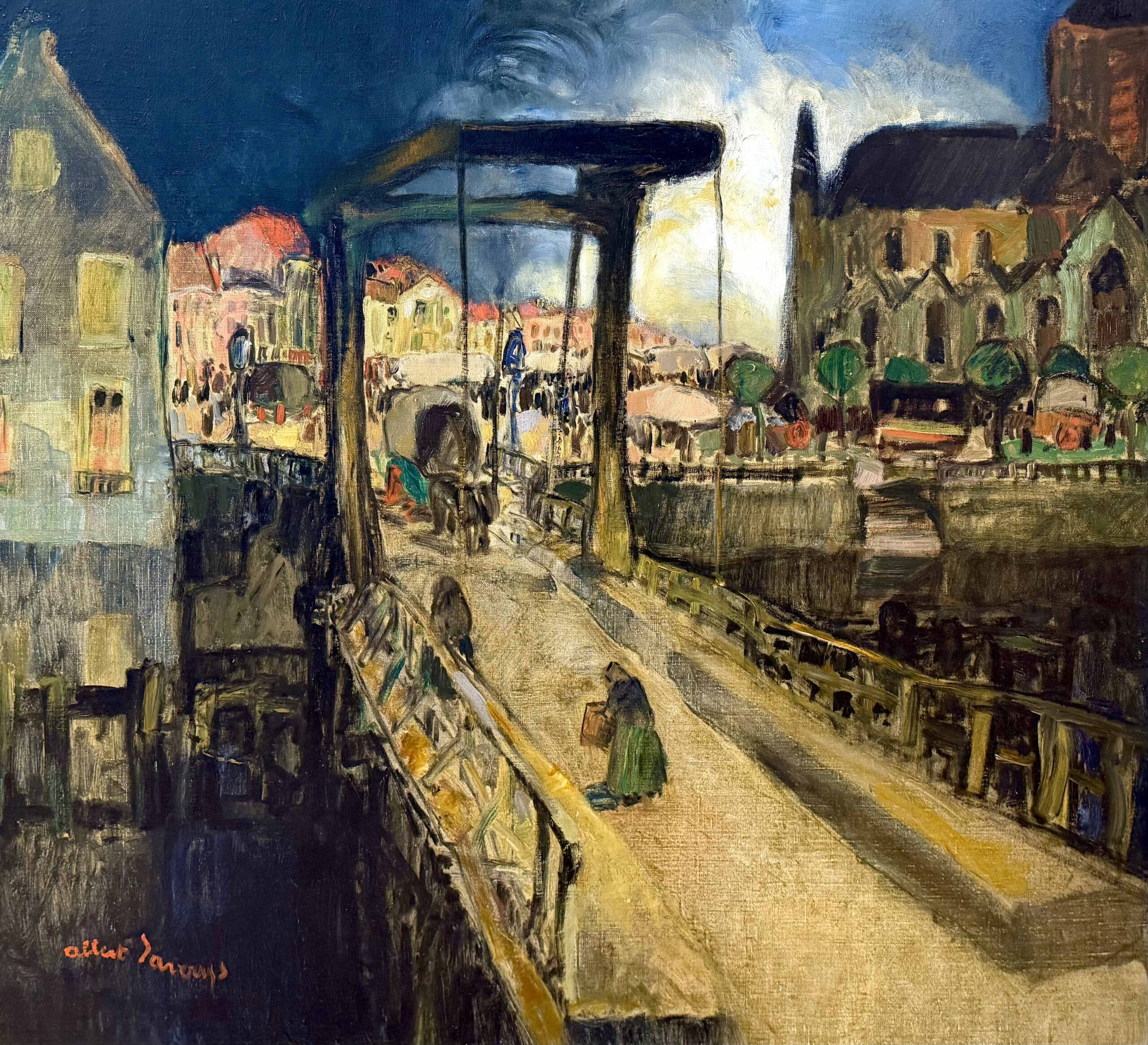
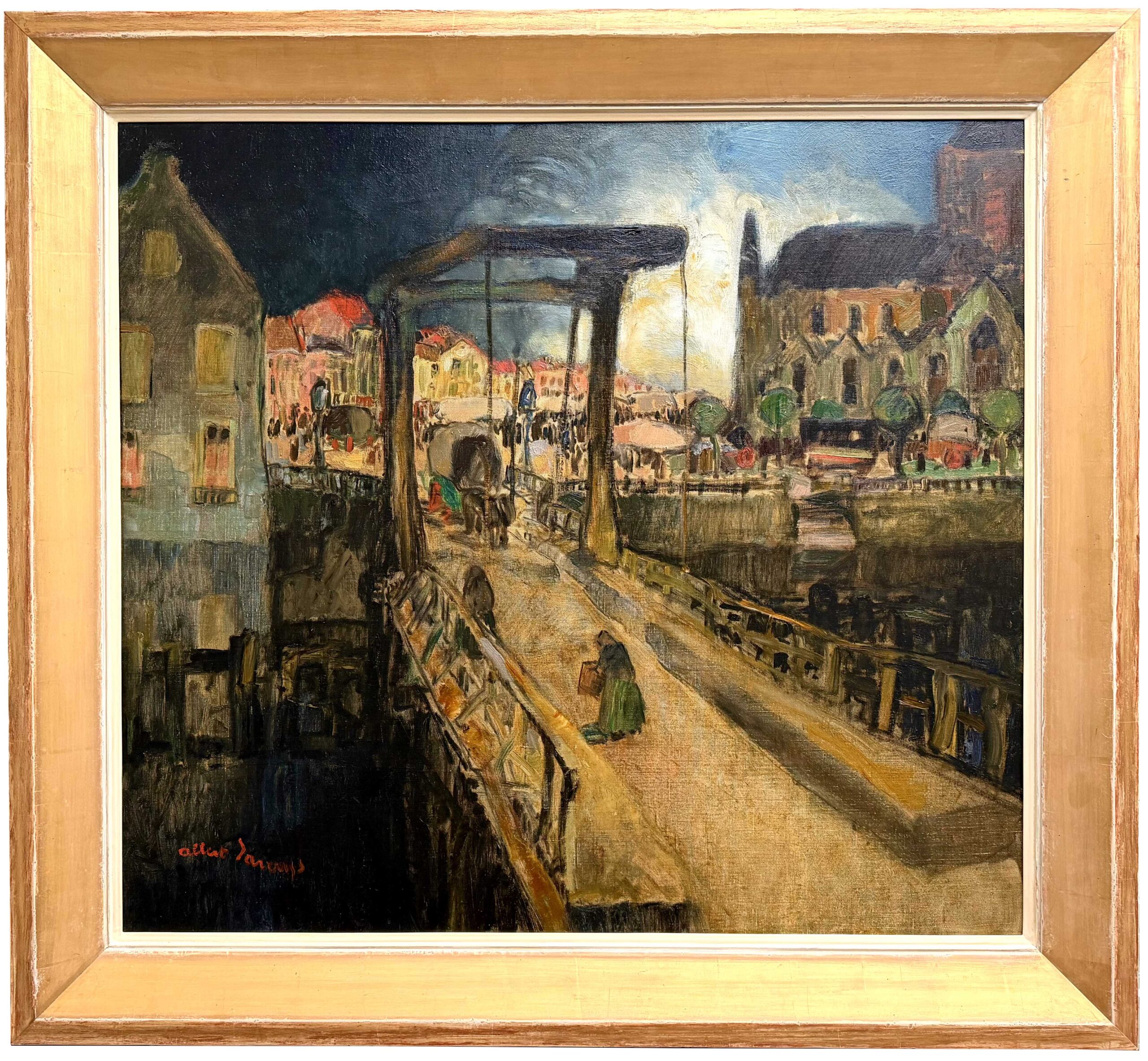
Market Scene in Deinze – The Toll Gate, 1920
Albert Saverys (Deinze, 12 mei 1886 – Petegem-aan-de-Leie, 29 april 1964) was a Belgian (Flemish) painter known for his vibrant landscapes, expressive colours, and a career that bridged luminism, impressionism, and expressionism. He became one of the most prominent Belgian artists of the interbellum period (between the First and Second World Wars).
Born in Deinze in East Flanders, Saverys was the son of a house-and-stage painter. After the early death of his father in 1902, he helped in the family business, which limited his initial artistic training. In 1912 he enrolled at the Royal Academy of Fine Arts in Ghent, where he studied under Jean Delvin and Georges Minne, among others.
Saverys began painting in the luminist and impressionist tradition, sometimes using a pointillist technique reminiscent of Emile Claus. Early work often reflects light effects and delicate colour harmonies. After the First World War, influenced by fellow artists and evolving art movements, his style broadened—he explored expressionism but soon forged a personal, free and energetic style with bold colour and brushwork that set him apart from his contemporaries.
Although often associated with the Latem school (particularly the later or Third Latem Group), Saverys maintained a distinctive voice that was both lyrical and expressive rather than doctrinaire.
Themes and subjects
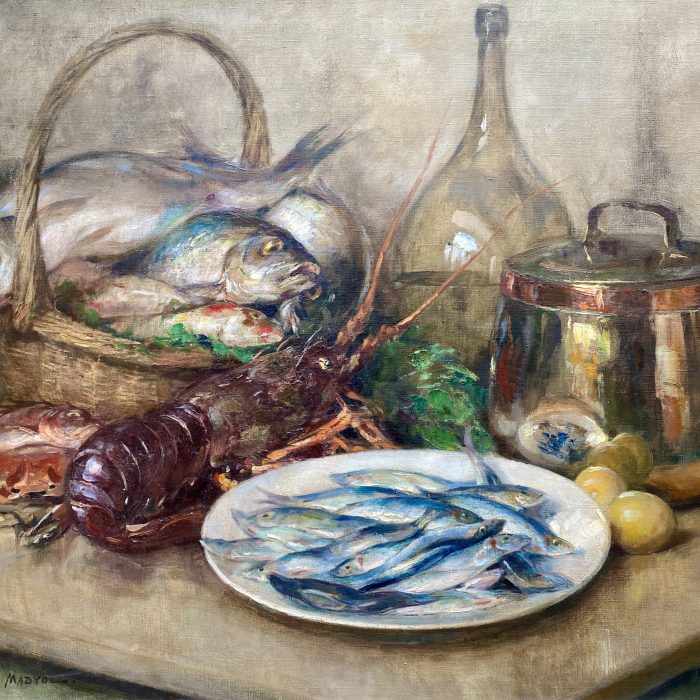
The Leie (Lys) river landscape was a constant in his work and became his primary subject from about 1920 onward. He painted the river and its surroundings in all seasons, creating numerous variations that explored changing light and colour. Saverys also produced stillevens (still lifes), marines, figures such as skaters on the ice, and other genre scenes.
By the 1920s and 1930s, Saverys had achieved national and international acclaim. He exhibited widely, including at the Venice Biennale six times between the wars, and had a major solo show at the Palais des Beaux-Arts in Brussels in 1937. His work was shown in major cultural capitals and appears in many important public collections.
In addition to his studio practice, Saverys worked as a decorator and designer, collaborating with the Kortrijk firm Kunstwerkstede Gebroeders De Coene on interior and furniture designs that married fine and applied arts.
In 1937, he was appointed professor at the National Higher Institute for Fine Arts (NHISKA) in Antwerp, a position he held until his retirement in 1951. Saverys continued to paint actively through the Second World War and afterwards, continually refining his expressive approach.
He died in Petegem-aan-de-Leie on 29 April 1964 at the age of 77. Albert Saverys is remembered as one of Belgium’s leading painters of the early 20th century—an artist who combined traditional Flemish landscape traditions with modern expressive colour and brushwork. His work remains in public and private collections worldwide, and institutions like the Museum Dhondt-Dhaenens continue to reassess and exhibit his contribution to Flemish modern art.