1864 – Bruges – 1958
Belgian Painter
+32 478 22 65 64 | info@valentinasafarian.com



1864 – Bruges – 1958
Belgian Painter
Bruges, 1864–1958
Louis Joseph Reckelbus was a Belgian painter and an important representative of the Bruges School, best known for his atmospheric watercolours and gouaches of Bruges and its historic architecture. Born in Bruges on 26 March 1864, he was the son of a policeman who lived in the Sint-Clarastraat. From an early age, Reckelbus showed a natural talent for drawing and developed a lifelong attachment to his native city.
He studied at the Bruges Academy of Fine Arts, where he received instruction from the distinguished painter Edmond Van Hove. Although he received formal artistic training, Reckelbus remained largely self-taught in his subsequent development, gradually creating a highly personal and sensitive artistic language. He first exhibited his work in 1890, after which he began to establish a reputation as a painter with a particular mastery of the watercolour technique.
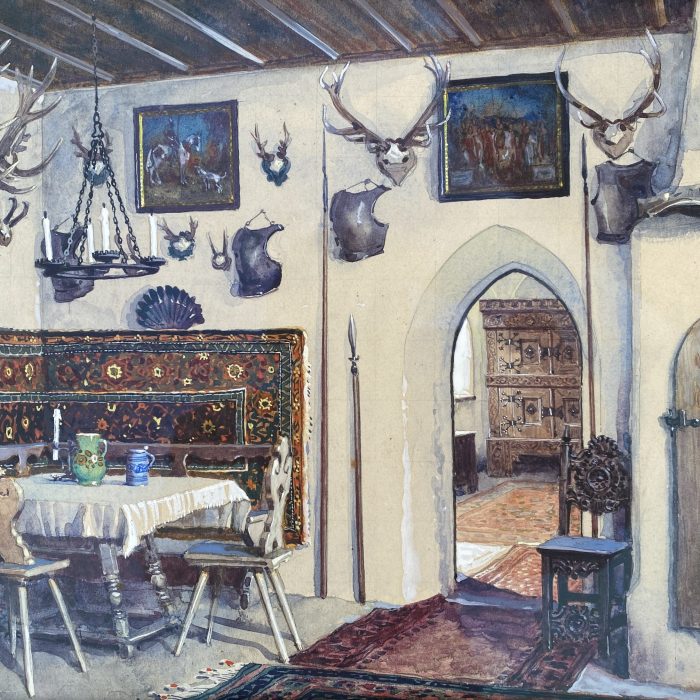
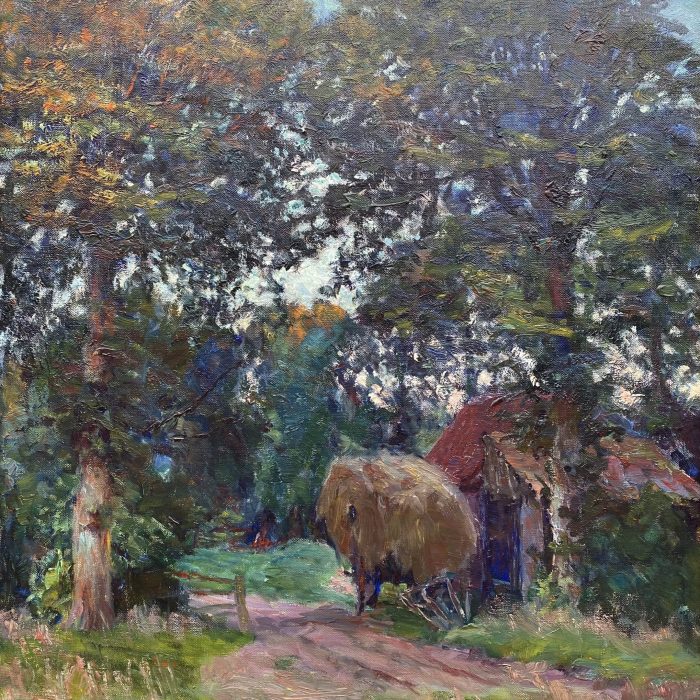
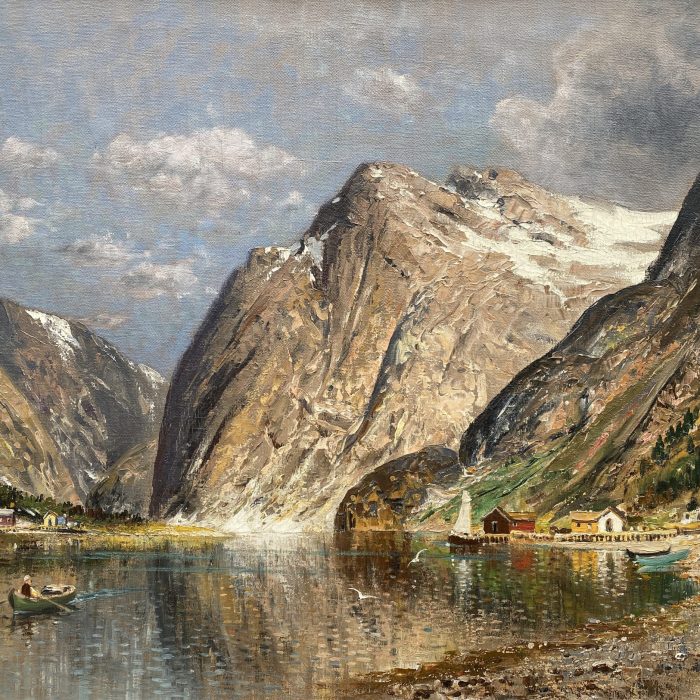
Reckelbus became especially renowned for his views of Bruges, portraying its canals, bridges, medieval façades, quiet streets and picturesque corners with a refined sense of atmosphere. Alongside his city views, he painted landscapes, marines, floral still lifes and intimate interiors. His artistic interests extended well beyond Bruges: he was particularly drawn to the Belgian coast and worked in the Netherlands and northern France, especially in Artois and Picardy. His oeuvre also included lithographs and illustrations.
Watercolour and gouache were central to Reckelbus’s practice. His sensitive handling of light, colour and atmosphere enabled him to capture the changing character of historic places with remarkable immediacy. His works were exhibited in Belgium and internationally, receiving several distinctions, and gradually entered collections in Bruges, throughout Belgium and abroad. A watercolour of the Gruuthuse Palace, for example, was donated by Reckelbus to the Oudheidkundige Vereniging van Brugge in 1927 and is now part of the collections of Musea Brugge.
During the First World War, Reckelbus lived in England, in the small Cornish town of St Ives. His years abroad brought him into contact with a different artistic environment and further broadened his experience as a painter.
Reckelbus was also deeply involved in the preservation of Bruges’s artistic heritage. In 1930, the Bruges City Council appointed him curator of the city’s Museum of Fine Arts, housed in the Groeningemuseum. The position was honorary and unpaid, yet he continued to fulfil it with great dedication until his death. Musea Brugge recognises him as the first curator of the Municipal Museum of Fine Arts and as an important figure in the early history of the city’s museum collections.
His connection with Bruges’s cultural heritage extended into his private life. Reckelbus lived at Westmeers 86, where he furnished his home in the manner of an old Flemish house, filling it with antique furniture, ceramics, tiles, books and other historical objects. His house attracted interest as an expression of his deep attachment to the past of Bruges, and there were plans to preserve it as a museum. Although these plans were ultimately abandoned, the house remains associated with the artist’s memory.
Louis Reckelbus died in Bruges on 18 September 1958. His artistic legacy remains closely connected with the city he portrayed throughout his career. Six works by Reckelbus are preserved in the Bruges city collection, while his works can also be found in other Belgian and international collections. Through his watercolours and gouaches, Reckelbus left an intimate and enduring visual record of Bruges, capturing not only its architecture but also the quiet atmosphere and character of the historic city.
Zeedijk – Het Zoute 731, 8300 Knokke
Belgium
+32 478 22 65 64
info@valentinasafarian.com
© Copyright 2023 Valentina Safarian | Website by BEAUX SITES