Delft 1878 – 1962 Braine-l’Alleud
Dutch – Belgian Painter
+32 478 22 65 64 | info@valentinasafarian.com

Delft 1878 – 1962 Braine-l’Alleud
Dutch – Belgian Painter
Willem Adriaan Paerels was a Dutch-born Belgian painter whose career unfolded largely in Brussels, where he became an important figure in the development of early twentieth-century Belgian modernism. His oeuvre evolved from impressionism towards the vivid colour and expressive brushwork of Brabant Fauvism, and later towards a more restrained and powerful form of expressionism.
Born in Delft on 15 July 1878, Paerels moved to Brussels at the age of sixteen with the ambition of becoming an artist. Although he briefly enrolled at the Brussels Academy, he largely developed as a self-taught painter. His early work was strongly influenced by French Impressionism and by artists such as Pierre Bonnard and Édouard Vuillard. His sensitivity to light, colour and atmosphere would remain fundamental throughout his career.
In 1898, Paerels was among the founders of the Brussels artists’ circle Le Labeur, alongside artists including Auguste Oleffe and Louis Thévenet. He subsequently exhibited with Vie et Lumière and La Libre Esthétique, two important circles in the Belgian avant-garde. From 1902 onwards he participated in the Salon des Indépendants in Paris, and from 1908 he was a member of the Salon d’Automne. These exhibitions placed his work within the international artistic currents of the period.
Around 1906, Paerels encountered Fauvism and increasingly embraced a freer and more vibrant use of colour. Together with Rik Wouters and Ferdinand Schirren, he became associated with the group of artists known as the Brabant Fauves or Brabantse fauvisten. Their work was characterised by luminous colour, energetic brushwork and a departure from traditional naturalistic representation. Paerels developed a distinctive personal interpretation of these principles, combining strong colour with an enduring interest in light and atmosphere.
The First World War marked an important turning point. Unable to return to Belgium after the outbreak of war in 1914, Paerels remained in the Netherlands and settled in Scheveningen, where the coast, harbour and changing light became recurring subjects. During these years he maintained close contacts with Belgian artists living in exile, including Rik Wouters. His wartime paintings reveal a gradual transition between his earlier impressionist and fauvist manner.
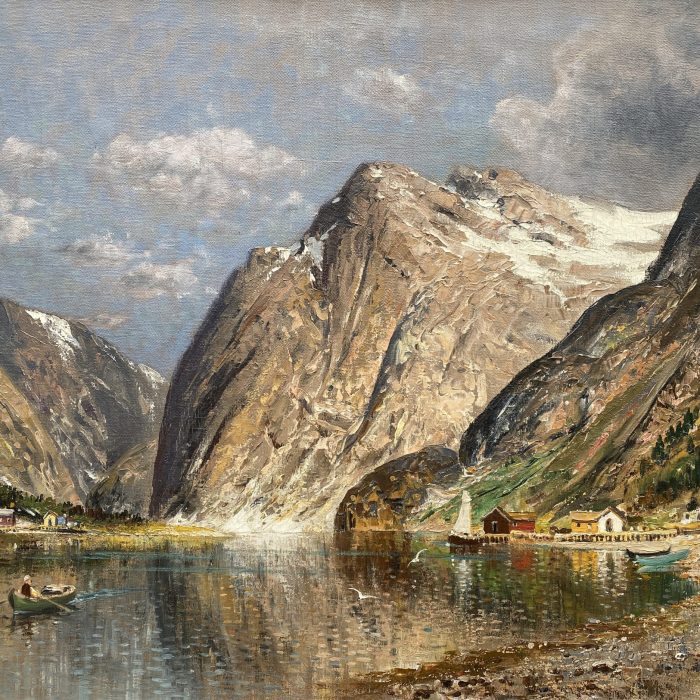
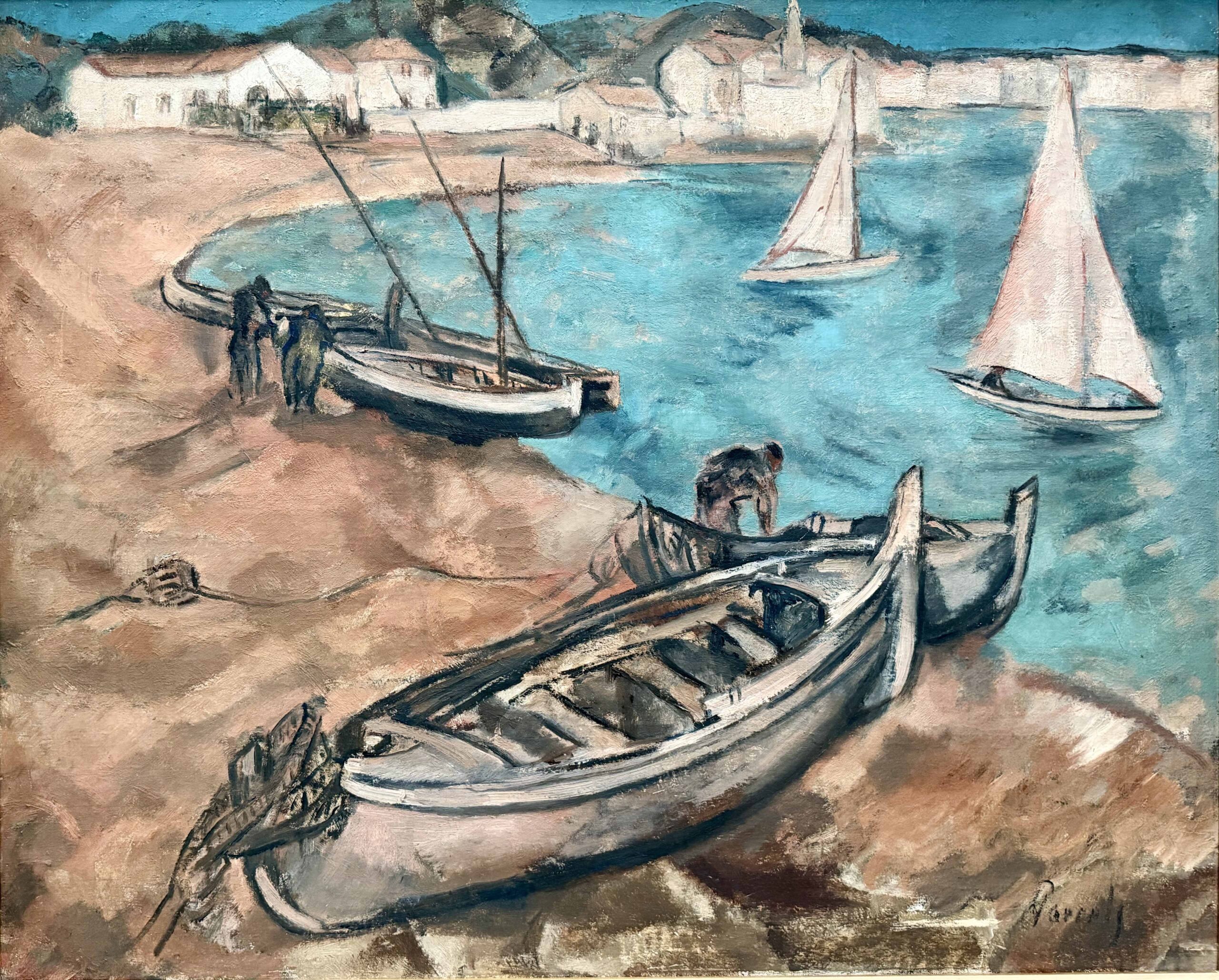
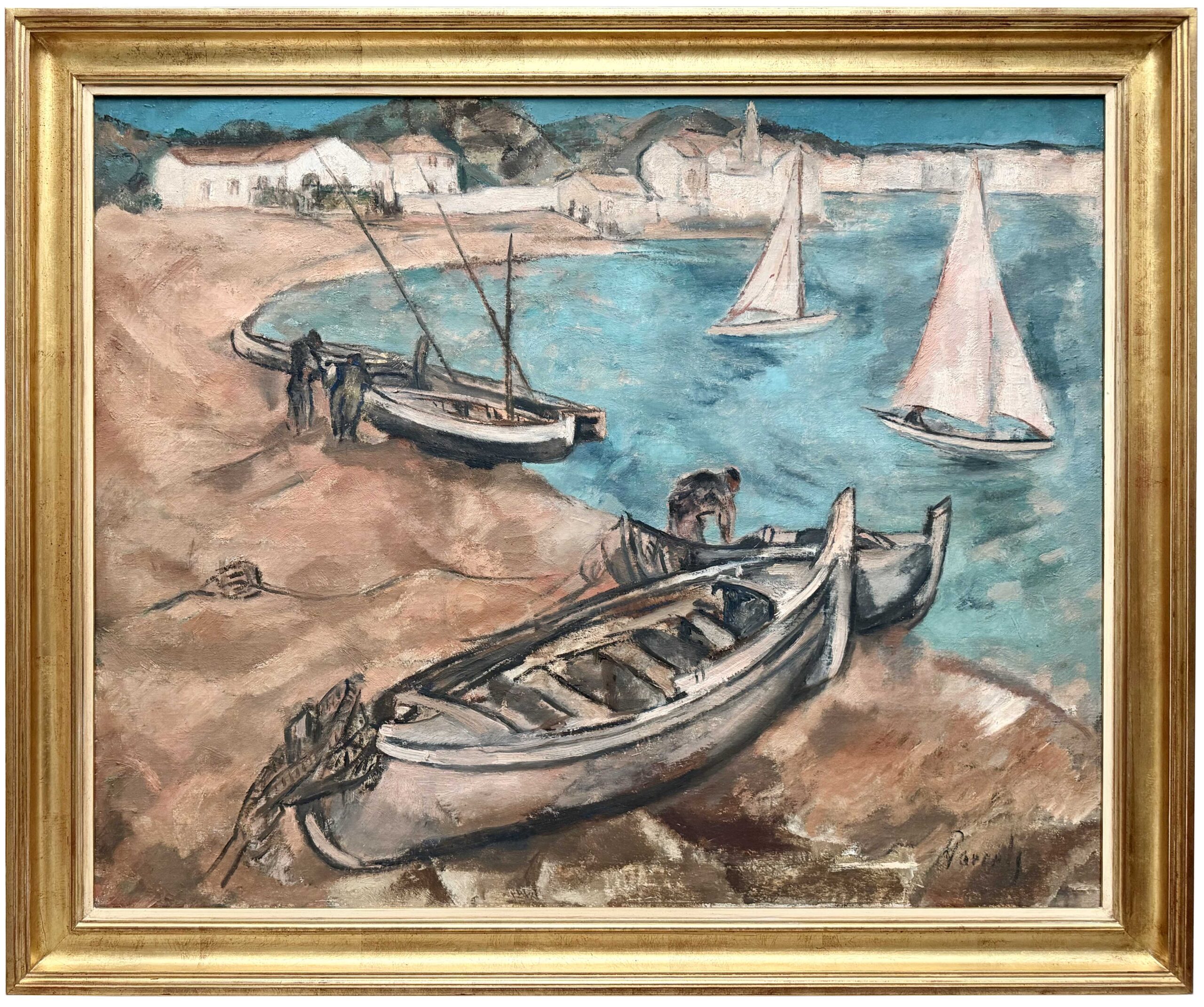
After returning to Belgium, Paerels continued to travel extensively, visiting destinations including southern France, Italy and Greece. His travels provided new subjects and contributed to the broad geographical range of his landscapes, harbour scenes and city views. The later decades of his career brought a more robust and concentrated form of painting, with increasingly simplified forms and a more subdued palette, an evolution towards expressionism.
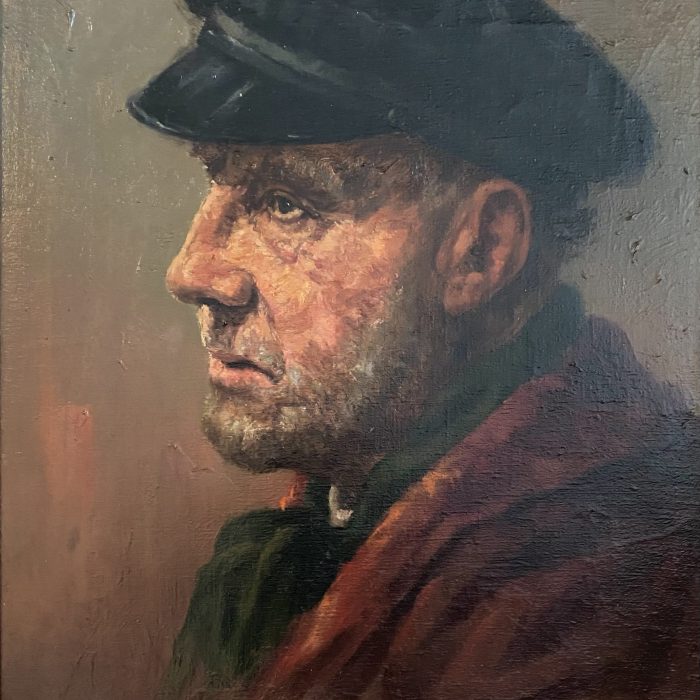
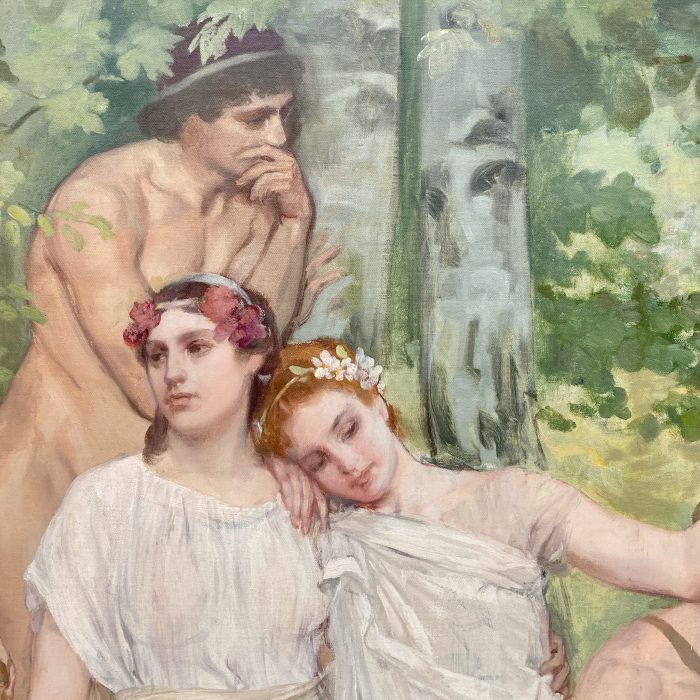
Paerels is particularly celebrated for his harbour and maritime scenes, but his varied oeuvre also encompasses landscapes, city views, portraits, figures, interiors and still lifes. His works are distinguished by their painterly vitality and by his lifelong fascination with colour, light and atmosphere.
Paerels became a Belgian citizen in the early 1930s; the Belgian parliamentary records document his naturalisation application and his long residence in Belgium since 1894. In 1955, he was appointed a member of the Royal Flemish Academy of Belgium for Science and the Arts and was promoted to Grand Officer of the Order of Leopold. He died in Eigenbrakel (Braine-l’Alleud), near Brussels, on 10 February 1962.
Today, Paerels is represented in important Belgian and Dutch museum collections, including the Royal Museums of Fine Arts of Belgium in Brussels, the Royal Museum of Fine Arts Antwerp (KMSKA), MSK Gent, and the Kunstmuseum aan Zee (Mu.ZEE) in Ostend. The museum collections include works spanning different phases of his career, from figures and still lifes to the harbour and Mediterranean views for which he became particularly renowned.
Notes: Willem Paerels (1878–1962) was a Dutch-born Belgian painter and a significant figure of Belgian modernism. Moving from impressionism towards the vibrant colourism of Brabant Fauvism and, later, a more expressive and concentrated style, Paerels developed a highly personal language of light, colour and movement. His celebrated harbour scenes, landscapes and city views are represented in major museum collections in Belgium and the Netherlands.
Zeedijk – Het Zoute 731, 8300 Knokke
Belgium
+32 478 22 65 64
info@valentinasafarian.com
© Copyright 2023 Valentina Safarian | Website by BEAUX SITES