Soignies 1902 – 1992 Albaicín
Belgian Painter
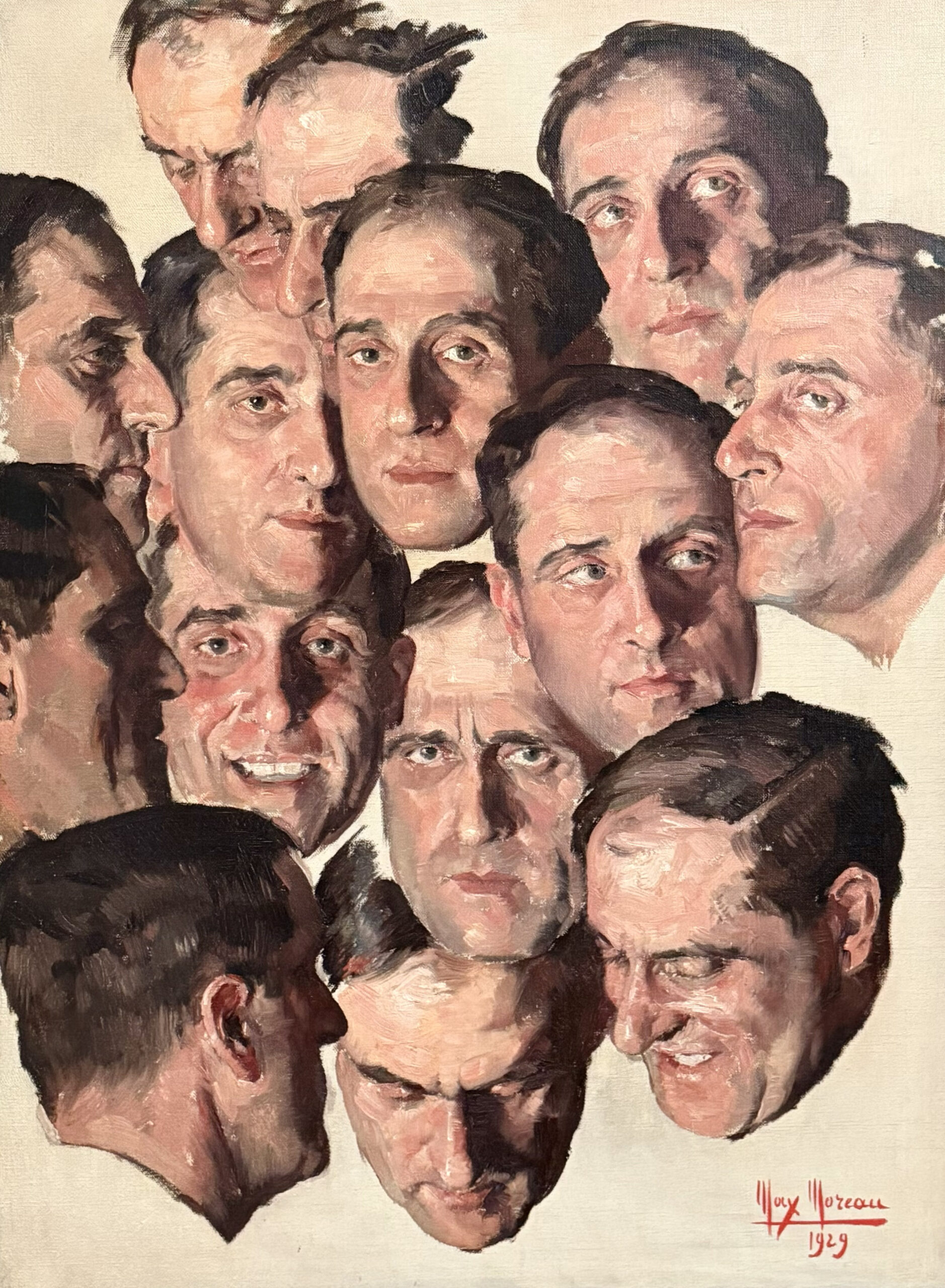
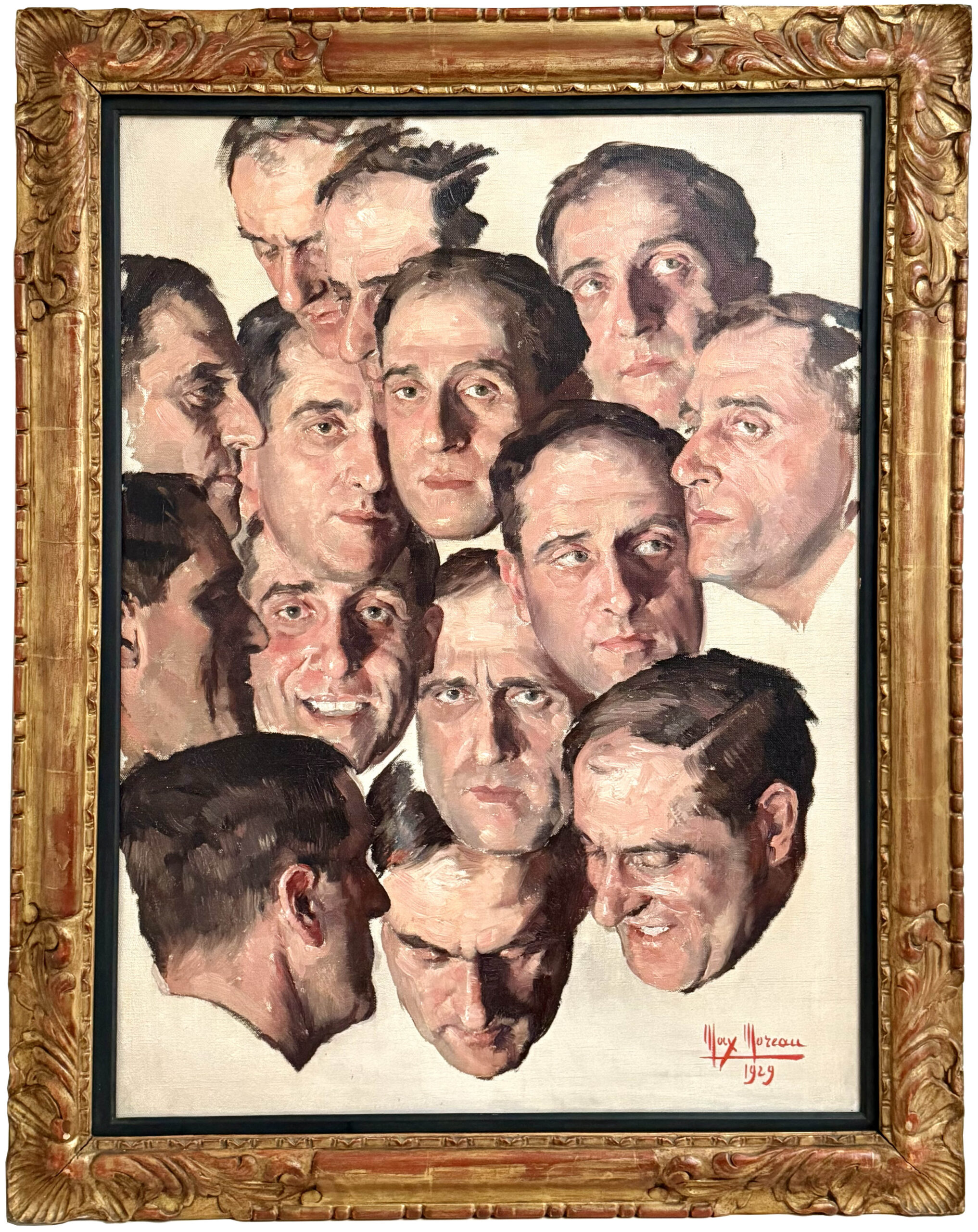
Portrait of Fourteen Emotions
Max Moreau was born in Soignies, Belgium, on 2 September 1902, and died ninety years later, on the very day of his birthday, 2 September 1992, in the Albaicín district of Granada, Spain. A Franco-Belgian painter closely associated with Realism, he devoted his life to portraiture and became renowned for his evocative depictions of the people and cultures of North Africa and southern Spain.
Born Max Leo Moreau, he was the son of an artist and grew up in an environment where drawing and painting formed part of daily life. Although largely self-taught, he received his earliest instruction in draughtsmanship from his father. At the end of the First World War, Moreau moved with his family to Paris. There he worked as a stage designer and entered the lively artistic and theatrical circles of the French capital. During this period he formed a close friendship with the actor and director Denis d’Inès, a relationship that would remain important throughout his early career.
In 1928, Moreau married Félicie Leclercq. The following year, the couple travelled to Tunisia, a journey that would profoundly shape the artist’s life and work. Moreau discovered in North Africa a world of striking light, rich colour and deeply rooted traditions. The landscapes, architecture and inhabitants of Tunisia awakened in him a lasting fascination with Moorish culture, an interest that would later extend naturally to southern Spain.
Throughout the following decades, Moreau and his wife travelled widely. During the Second World War they remained in France, but after the war they journeyed extensively through Morocco, the Caribbean, the United States and across Europe. Wherever they went, Moreau painted. He became highly sought after as a society portraitist and portrayed members of the cultured and affluent circles in which the couple moved. These elegant commissions brought him considerable success and financial security.
Yet beyond these sophisticated portraits, Moreau pursued a more personal artistic vision. He specialised in realistic portrayals of the people he encountered in the cities and villages of North Africa, as well as later in Granada. Street vendors, children, craftsmen, women in traditional dress and elderly townspeople became the subjects of his most compelling works. Painted with empathy and remarkable precision, these portraits reveal Moreau’s gift for capturing both the physical presence and the inner dignity of his sitters.
His style remained firmly rooted in Realism. Moreau was less interested in artistic experimentation than in faithfully conveying character, atmosphere and light. The intense Mediterranean sunlight, the textures of fabrics and stone, and the expressive faces of his sitters all occupy a central place in his work. His paintings possess a quiet humanity and a refined sensitivity that set them apart.
In 1966, Max and Félicie Moreau settled permanently in Granada. They purchased a neglected property in the historic Albaicín quarter: the Carmen de los Geranios, or House of the Geraniums. At the time of its acquisition, the house was in a state of disrepair. The couple devoted many years to restoring both the residence and its gardens, transforming it into a place of beauty and inspiration overlooking the Alhambra and the city below.
Granada became the final and perhaps most meaningful chapter of Moreau’s life. There he continued to paint portraits of local inhabitants and to immerse himself in the atmosphere of Andalusia. His final exhibition was held in 1981, although the last years of his life were overshadowed by Parkinson’s disease.
Max Moreau died in Granada in 1992 at the age of ninety. In a final gesture of generosity, he bequeathed his entire estate to the city. His home in the Albaicín was subsequently transformed into the Centro Cultural Max Moreau, which opened in 1998. Today, the museum preserves the artist’s house, studio, gardens and personal collections, offering a moving insight into the life and work of a painter who remained faithful throughout his long career to the art of portraiture and to the people who inspired him.