Courtrai 1826 – 1888 Ixelles
Belgian Painter of Landscapes and Animal Subjects
+32 478 22 65 64 | info@valentinasafarian.com

Courtrai 1826 – 1888 Ixelles
Belgian Painter of Landscapes and Animal Subjects
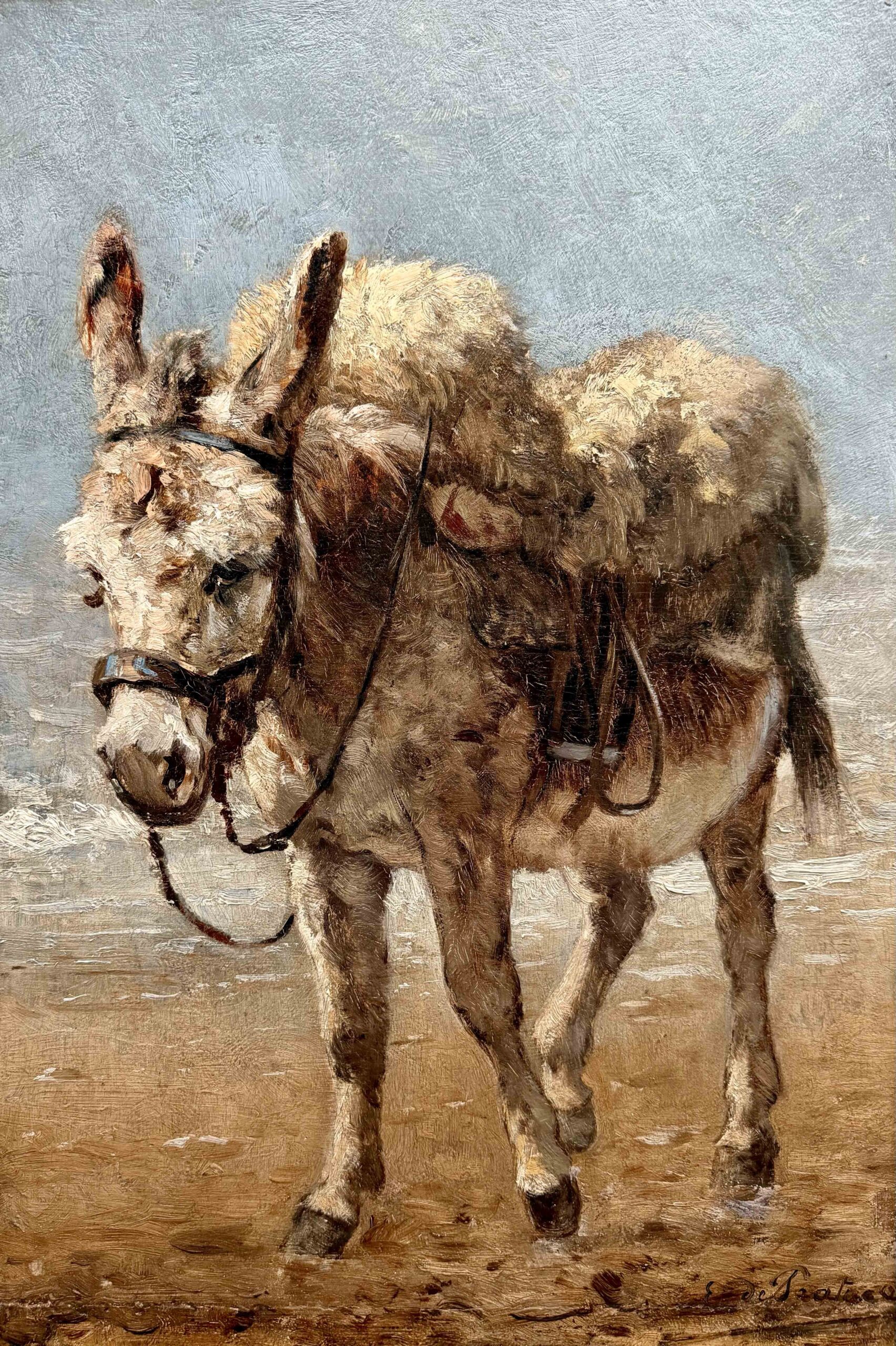
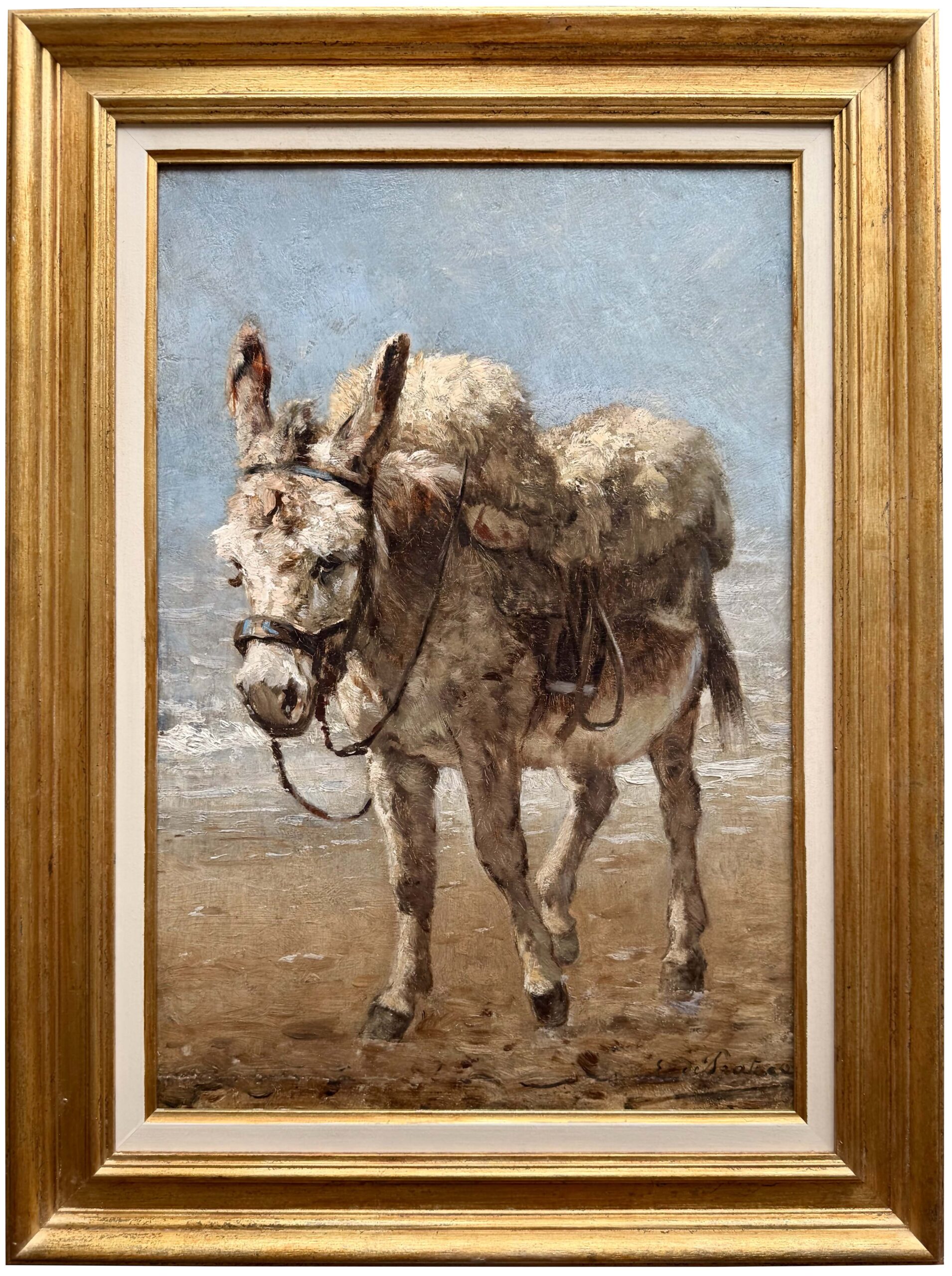
Edmond Joseph de Pratere was born in Kortrijk (Courtrai) in 1826 and became one of the leading Belgian animal and landscape painters of the nineteenth century. Renowned for his masterful depictions of horses, cattle, donkeys and rural life, he combined a keen observation of nature with a remarkable sensitivity to light and atmosphere. His paintings occupy an important place within the tradition of Belgian Realism and the Barbizon-inspired landscape movement.
De Pratere received his first artistic training from his elder brother, the painter Henri De Pratere, before studying at the Academy of Fine Arts in Kortrijk. His early talent was quickly recognised, earning him several prizes and gold medals. Initially trained in decorative arts, he soon devoted himself entirely to landscape and animal painting, becoming a pupil and follower of the celebrated animal painter Louis Robbe.
From the 1850s onwards, De Pratere exhibited regularly at the major Belgian Salons and became a frequent participant in the Paris Salons, where his works attracted favourable attention from critics, including the writer Théophile Gautier. His subjects were often drawn from the countryside of Flanders, particularly the fertile pastures of the Veurne-Ambacht region, where he painted directly from nature. Horses, oxen, cattle and donkeys became his favourite motifs, rendered with remarkable accuracy and vitality. Contemporary critics praised the strength of his composition, his command of colour and the realism of his animal studies.
An enthusiastic traveller, De Pratere visited France, Scotland, Italy and the Forest of Fontainebleau, broadening his artistic horizons while remaining deeply attached to the Flemish landscape. His mature works demonstrate an increasing concern for light, air and atmosphere, qualities that distinguish his finest paintings.
Among his most celebrated works are Shrimpers (Garnaalvissers), painted in Nieuwpoort in 1867 and now preserved in the collection of the Museum of Fine Arts Ghent, and Cattle Market at the Brussels Abattoir (1880), held by the Royal Museums of Fine Arts of Belgium. His paintings are also represented in numerous Belgian public collections, including the Museum of Ixelles.
De Pratere’s legacy extends beyond his artistic production. Following his death in Ixelles in 1888, his sister Eugénie donated his extensive art collection and studio contents to the municipality of Ixelles. This remarkable bequest formed the foundation of the Museum of Ixelles, established in 1892 and today regarded as one of Belgium’s most important museums of nineteenth- and twentieth-century art. Few artists can claim such a direct role in the creation of a major public museum.
Today, Edmond De Pratere is remembered as one of Belgium’s foremost nineteenth-century animal painters. His works remain highly sought after for their technical excellence, their evocative portrayal of rural life and their enduring celebration of the Flemish countryside.
Zeedijk – Het Zoute 731, 8300 Knokke
Belgium
+32 478 22 65 64
info@valentinasafarian.com
© Copyright 2023 Valentina Safarian | Website by BEAUX SITES