Pittem 1887 – 1946 Uccle
Belgian Painter
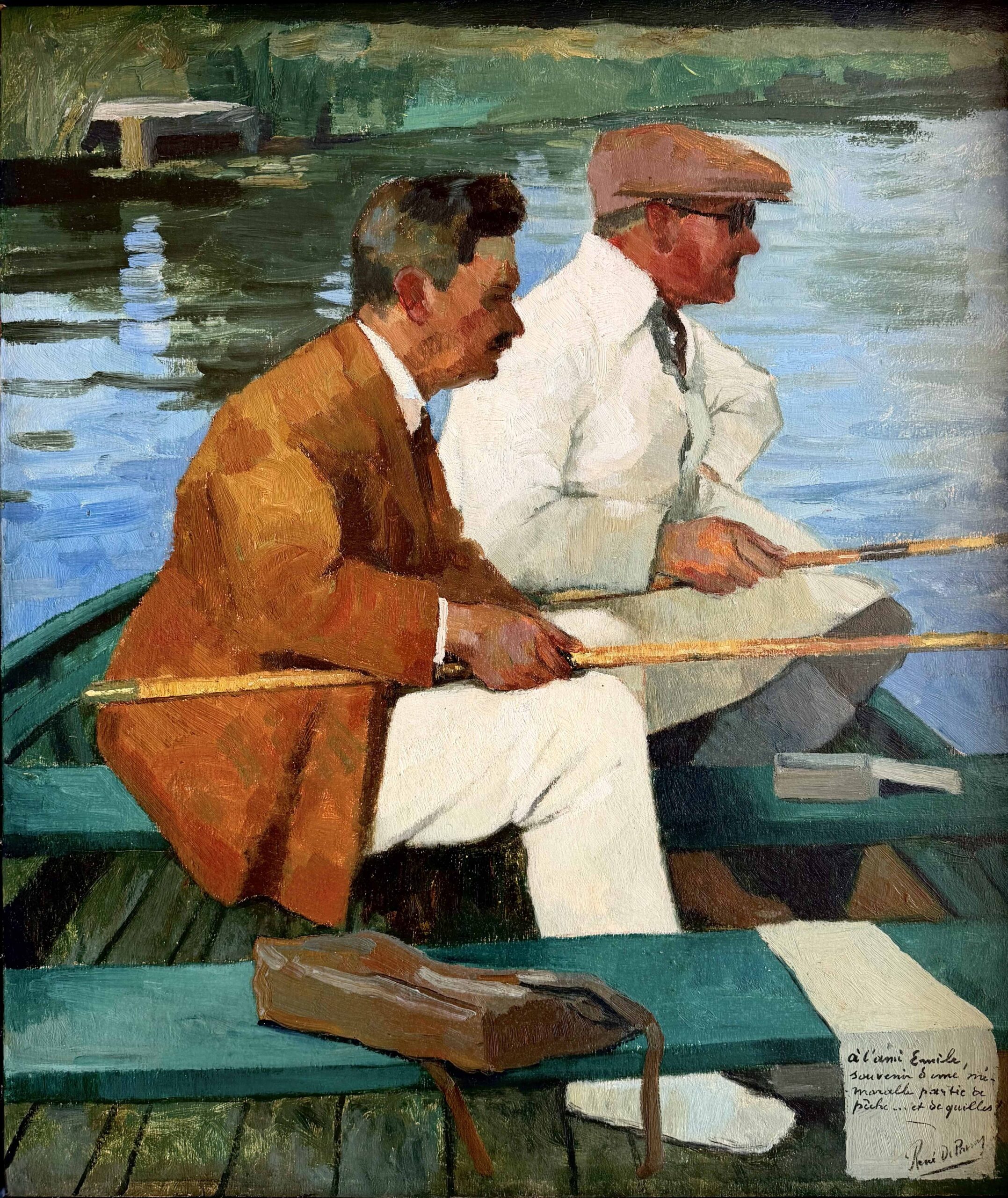
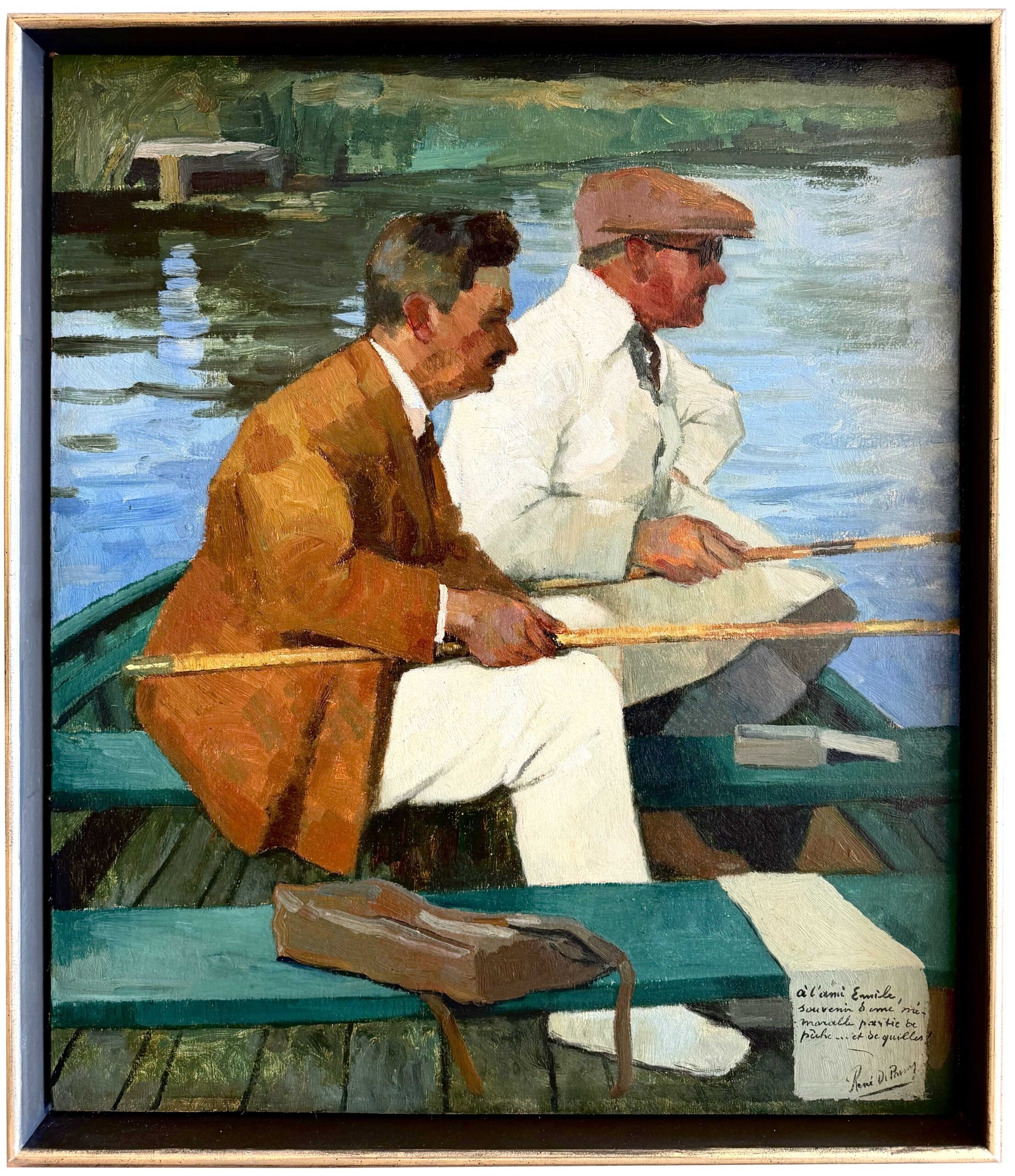
A Memorable Fishing Trip
René De Pauw was a distinguished Belgian painter, draughtsman and illustrator whose artistic career formed a remarkable bridge between Impressionism and Expressionism in twentieth-century Belgian art. Best known for his powerful depictions of Flemish fishermen and coastal life, he also gained recognition as an accomplished portraitist, caricaturist and mural painter.
Born in Pittem on 14 June 1887, De Pauw was the son of Karel-Lodewijk De Pauw, a notary and alderman, and Emma De Stoop. In 1901 the family settled in Bruges, where his father became churchwarden of the Church of Our Lady. René received his secondary education at Sint-Lodewijkscollege and subsequently studied philosophy and literature at the University of Ghent. At the same time, he pursued artistic training at the Academy of Fine Arts in Bruges, where he studied under the celebrated painter Flori Van Acker. In 1913 he graduated as primus of the academy, an achievement that was celebrated according to local tradition with a festive procession through the city.
During the years surrounding the First World War, De Pauw established himself primarily as a gifted caricaturist. His incisive and often humorous drawings portrayed fellow artists, local Bruges personalities and football figures, while his sharply critical caricatures of German military officers reflected the tensions of the wartime period. Alongside his graphic work, he produced portraits, landscapes and still lifes that revealed a refined impressionistic sensibility characterised by luminous colours, fluid brushwork and an atmosphere of quiet elegance.
In 1920 De Pauw moved to Etterbeek, Brussels, where he sought to build a broader artistic career. His early paintings from this period focused on flowers, nudes, interiors and landscapes, demonstrating a bright palette and an interest in capturing the effects of light and atmosphere. As his career progressed, however, his artistic language evolved significantly.
A decisive turning point came in 1932 when De Pauw settled in Heist-aan-Zee on the Belgian coast. Deeply inspired by the fishing community and maritime landscape, he abandoned the lighter Impressionist manner of his earlier years and embraced a more monumental and expressive style. His paintings of fishermen, fisherwomen and their families display powerful forms, strong contours and a subdued colour palette, recalling the influence of the great Flemish Expressionists, particularly Constant Permeke. These works convey both the dignity and hardship of coastal life and remain among the most admired achievements of his oeuvre.
De Pauw’s reputation reached its height during the 1930s. In 1934 he published and illustrated a remarkable volume devoted to the daily lives and traditions of the fishermen of Heist, further demonstrating his deep connection with the coastal community. In 1939 he received one of the most prestigious commissions of his career: the execution of monumental decorative murals for the new railway station of Bruges. These large-scale works established his position as an important public artist and remain among the most significant examples of Belgian mural painting of the period.
Throughout his career, De Pauw worked across a wide range of subjects, including portraits, figures, landscapes, marines, interiors and still lifes. He also illustrated numerous books and publications. His works are represented today in several important Belgian museum collections, including the Groeningemuseum in Bruges, the Royal Museum of Fine Arts in Antwerp, Mu.ZEE in Ostend, the Volkskundemuseum in Bruges and the Museum Sincfala in Knokke-Heist.
The outbreak of the Second World War once again disrupted his life. In 1942, when the German authorities transformed the Belgian coastline into a restricted military zone (Sperrgebiet), De Pauw was forced to leave Heist and return to Brussels. He settled once more in Etterbeek and continued painting despite declining health. René De Pauw died of cancer in Uccle on 26 January 1946.
Today, René De Pauw is regarded as one of the notable figures of twentieth-century Belgian art. His work reflects both the lyricism of Impressionism and the strength of Flemish Expressionism, while his sensitive portrayals of fishermen and coastal life remain enduring testimonies to a disappearing world.
Inscribed and signed lower right: