Brussels 1857 – 1920 Ohain
Belgian Painter
+32 478 22 65 64 | info@valentinasafarian.com

Brussels 1857 – 1920 Ohain
Belgian Painter
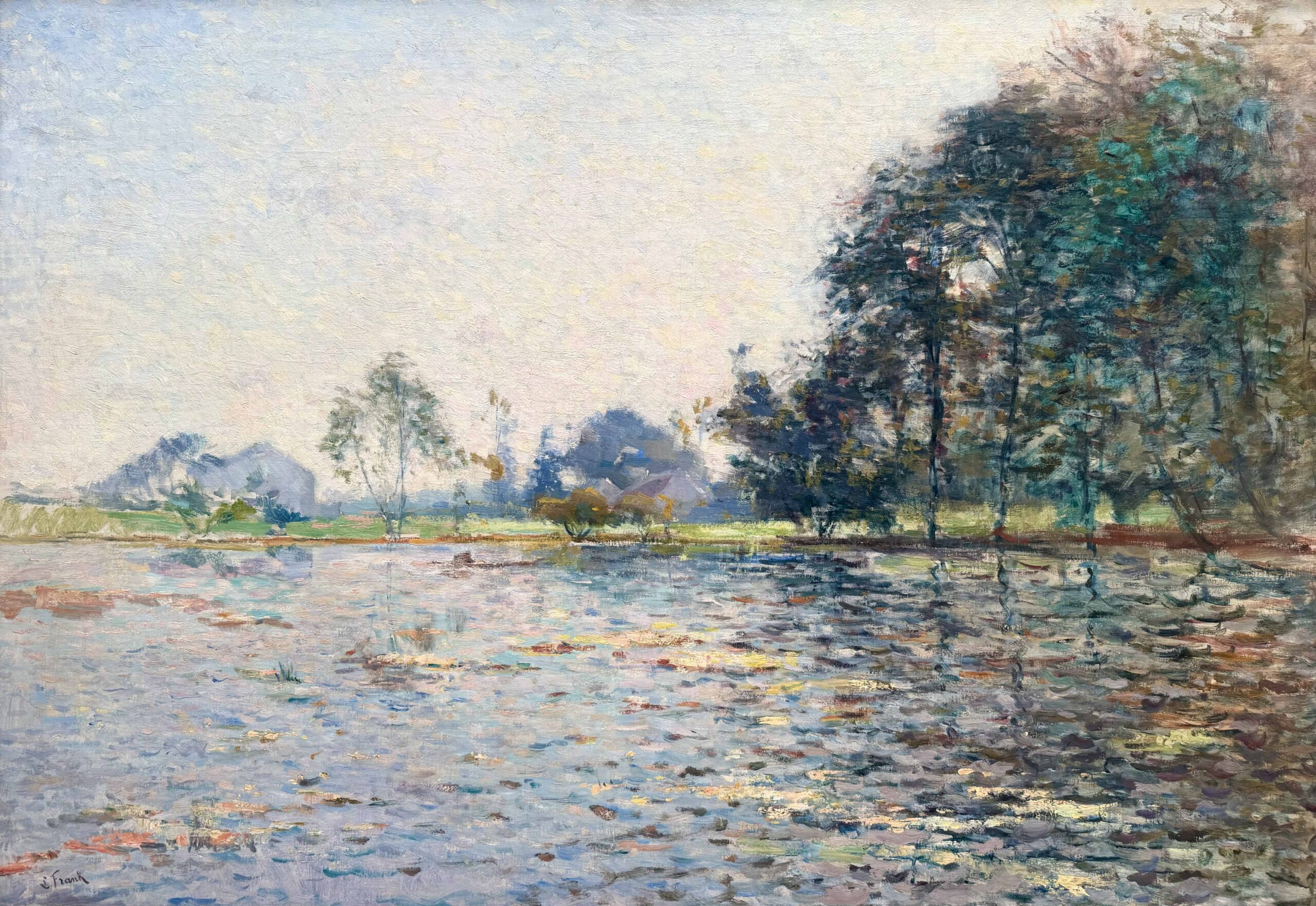
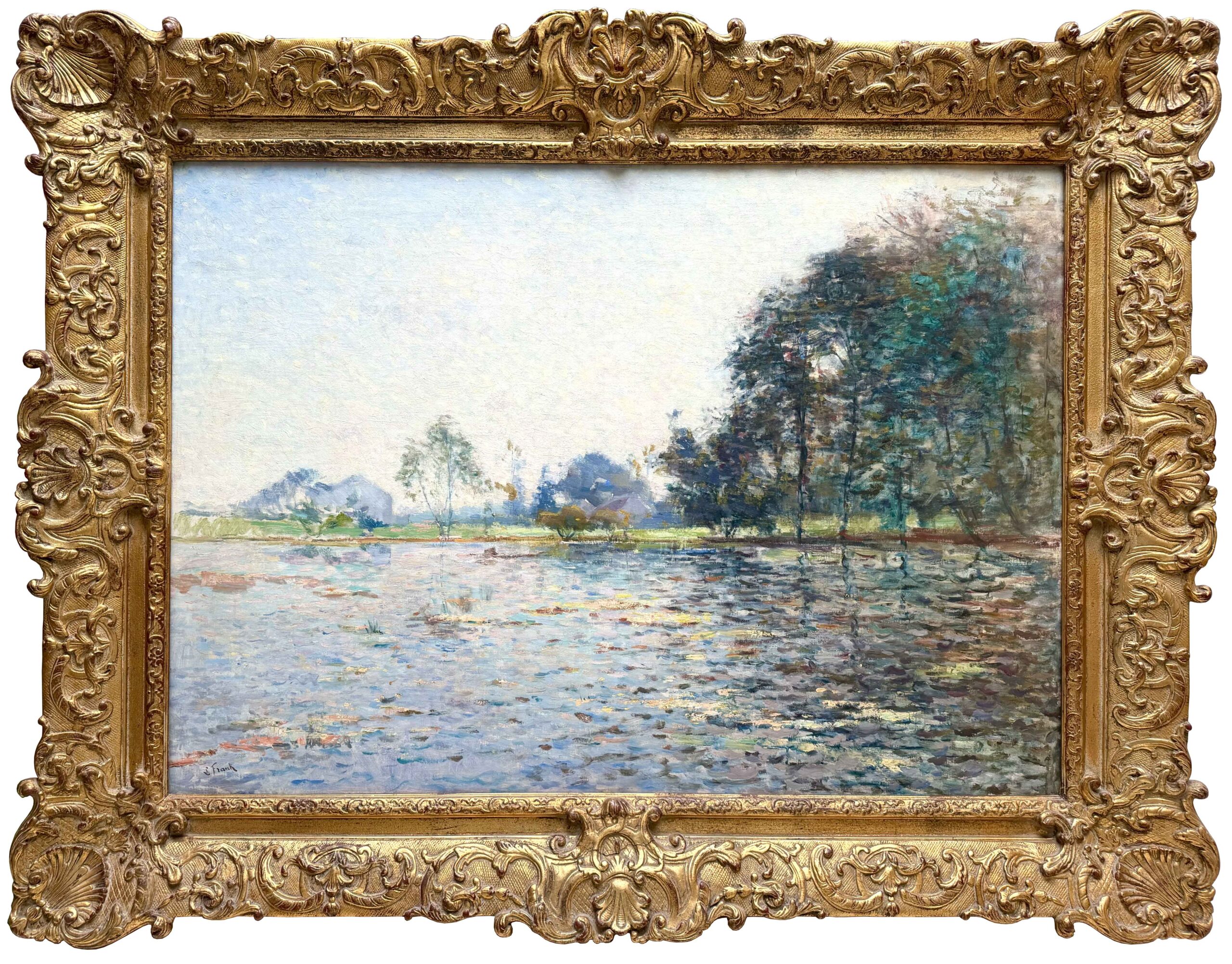
Lucien Frank (Brussels, 10 November 1857 – Ohain, 20 January 1920) was a Belgian Impressionist painter celebrated for his atmospheric landscapes, animated boulevard scenes, and refined depictions of everyday life. Closely associated with the School of Rouge-Cloître (Rooklooster) and the artistic circles of Tervuren, Frank developed a highly personal interpretation of Impressionism, balancing luminous landscapes with vibrant urban compositions.
Born in Brussels to Joseph Frank, of Dutch origin, and Serette Levy, of French descent, Lucien Frank came from a family with Jewish roots. Rather than following a conventional academic education, he is believed to have received his artistic training in France. Contemporary accounts suggest that he studied under the celebrated French landscape painter Charles-François Daubigny, a leading figure of the Barbizon School, and was reportedly acquainted with Édouard Manet. These influences encouraged Frank to embrace plein-air painting and the direct observation of nature.
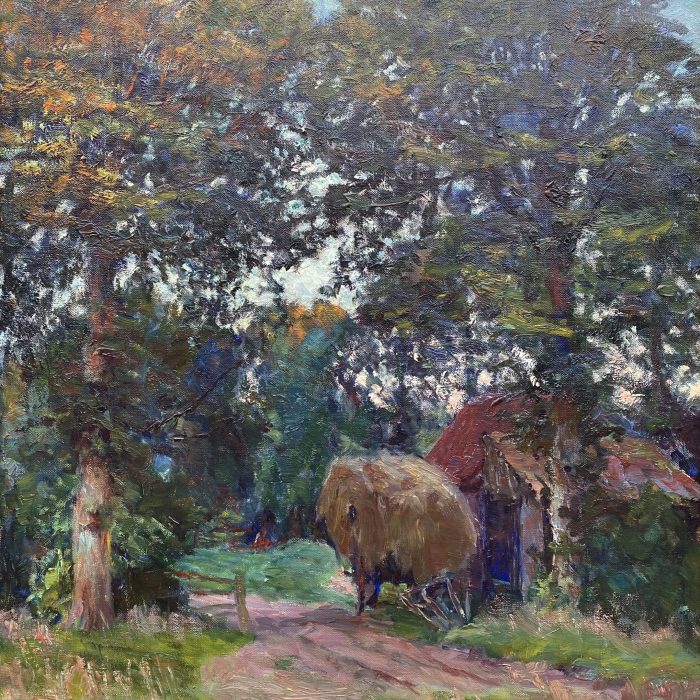
During the late 1880s, Frank discovered the picturesque village of Ohain, where he worked intensively between 1887 and 1890. It was here that he established his distinctive artistic language, capturing tranquil ponds, woodland paths, and changing atmospheric effects with a delicate, impressionistic touch. Around 1890 he also settled for a time in Tervuren, another important centre of Belgian landscape painting, where he continued to explore the interplay of light, season, and reflection. His travels further inspired paintings of the Belgian coast, the Netherlands and later Spain.
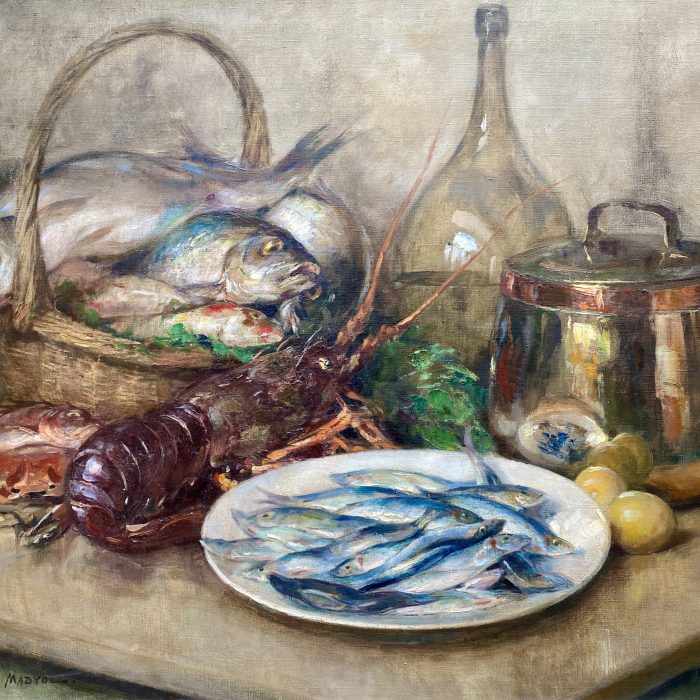
Although highly regarded as a landscape painter, Frank became especially known for his evocative views of the great boulevards of Brussels and Paris. These lively street scenes, populated with elegant figures, horse-drawn carriages, and shimmering reflections after rain or snowfall, reveal his remarkable ability to capture the rhythm and atmosphere of modern urban life. His oeuvre also includes still lifes, demonstrating the versatility of his artistic practice.
Frank exhibited regularly throughout his career. In 1887 and 1890, he held joint exhibitions with Laboulaye at the Cercle Artistique et Littéraire in Brussels, presenting studies painted in Ohain and works such as Plane Trees – Pond at La Hulpe, Pond at Ohain, Mill Pond at La Hulpe, and Sunset. In 1905, he participated in the Salon des Indépendants in Paris, exhibiting landscapes from Tervuren and Dordrecht alongside celebrated Brussels city views including Boulevard Botanique in Brussels and the winter scene It Snows – Rue des Pierres, Brussels. During the First World War, Frank left Belgium and lived in France and later Spain, where he held a solo exhibition at the Círculo Artístico in Barcelona in 1917.
His personal life was closely intertwined with art. For many years he shared his life with the painter Sylvia Marie Vloeberghen, whom he married after a long period together. During his wartime exile, Sylvia passed away, a profound personal loss. Returning to Belgium in 1919, Frank settled once more in Ohain with his son Paul, but died suddenly only a few months later, on 20 January 1920.
Today, Lucien Frank is regarded as one of the refined yet comparatively overlooked figures of Belgian Impressionism. His paintings are distinguished by their poetic atmosphere, subtle treatment of light, and exceptional sensitivity to both natural and urban environments. His works are preserved in several important public collections, including the Royal Museums of Fine Arts of Belgium (Brussels), the Museum of Ixelles (Brussels), BAM – Beaux-Arts Mons, La Boverie / Musée d’Art Moderne et d’Art Contemporain (Liège), the former Musée du Luxembourg (Paris), and the Musée des Beaux-Arts de Tournai. His oeuvre continues to be appreciated by collectors for its elegance, technical refinement, and evocative portrayal of Belgium and France during the late nineteenth and early twentieth centuries.
Zeedijk – Het Zoute 731, 8300 Knokke
Belgium
+32 478 22 65 64
info@valentinasafarian.com
© Copyright 2023 Valentina Safarian | Website by BEAUX SITES