Ostend 1820 – 1888 Saint-Josse-ten-Noode
Belgian Painter
+32 478 22 65 64 | info@valentinasafarian.com

Ostend 1820 – 1888 Saint-Josse-ten-Noode
Belgian Painter
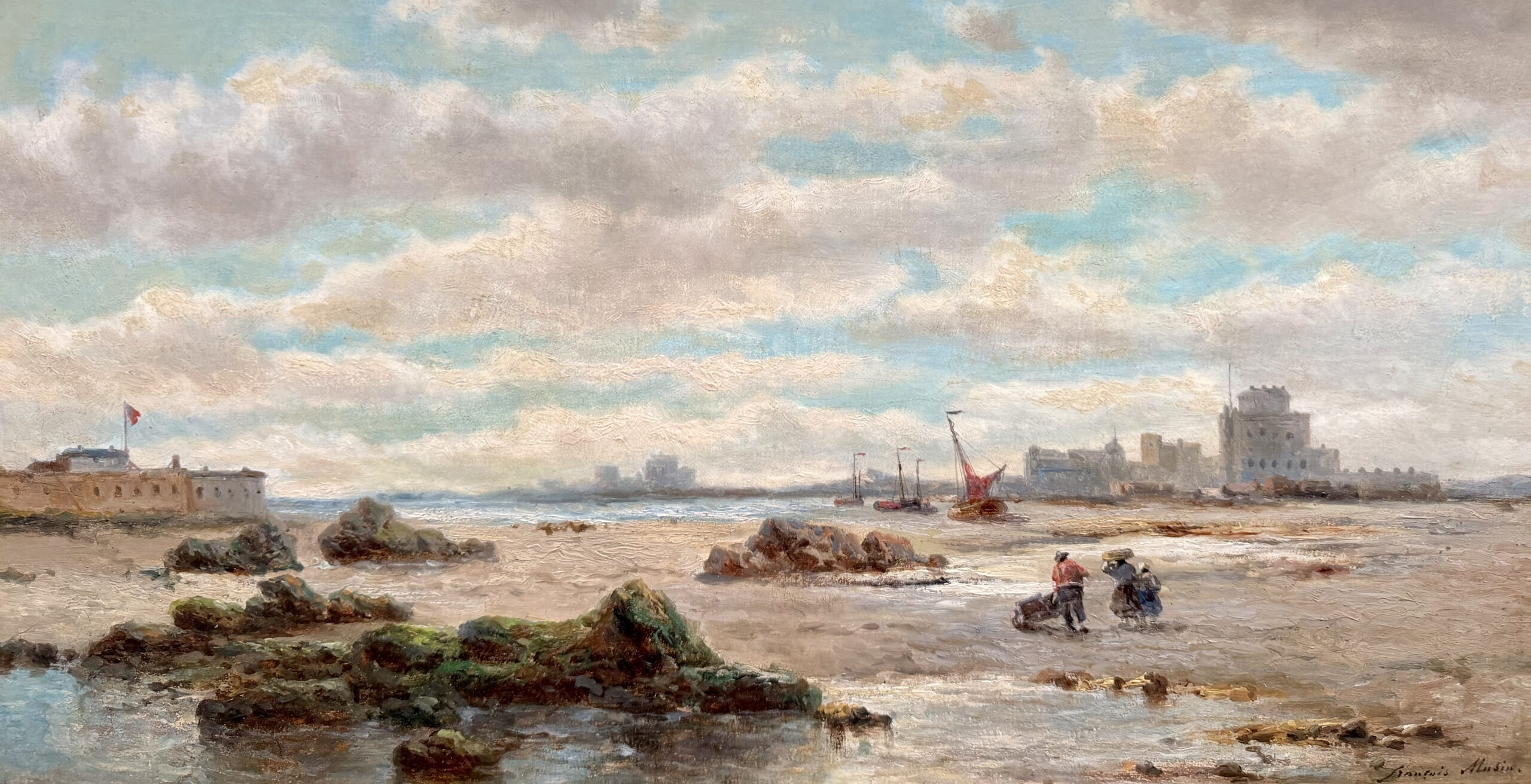
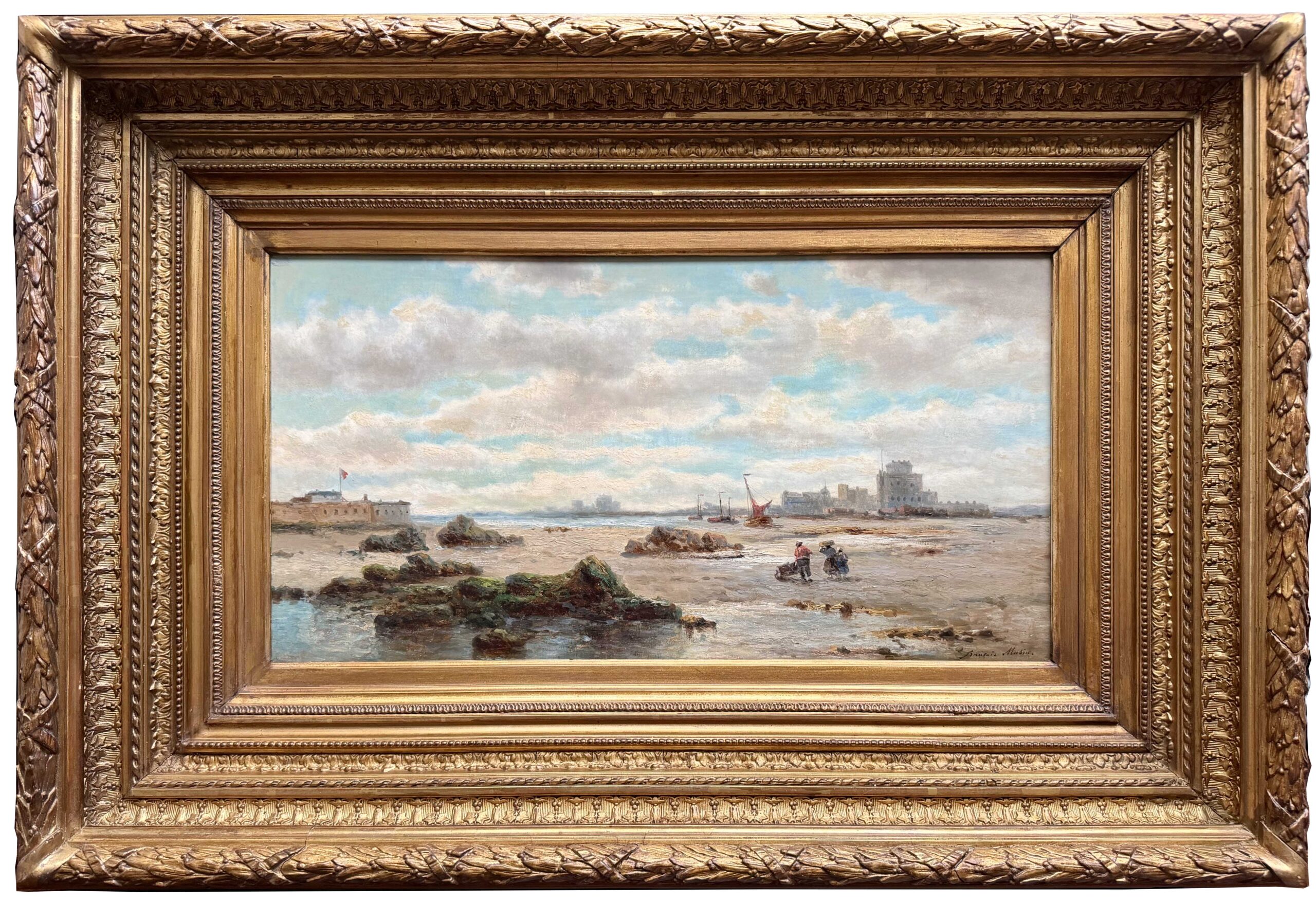
François-Étienne Musin (1820–1888) was a celebrated Belgian marine painter, renowned for his vivid and atmospheric depictions of the sea. His life, closely intertwined with maritime culture, was as colorful and eventful as the scenes he painted.
He was born in Ostend into a family deeply connected to the sea. His father, an innkeeper, shipbuilder, and oyster farmer, had led a turbulent early life and even served time in a penal regiment for desertion during the Napoleonic Wars. Growing up in this environment, young Musin showed little interest in formal schooling, preferring instead to observe the harbor and the ever-changing moods of the North Sea. His artistic talent revealed itself in a memorable episode from childhood: punished and locked in an attic, he used a piece of charcoal to draw a detailed view of the Ostend docks directly onto the wall.
In 1831, Musin began his artistic training under Michel Van Cuyck and François-Antoine Bossuet, who at the time worked for the Port of Ostend. He later enrolled at the local Academy of Fine Arts, where he excelled, winning a gold medal in 1835. By then, he had already gained firsthand, and sometimes perilous, experience at sea while helping with his father’s oyster beds, an experience that would later lend authenticity to his marine scenes.
Musin continued his studies at the Académie Royale des Beaux-Arts in Brussels under François-Joseph Navez. During this period, he also produced anatomical drawings of surgical procedures in the operating room of Doctor Louis-Joseph Seutin, intending to publish them in a medical textbook, a testament to his keen eye for detail and observation. In 1839, he was drafted into the army, though his father secured a substitute, allowing him to continue his artistic pursuits uninterrupted. By 1840, Musin had begun exhibiting his work, and in 1842 he settled permanently in Brussels, completing his studies the following year. His early success was cemented when King Leopold I purchased two of his paintings in 1845.
Musin’s growing reputation led him to travel widely. He spent time in England, where his work found particular appreciation, and journeyed through Spain and Portugal. He returned to Ostend in 1848 due to his father’s illness. The following year, he married the painter Marie-Célestine Gosselin, though her early death in 1853 deeply affected him. In the aftermath, Musin transferred his share of the family business to his brother in exchange for studio and exhibition space in the family’s establishment.
An enterprising figure, Musin also invested in seaside development. He built the Pavilion des Dunes, the first structure on the Ostend beach, which he used both as a rental property and occasionally as a studio. The area gained prestige when King Leopold I constructed his nearby Royal Pavilions in 1863, triggering a wave of development. In 1865, Musin converted his pavilion into a hotel, which he later sold in 1877.
Throughout his life, Musin traveled extensively across Europe and beyond, visiting France, Portugal, the Alps, Norway, and even North America, possibly participating in a whaling expedition. These journeys provided a wealth of sketches and studies, later transformed into finished compositions in his studio. In 1869, he settled in Saint-Josse-ten-Noode, where he built a large garden studio filled with maritime objects and curiosities, and began teaching his son Auguste.
Royal patronage played a significant role in Musin’s career. After Kaiser Wilhelm I ordered eight seascapes in 1853, he attracted a steady stream of elite clients. Works were acquired by the royal family of Württemberg and by Naser al-Din Shah Qajar. In 1869, the Museo del Prado purchased his dramatic painting The Cannon Shot – Signal for the Revolt of Cádiz, and he was awarded the Spanish Order of Charles III. Despite this international acclaim, official recognition in Belgium came relatively late, with the government only acquiring his work in 1880.
A curious episode late in his life occurred in 1885, when a whale carcass washed ashore in Ostend, drawing widespread attention. Musin captured the scene in a lively painted sketch, as did contemporaries such as James Ensor.
Musin died in Saint-Josse-ten-Noode after suffering a stroke. He was remembered by those who knew him as a cheerful, pleasure-loving man, always eager to share stories of his travels and adventures. His works, admired for their technical mastery and vivid realism, became highly sought after, so much so that they were frequently forged. In response, his son developed methods of authentication, including certificates and wax seals, to protect his father’s legacy.
Today, Musin remains an important figure in 19th-century Belgian marine painting, celebrated for the vitality, precision, and lived experience that animate his seascapes.
Zeedijk – Het Zoute 731, 8300 Knokke
Belgium
+32 478 22 65 64
info@valentinasafarian.com

© Copyright 2023 Valentina Safarian | Website by BEAUX SITES